Why the most powerful company town in U.S. history disappeared overnight
It’s hard to believe a single corporate giant once owned every house, school, and church in an entire American town. George Pullman built this model community in 1880 on the shores of Lake Calumet, just south of Chicago. This Gilded Age masterpiece was designed to cure urban slums and prevent labor strikes before they could even start.
The town of Pullman housed thousands of workers who built the world’s most luxurious railcars. At its peak, the company was an economic powerhouse that controlled the daily lives of over 8,000 residents. But this perfect corporate empire vanished almost overnight when a bitter dispute turned into a historic national crisis.
The beautiful Gilded Age utopia was a velvet trap
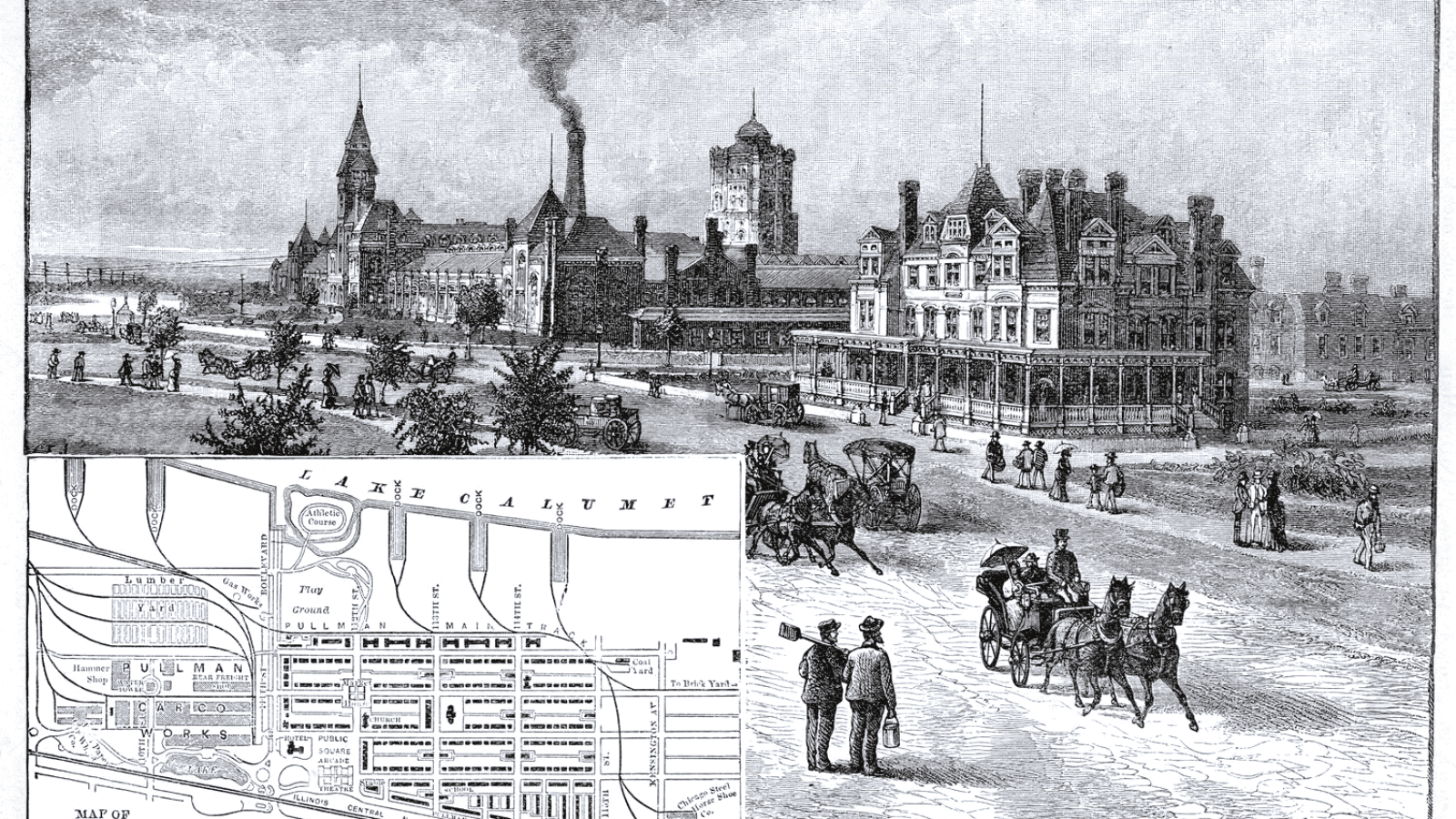
George Pullman was no stranger to high-stakes business, having built his early fortune lifting Chicago out of the swamps and running supply stores in the Colorado gold rush. He believed that clean air and picturesque architecture would make his factory workers incredibly loyal and productive.
He built beautiful brick homes with gas, fresh water, and indoor plumbing. It was the Google or Facebook campus of its era. But this beautiful community quickly felt like a golden cage to the families living there. The company banned saloons, outlawed independent newspapers, and even prohibited residents from sitting on their front porches. Historian John S. Garner notes that the company’s paternalism extended far beyond bare-bones housing needs.
Under this system, the boss held absolute power over his employees’ private lives. Economist Richard Ely visited the town in 1884 and noticed a chilling atmosphere. Ely wrote that not a single resident dared to speak their opinion openly about the town.
Ultimately, corporate paternalism was simply a clever tool to maximize factory efficiency. Architectural historian Margaret Crawford argues that this strict moral policing arose out of “the sagacity of self-interest” to prevent unrest. Every single dollar spent by the workers flowed directly back into Pullman’s corporate pockets.
A brutal economic crash exposed the corporate greed

The worst economic depression in U.S. history at the time struck in 1893, shattering the railroad industry. Orders for new Pullman luxury cars plummeted. To save his profits, Pullman quickly fired workers and slashed remaining wages by an average of 25%.
But the billionaire didn’t lower the rents he charged for company housing by a single penny. This created an impossible situation for the struggling workers. Many families received two paychecks, only to find one was immediately signed back to the company to cover rent.
After paying rent, some workers were left with just pennies to feed their families. Desperate employees tried to negotiate, but the company flatly refused to listen. The beautiful model town was suddenly on the verge of a massive explosion.
A massive national railroad boycott brought the country to a standstill
Angry workers decided to strike in May 1894 after their peaceful pleas were ignored. They quickly joined the American Railway Union, which was led by the charismatic Eugene Debs. The union voted to boycott all trains carrying the famous Pullman luxury cars.
Thanks to the emotional testimony of workers like seamstress Jennie Curtis, the boycott spread like wildfire. The strike paralyzed the entire nation’s transportation system almost overnight. Nearly 250,000 workers joined the strike across 29 different railroads. Within days, western trade halted and commuter trains ground to a complete stop. The railroads tried to force the issue by attaching Pullman cars directly to mail trains. This clever move allowed them to demand federal help to break the strike.
Bloodshed and federal troops crushed the rebellion

The federal government stepped in with massive force to protect corporate interests and mail delivery. Attorney General Richard Olney used the Sherman Antitrust Act to get federal injunctions against the strikers. President Grover Cleveland then ordered federal troops to march into Chicago.
The arrival of armed soldiers ignited furious riots and violent street battles. Angry protesters clashed with troops, and dozens of railcars were set ablaze. By the time the smoke cleared, about 30 workers were dead, and many more were wounded.
The strike collapsed under the weight of federal military power, but the company’s image was ruined. Eugene Debs was thrown in jail for six months, and blacklisted workers lost their livelihoods. George Pullman won the battle, but he became one of the most hated men in America.
The courts stepped in to dismantle the empire forever

The final blow to the model town didn’t come from the strikers, but from the state government. In August 1894, the State of Illinois sued the Pullman Company for violating its corporate charter. The state argued that a manufacturing firm had no legal right to act as a municipal government.
In October 1898, the Illinois Supreme Court ordered the company to sell off all non-industrial land. The company was forced to sell its houses, shops, schools, and churches. This landmark ruling dissolved the famous company town almost overnight.
Though the factory continued to operate under Robert Todd Lincoln, the social experiment was officially dead. The homes were sold to private owners, and the town was absorbed into Chicago. A century later, the ruins stand as a historic national park and a warning about corporate overreach.
Key takeaway

The dramatic collapse of Pullman proved that absolute corporate control over workers’ private lives will always fail. When a company tries to act as both boss and landlord, economic downturns will inevitably turn quiet neighborhoods into battlegrounds. True stability requires fair pay and democratic freedom, not a gilded cage of corporate control.
Disclaimer – This list is solely the author’s opinion based on research and publicly available information. It is not intended to be professional advice.
Like our content? Be sure to follow us