12 reasons your dog may put its paw on you
When a dog places its paw on a person, it is generally considered a form of social communication rather than random behavior. Veterinary behavior experts note that dogs often use physical gestures, such as pawing, to solicit attention or interaction from their owners, especially because these behaviors are frequently reinforced when they receive a response like petting, talking, or food. Over time, this can make pawing a learned and repeated behavior.
Research and veterinary guidance on canine behavior indicate that pawing can serve multiple purposes depending on context. It may be used to request attention, communicate excitement, or signal a need, such as going outside or wanting food. Experts emphasize that dogs rely heavily on a combination of body language and learned associations to interact with humans, and pawing is one of several physical cues whose meaning can vary by context.
Because pawing can reflect different motivations, veterinarians and certified behaviorists recommend interpreting it alongside other signals, such as posture, facial expressions, and vocalizations. In some cases, it can indicate affection or a desire for closeness, while in others, it may simply be a reinforced habit that consistently gets a response. Understanding the context helps distinguish between attention-seeking behavior and other emotional or physical needs.
With that in mind, here are 12 reasons your dog may be putting its paw on you.
“I Love You” And Bonding
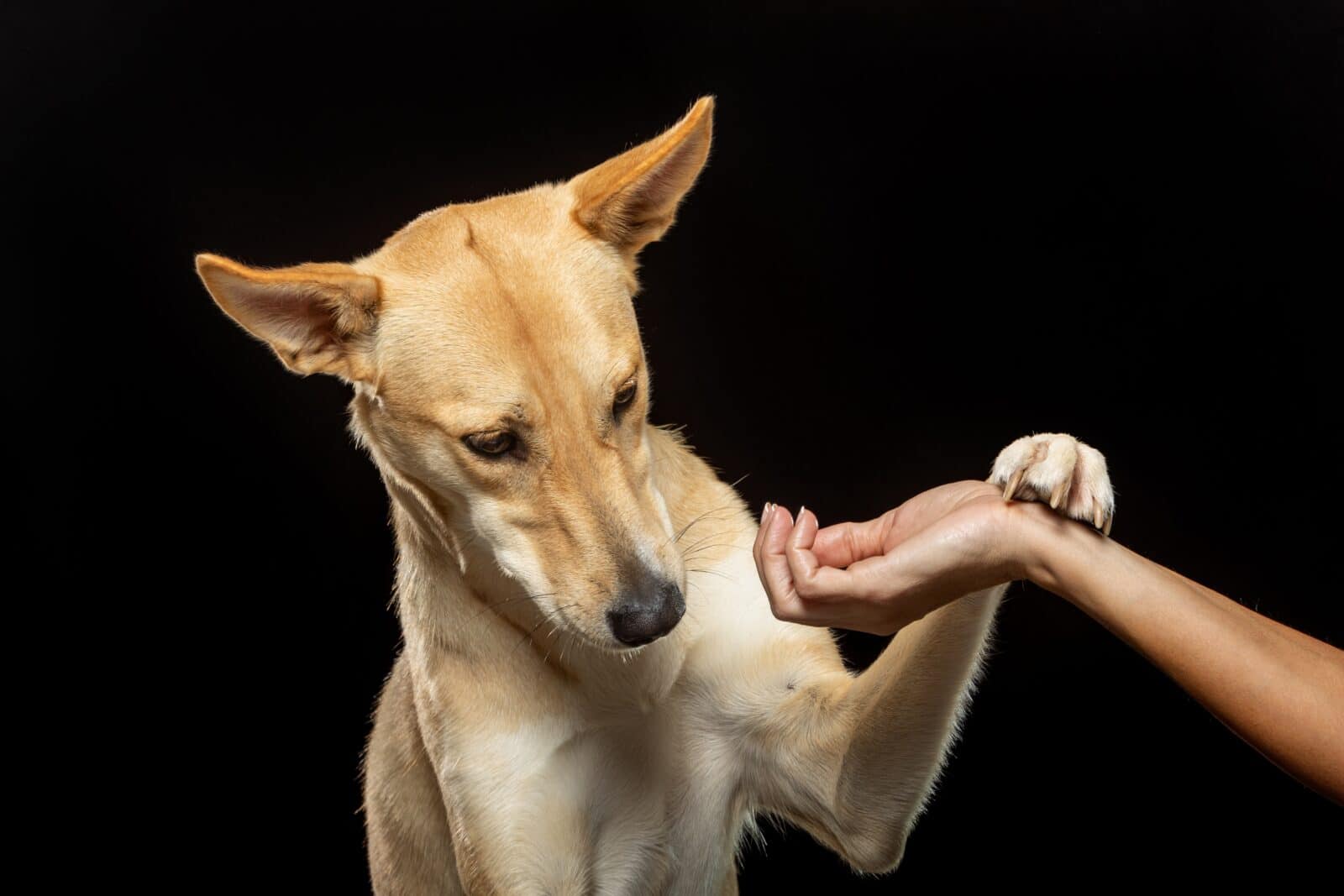
A soft paw during a calm cuddle may be your dog’s small, furry version of holding hands. That matters because dogs are living inside American homes in record numbers, with APPA counting 71 million U.S. dog-owning households in 2025, and many owners now treat dogs less like backyard pets and more like emotional family members.
Assistance dog trainer Rebecca Forrest explains the affectionate side beautifully: “By putting his paw on you whilst you are stroking him, he is further extending contact and reciprocating affection back.”
That quote fits the science, too, because the 2015 Science study by Miho Nagasawa and colleagues found that dog-to-owner gazing raised oxytocin in owners, creating a bonding loop that feels less like training and more like devotion with a heartbeat.
So if your dog rests a loose paw on your leg while their body stays relaxed, their eyes soften, and their breathing slows, that paw may simply be saying, “Stay here, I like who I am beside you.“
Straight-Up Attention-Seeking
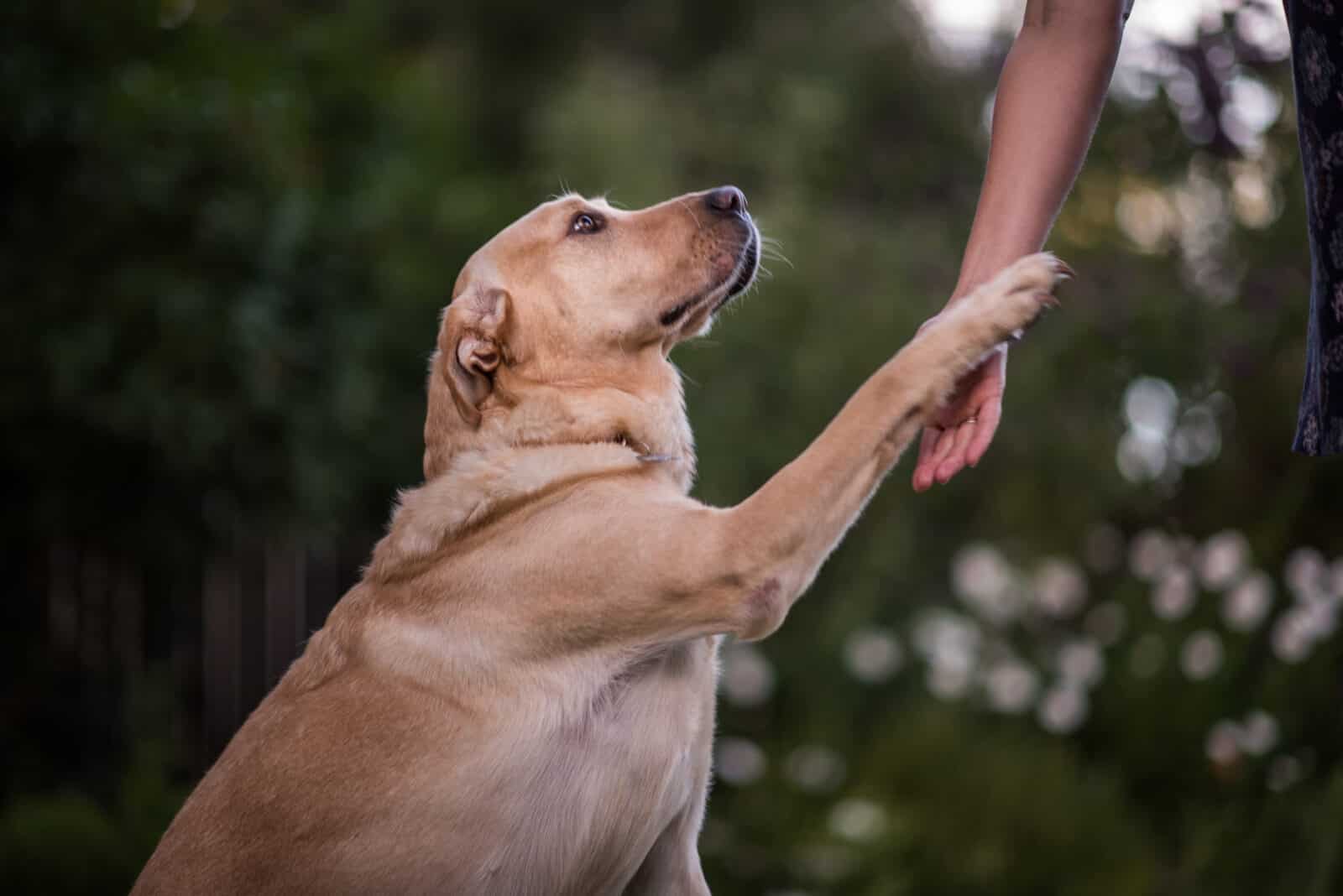
Sometimes the paw is less a love poem and more a doorbell. Your dog has learned that a paw on your knee cuts through the room faster than a stare from the rug, and honestly, they’re not wrong.
PetMD explains in its 2025 guide that pawing is an instinctive puppy behavior that can be useful because humans tend to respond with attention, food, access, or touch. That is basic reinforcement, but in real life, it looks like this: you’re typing, your dog taps you, you look down, say their name, rub their ears, and the lesson lands like a treat.
In a country with 95 million pet-owning households, tiny habits like this become part of daily home language, right next to jingling collars and the thud of a tail against the couch. If the paw shows up every time you stop petting, look at your phone, or talk to someone else, your dog may be saying, “Hey, remember your real job here.“
“I Need Something” Food, Water, Potty, Walk
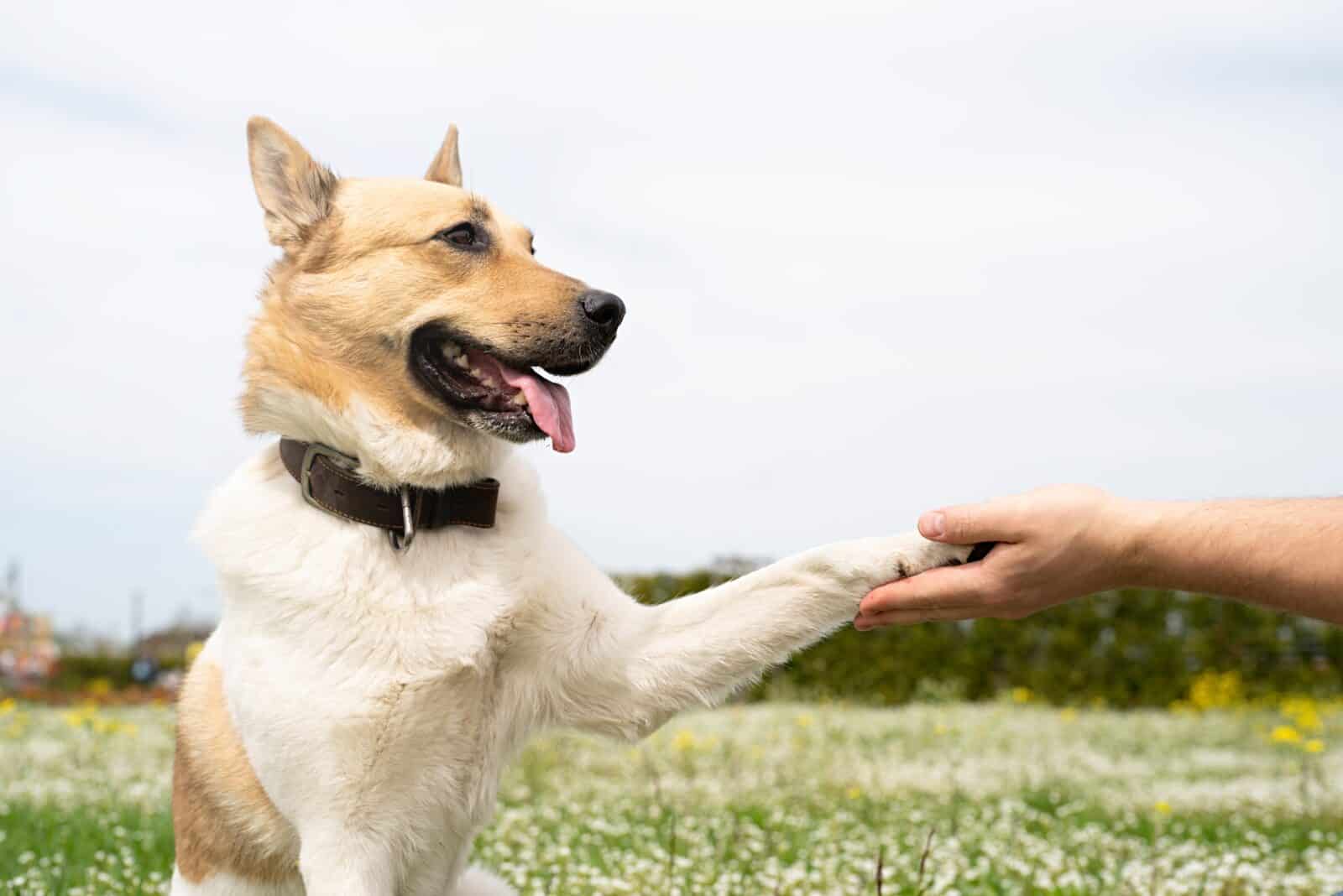
A paw can also be a polite little request with an urgent deadline. PetMD notes that dogs may get restless about 30 minutes before mealtime, and pawing often becomes part of that routine because it works faster than silent hope.
That same tap may happen near the door, beside an empty water bowl, or next to a toy trapped under the couch, and suddenly the paw is less mysterious and more practical. Southern Living also points out that dogs may paw when they want to play, go potty, get water, or reach something they can’t access on their own.
In a household rhythm, this can become almost musical: bowl glance, paw tap, human sigh, dinner scoop. If your dog paws you, then looks at the door, circles the kitchen, nudges a bowl, or leads you down the hallway, don’t treat the paw as the whole message. Treat it as the first word in a sentence your dog has been building with their body.
Anxiety, Stress, Or “Please Comfort Me.”
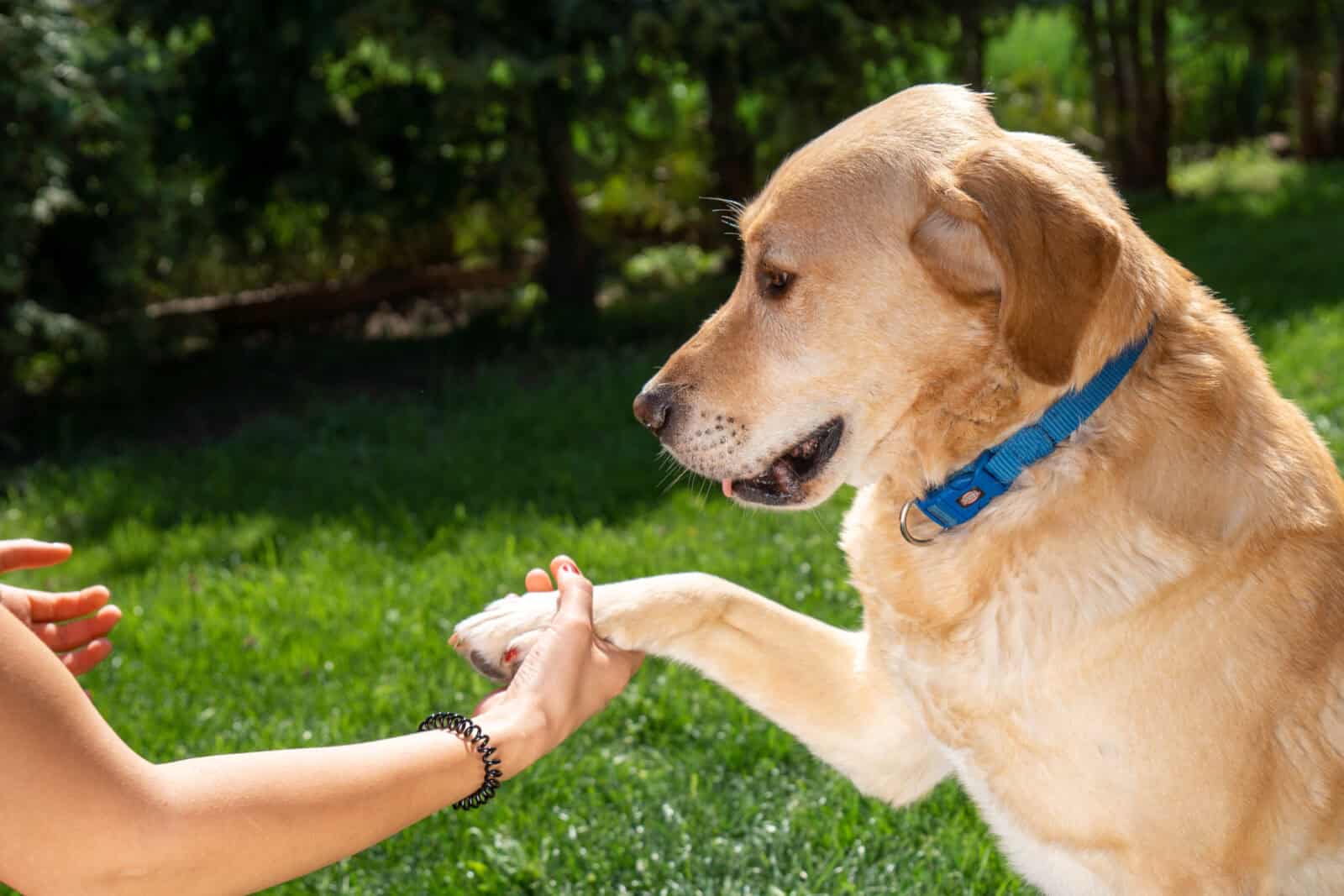
A paw can also tremble with worry. This is where the room matters, the weather matters, the noise matters, and your dog’s whole body starts speaking at once.
ASPCApro says yawning and lip licking may be early signs of stress, especially with a tight mouth and an averted gaze, and notes that rapid panting, dilated pupils, pinned ears, a tucked tail, or even wet pawprints can indicate stress in dogs.
The AKC gives owners another clue through the eyes: “Soft eyes have relaxed lids,” and those soft eyes usually point to a calm or happy dog, not a worried one. So if your dog paws you during thunder, fireworks, a noisy gathering, or a tense moment at home, and then adds lip licking, trembling, hiding, or hard staring, the paw may not be a demand.
It may be a small hand reaching from a storm cloud. That is the moment to lower your voice, reduce pressure, and help your dog find steady ground again.
Learned Trick That Became A Habit
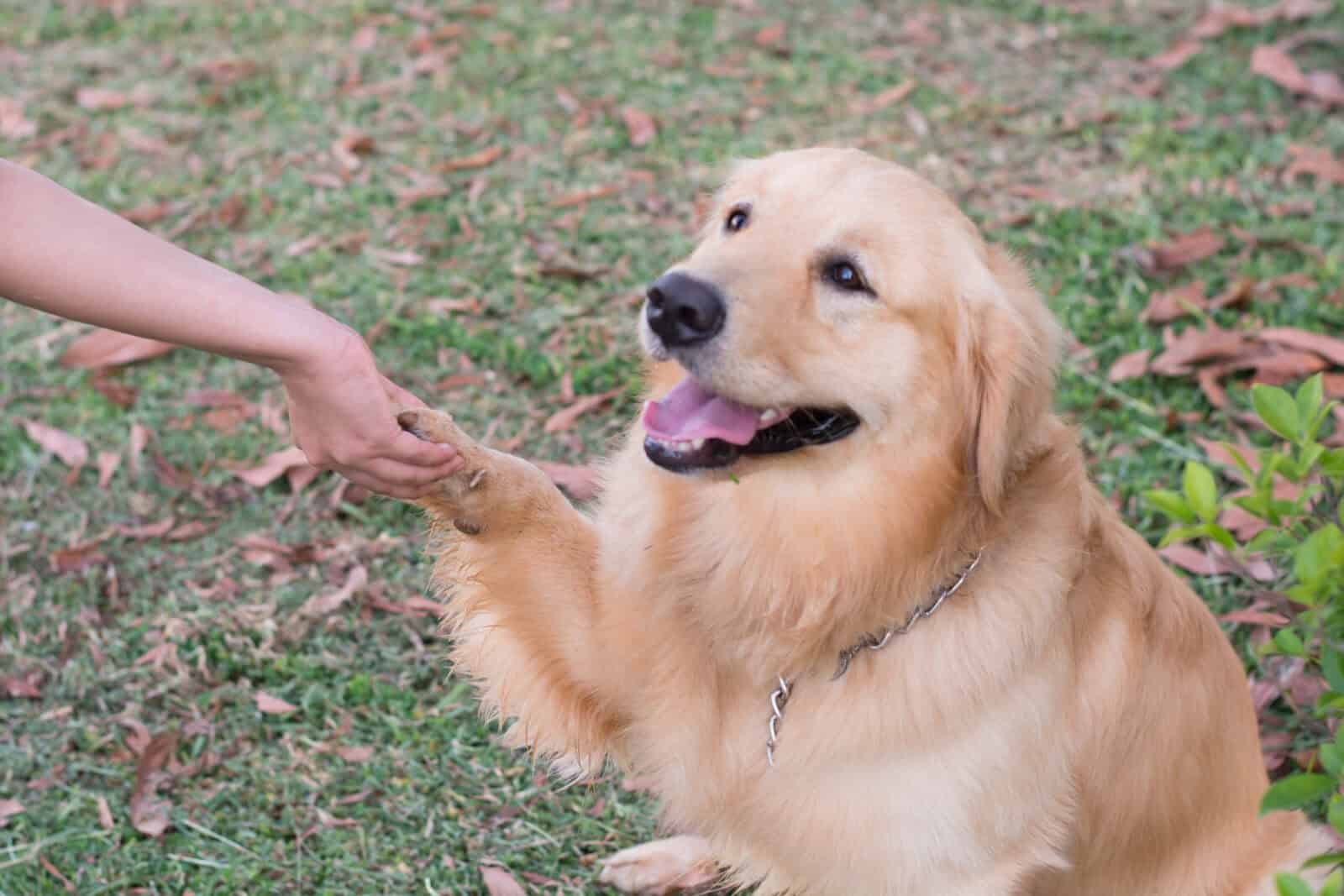
Some dogs paw because somebody once taught “shake,” cheered like they won the Super Bowl, and handed over a treat. Dogs remember that kind of magic. PetMD’s 2025 behavior guide explains that dogs learn pawing is useful because it often brings attention, food, or access, and that turns a cute trick into a daily strategy.
A hypothetical example makes it easy to see: a Labrador learns to shake at 5 months, gets cookies for it, then starts offering the same paw at 5 years old whenever someone stands near the treat jar. Nothing spooky is happening.
The dog simply found a button that opens the human vending machine. With U.S. dog ownership rising to 53% of households in 2025, plenty of families are teaching charming behaviors that later grow legs of their own. If the paw feels constant, ask for a calmer replacement, like “sit” or “go to your mat,” then reward that instead. Your dog still gets a voice, but you get better manners in the room.
Play Invitation And Boredom
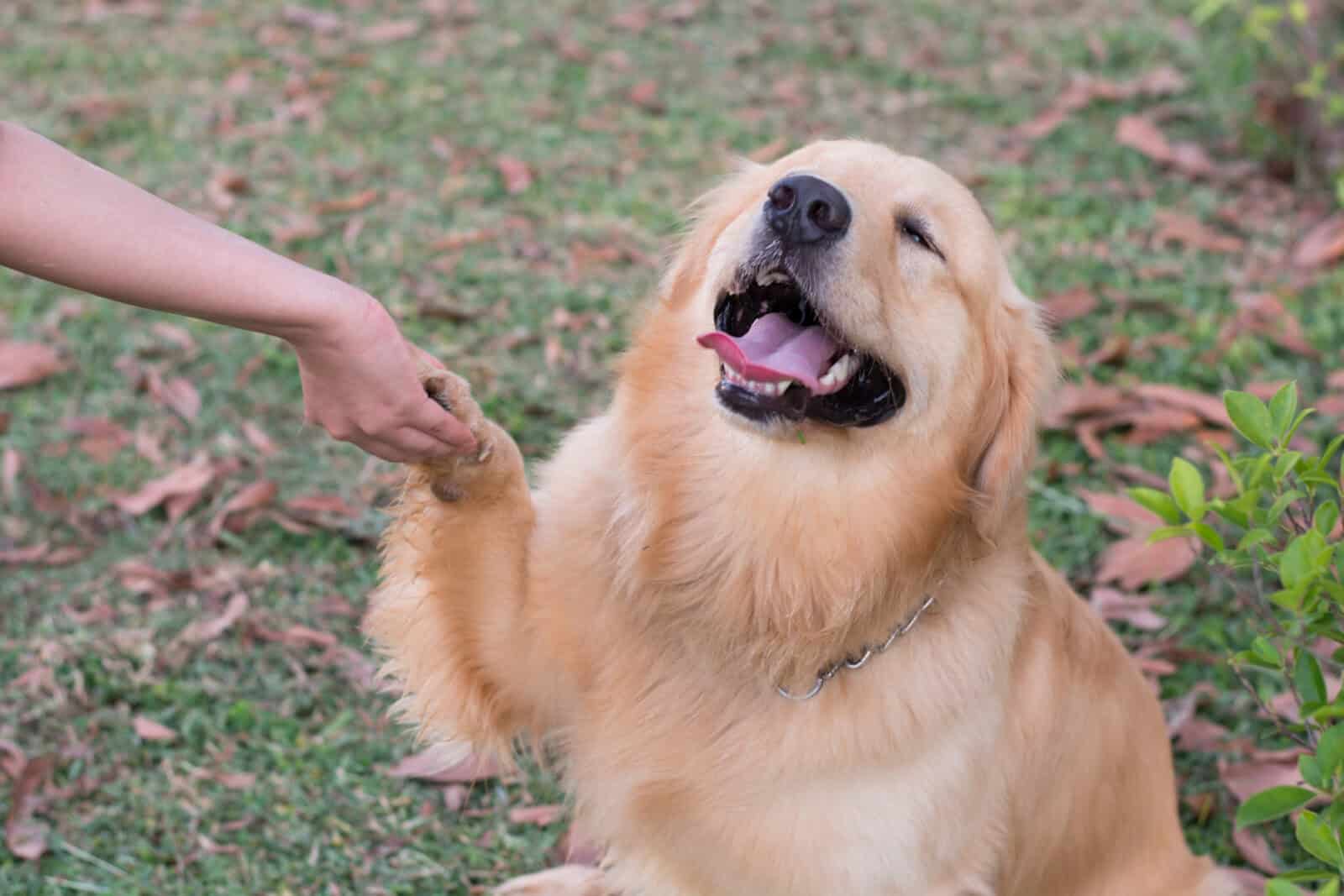
A bouncy paw tap, a play bow, a toy dropped at your feet, and that ridiculous hopeful face usually mean one thing: the fun department has filed a complaint. PetMD says bored dogs may paw to seek affection or to start play, and research on exercise adds another layer. A Scientific Reports study found that dog owners had far greater odds of meeting physical activity guidelines, but the same paper noted earlier U.S. research showing that only 27% of dog owners walked their dogs for at least 150 minutes per week.
That gap matters because dogs with sharp minds and restless bodies often turn the living room into a customer service center. The paw becomes a bell. The toy becomes paperwork. You become the only employee on shift.
If your dog’s paw comes with a wagging body, loose mouth, toy nudges, and quick, happy movement, they may not need deep emotional analysis. They may need ten minutes of tug, a sniff walk, a puzzle feeder, or a backyard sprint that lets the day shake out of their fur.
Reinforcing Their Sense Of Security
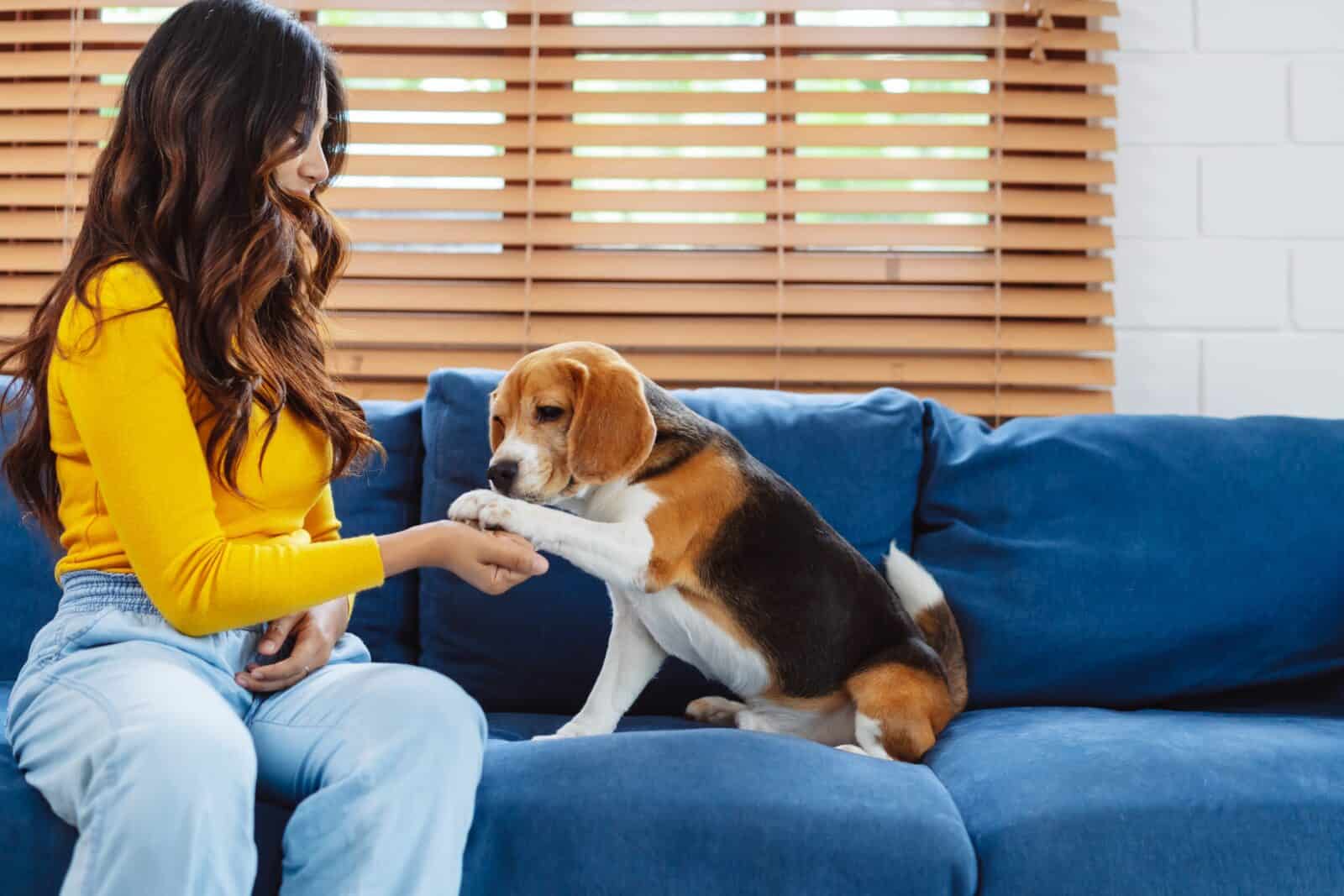
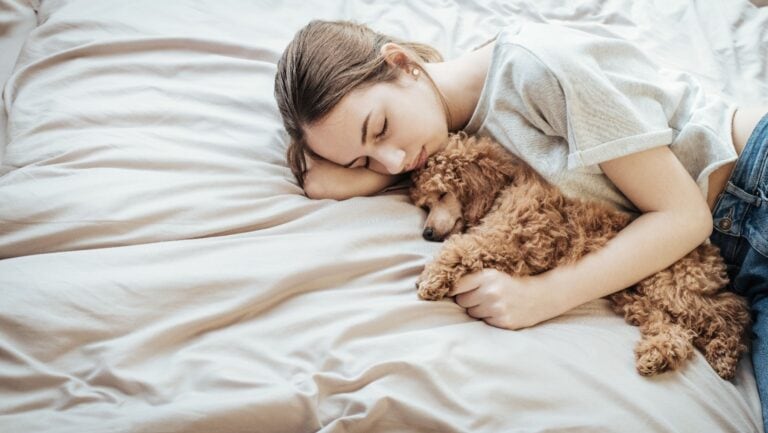
Some pawing is soft security work. Dogs often sleep near humans for warmth, comfort, protection, and that quiet pack feeling, and Southern Living reports that a dog may rest a paw on you during sleep so they know you’re close while still keeping their own space.
That lands differently if you’ve ever had a rescue dog, a nervous dog, or an older dog who checks for you like a lighthouse checks the dark. In 2025, APPA reported 95 million U.S. households with pets, so this kind of nighttime closeness is part of a huge American home story, not just a cute clip online. A paw at night may not ask for food, play, or control.
It may say, I can sleep if I can feel you there. If the body stays loose, the breathing stays even, and the paw rests rather than scratches, it can be a tender little anchor. Your dog has their bed, their blanket, their toys, but your presence may still be the warmest landmark in the room.
Subtle Dominance Or Pushy Boundaries
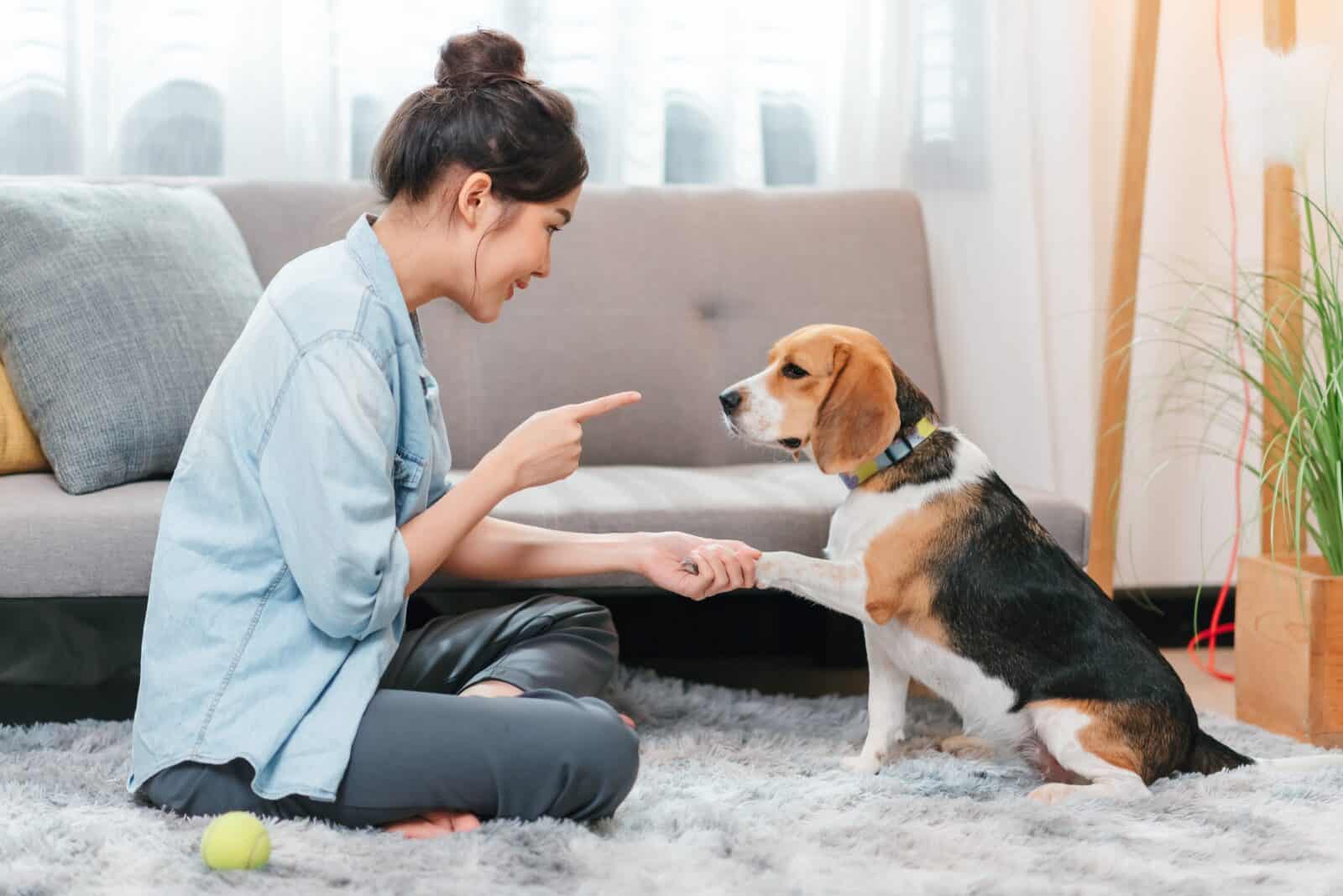
Most pawing is harmless communication, but some pawing gets pushy. You’ll feel the difference when the paw keeps interrupting you, moving your hand, demanding petting, scratching skin, or refusing to stop after you’ve calmly disengaged.
PetMD says unwanted pawing can be redirected by asking for another behavior, such as “sit,” and then rewarding the calmer choice. This is less about labeling your dog as bossy and more about keeping the relationship clear.
Victoria Stilwell’s Positively training guidance puts the larger rule in plain language: “dogs communicate with their entire bodies, not just parts of them.” So look for the pattern. A single paw with soft eyes is different from pawing paired with mounting, guarding, barking in your face, or ignoring basic cues.
With 71 million U.S. households owning dogs in 2025, many owners will encounter both the sweet and pushy versions at some point. The fix is not anger. It’s calm structure, consistent responses, and rewarding the behavior you actually want living in your house.
Sensory Quirk Or Habitual “Stimming.”
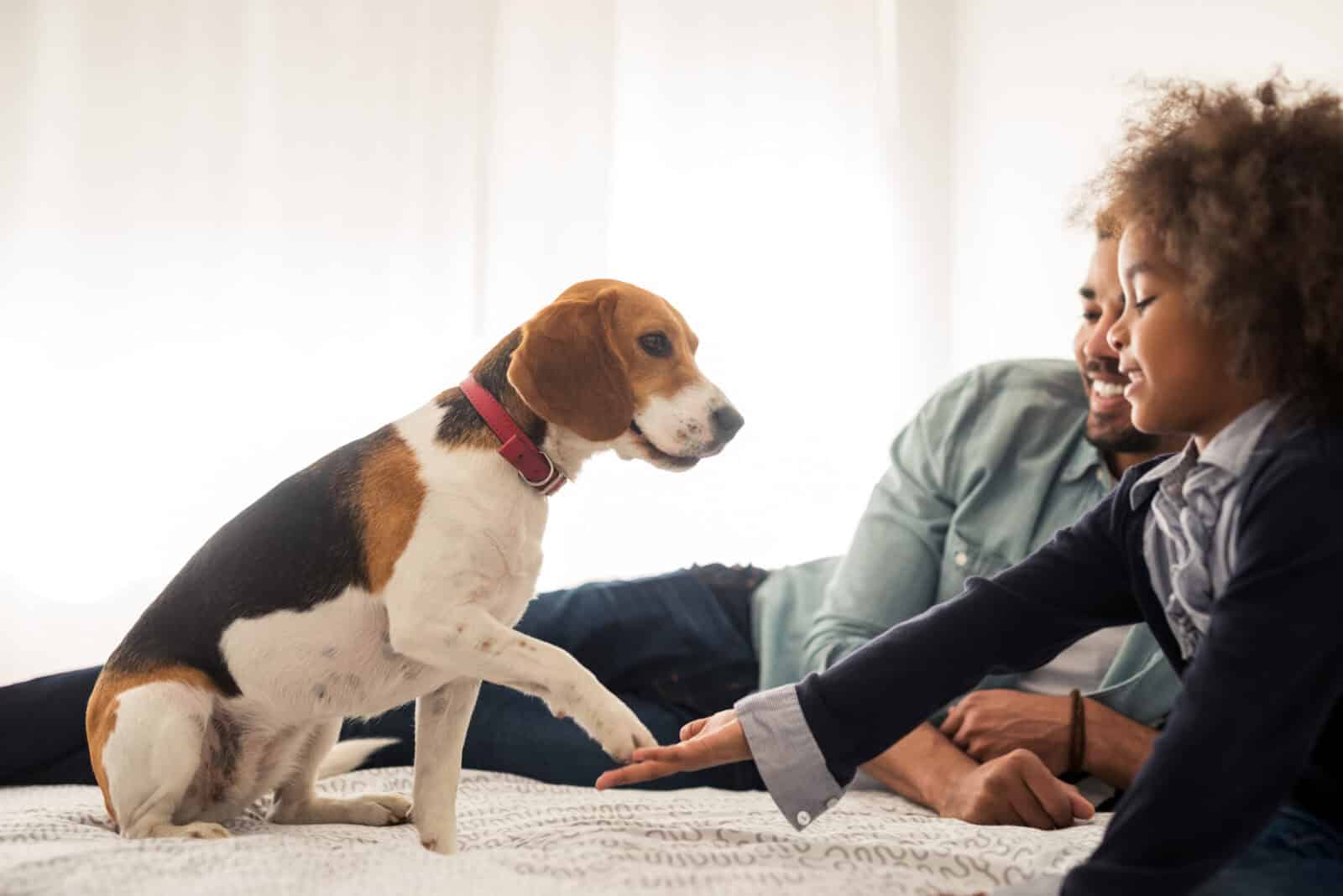
Some dogs paw in ways that don’t clearly ask for food, play, comfort, or access. It may look repetitive and rhythmic, almost as if the paw has become its own little metronome. That does not mean you should panic, but it does mean you should watch.
A veterinary review on repetitive behaviors in dogs describes compulsive patterns such as spinning, tail chasing, light chasing, and self-directed licking. PetMD’s 2026 canine compulsive disorder guide says repetitive, hard-to-interrupt behaviors can interfere with daily life and may involve genetics, stress, brain chemistry, pain, skin disease, or neurologic problems.
PetMD also notes that canine compulsive disorder often begins between 6 and 24 months of age, which gives owners a useful timeline if a young dog starts repeating odd behaviors. Paw tapping alone may be harmless, especially if your dog can stop and relax. But if the pawing escalates, ignores your response, disrupts sleep, or arrives with licking, pacing, staring, or distress, that little rhythm may deserve a vet’s ear.
Pain, Nerve, Or Mobility Issues
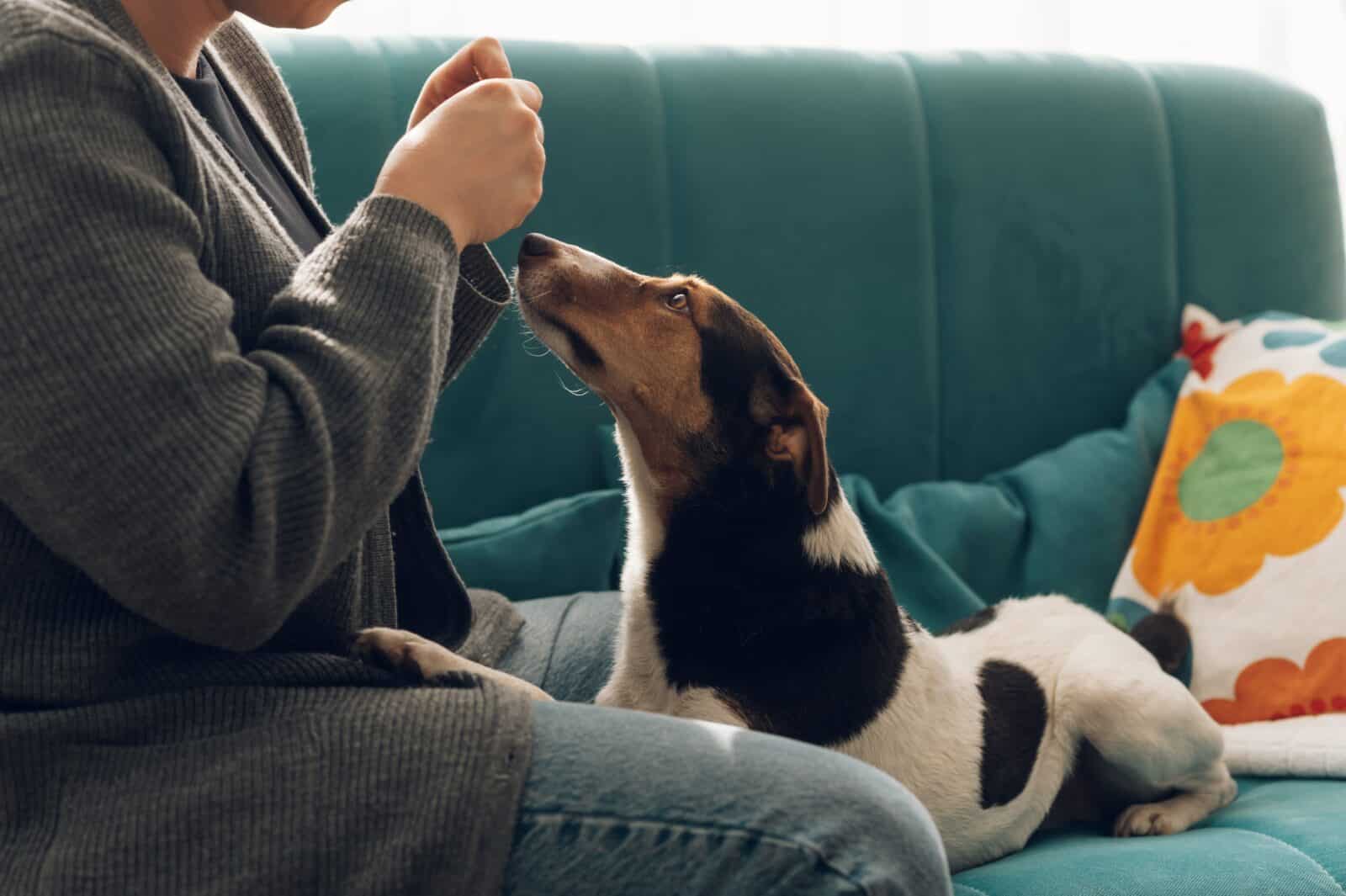
Not every paw story starts in the heart. Some start in the body. If your dog suddenly paws differently, presses weight into you, drags toes, knuckles a paw, limps, avoids stairs, or hesitates before jumping onto a couch they used to conquer like a mountain goat, pay attention.
A 2024 PLOS One study reviewed videos of 296 canine athletes completing a dog-walk obstacle and found substantial variation in paw placement and obstacle performance, noting that movement patterns warrant further study, as they may relate to injury risk.
That study focused on agility dogs, not sleepy house dogs, but the broader lesson travels well: paws reveal movement, and movement can reveal strain. PetMD’s 2026 compulsive-behavior guidance also stresses that medical causes such as pain, skin disease, or neurologic conditions need to be ruled out before calling a behavior purely emotional.
So if pawing appears suddenly or arrives with physical changes, don’t write it off as clinginess. Your dog may be using your body as a brace, a comfort, or the nearest sturdy thing in a room that suddenly feels harder to cross.
Copying You And Learning Your Routines
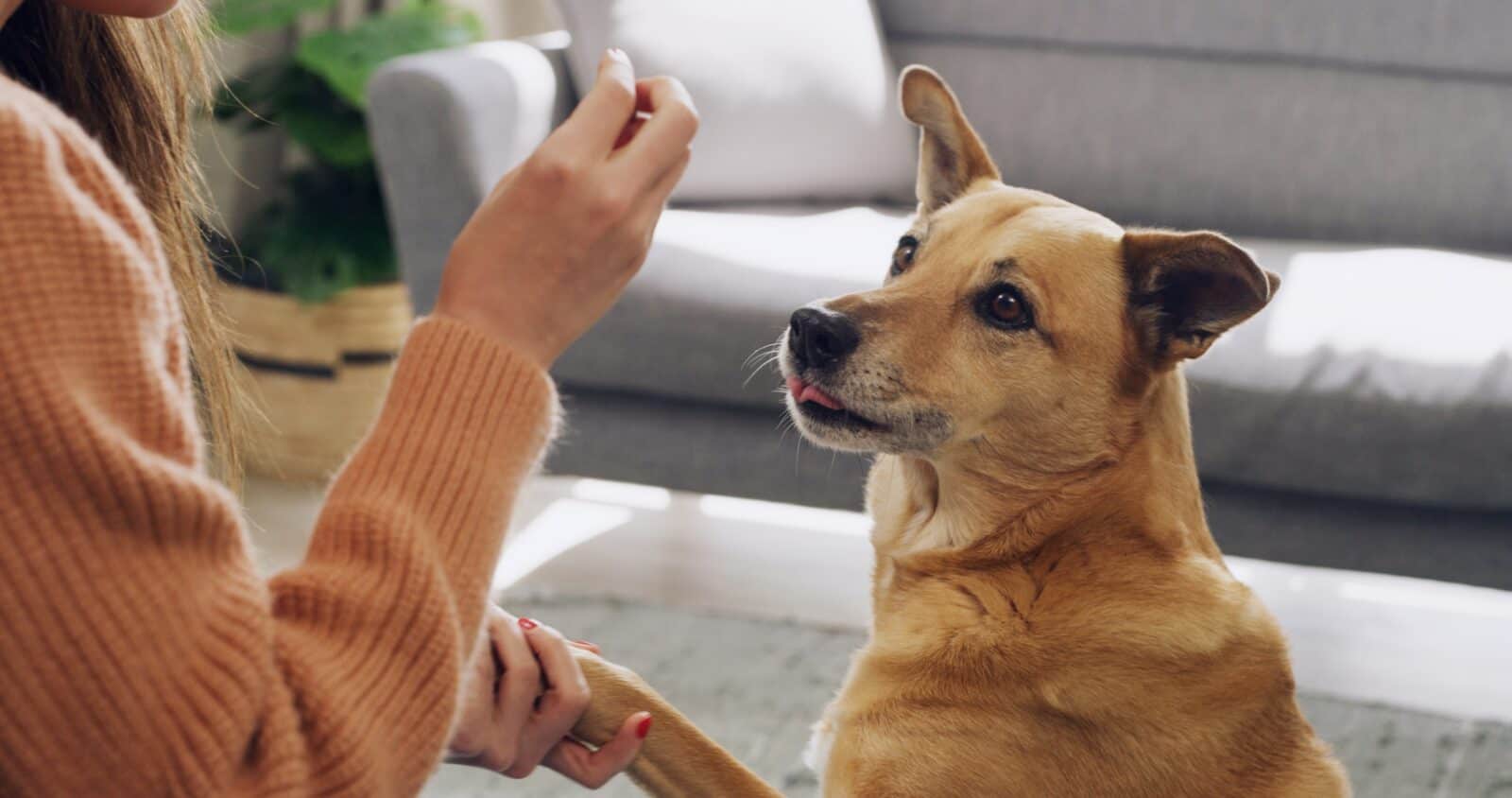
Dogs study us like little household detectives. They learn the music of keys, shoes, laptops, phones, coffee machines, leash hooks, and the sigh you make before standing up.
Merck Veterinary Manual notes that many dogs with separation-related distress show signs within the first 15 to 30 minutes after an owner leaves, and some begin reacting before departure when the owner puts on shoes, grabs keys, or walks toward the door. That does not mean every paw before work is separation anxiety, but it does show how sharp dogs can be at reading routine.
A hypothetical scene makes it clear: you close your laptop at 6 p.m. every day, then walk the dog, so by 5:58 your dog places one paw on your knee like a tiny calendar reminder. Another dog may paw when you pick up your phone because phones often steal attention.
This is not random. It is pattern recognition with fur. If your dog paws at certain moments every day, ask what usually happens next. The answer may be sitting in your own routine, wearing shoes, and holding car keys.
Your Dog’s “Signature” Communication Style
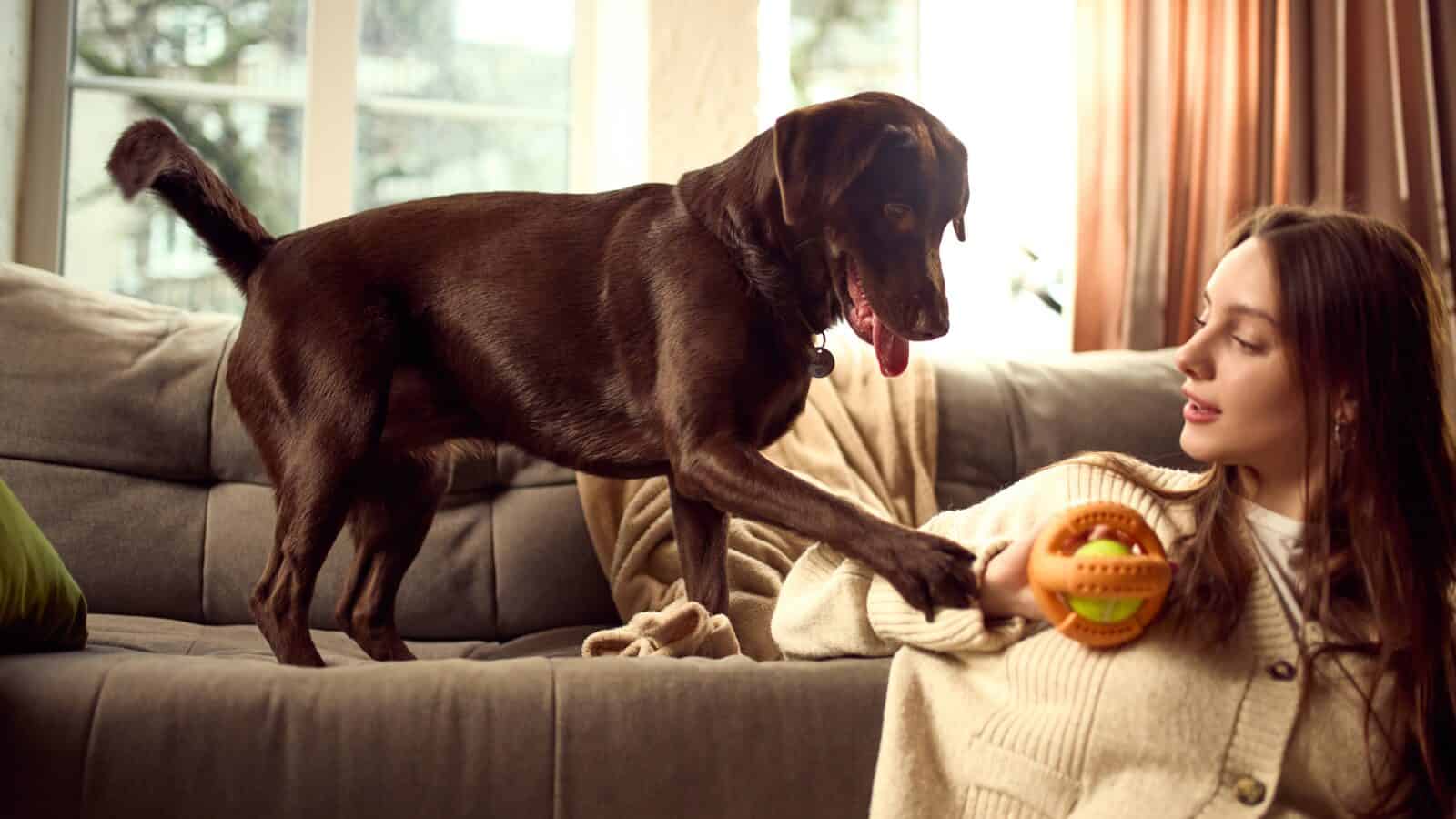
Finally, pawing may simply be your dog’s personal accent. Some dogs talk with barks, some with dramatic sighs, some with nose nudges, some with full-body leaning, and some seem born with a paw that writes little messages on human skin.
PetMD says pawing is a natural communication tool dogs use to express needs such as food, attention, or access, and the AKC body-language guidance reminds owners that eyes, posture, and context help explain what the dog feels.
In a nation with 71 million dog-owning households in 2025, there is no single paw dictionary that fits every couch, kitchen, rescue story, puppy class, or bedtime routine. Your job is to learn your dog’s dialect.
A relaxed paw after petting may mean affection. A paw near the door may mean potty. A paw during thunder may mean fear. A sudden odd paw may mean pain. Over time, the paw becomes data, but tender data. It tells you what your dog has learned, what they need, what they fear, and how close they feel safe enough to come.
A dog’s paw is small, but it can carry a whole weather system. Love, hunger, boredom, stress, habit, and pain can all arrive through the same soft tap. With U.S. dog ownership still rising and about 4 million more dog-owning households added from 2024 to 2025, learning that language is less of a pet trick and more of a home skill. The better you read the paw, the better you hear the dog behind it.
Key Takeaways
- Soft paws and relaxed body language often indicate affection and bonding.
- Pawing near food, doors, toys, or water often means your dog needs something.
- Pawing with lip licking, trembling, pinned ears, or hard eyes deserves extra attention.
- Sudden or unusual pawing can indicate pain, nerve issues, or changes in mobility.
- If pawing becomes pushy, redirect your dog to a calmer behavior and reward that instead.
Disclaimer – This list is solely the author’s opinion based on research and publicly available information. It is not intended to be professional advice.
Like our content? Be sure to follow us