Toy Story 5, released this month, is an eye-opener for parents torn between traditional toys and screen time.
The villain in Toy Story 5 is not a vintage doll with cracked porcelain eyes or a stuffed bear with a grudge. It is a tablet.
Named Lilypad and voiced by Greta Lee, she arrives in Bonnie’s room as the newest, shiniest plaything, and within minutes, the franchise’s old guard, Woody, Buzz, and Jessie, find their entire reason for existing under threat. Pixar has spent thirty years asking what happens to toys when kids grow up. This time, the question is what happens to toys when kids would rather hold a screen?
It is a strange thing for a studio that sells plush versions of its own characters to interrogate. But the anxiety Toy Story 5 taps into did not start in a writers’ room. It has been building in living rooms for years, and the movie’s timing puts it directly in front of the audience most likely to feel it.
Why a kids’ movie is having an identity crisis about kids and screens
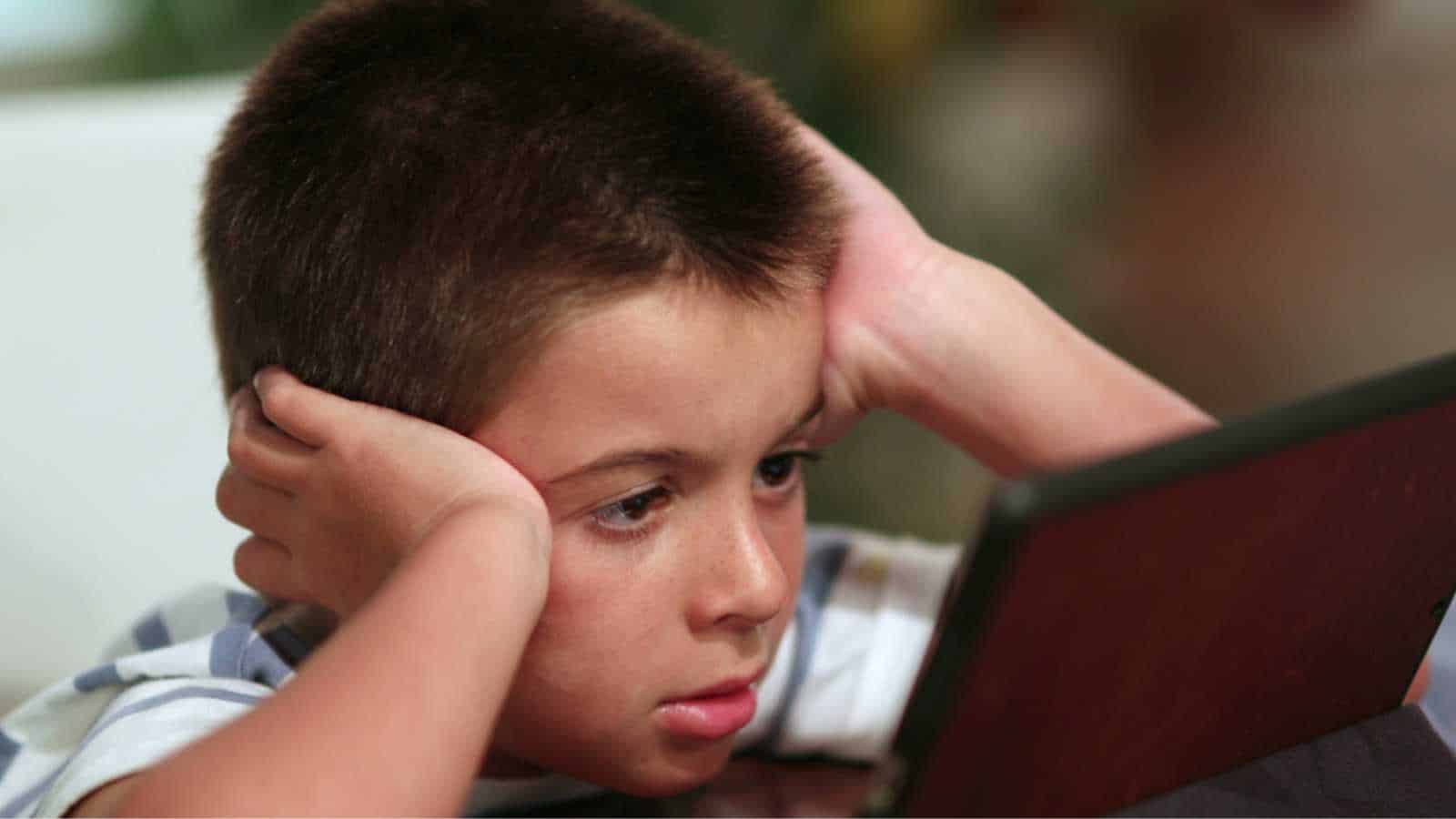
Pixar’s films are usually metaphors for adult experiences wearing toy costumes, separation anxiety, mortality, and the fear of becoming obsolete. “Toy Story 5” is less abstract than that.
Director Andrew Stanton has described the film’s premise simply as “Toy meets Tech.” Jessie and the other toys spend the film trying to win Bonnie back from a device that does not get jealous, does not break, and does not need a kid to use its imagination to come alive.
Critics noticed the film does not fully commit to the bit. The Boston Globe’s Odie Henderson wrote that the movie does not follow through on its initial premise that technology had turned people into screen-dependent zombies. That hesitation is its own kind of data point. A studio built on toys could not bring itself to make the tablet purely evil, because the parents buying tickets are not raising kids in a world where screens are optional.
The numbers behind the worry in the audience
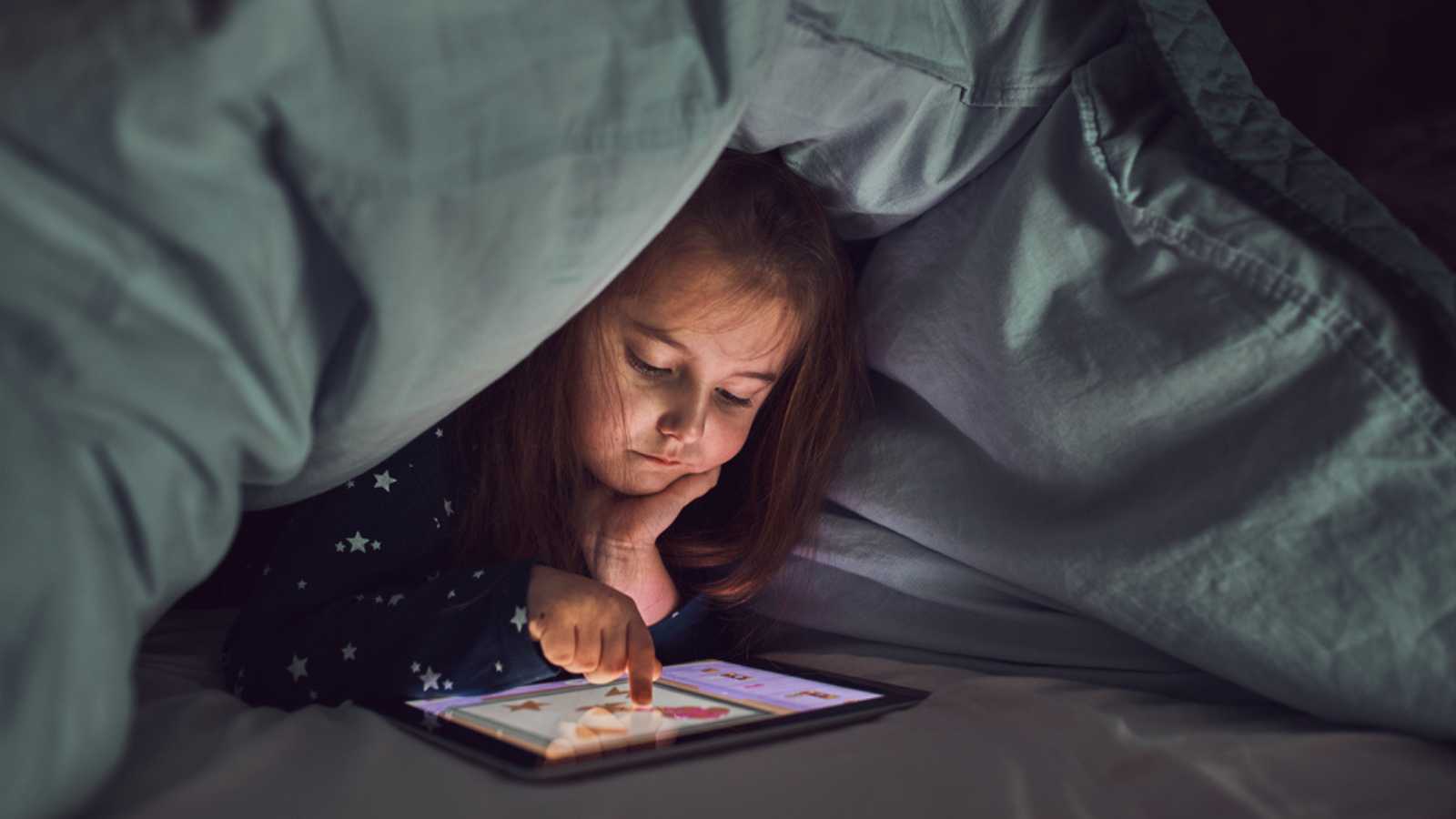
By age 2, 40% of children already have their own tablet. By age 4, that climbs past half. Average daily screen time for kids under 8 has held around two and a half hours, but Common Sense Media’s research found the composition has shifted hard toward gaming and short-form video, the formats parents tend to find most anxiety-inducing.
Parents of younger children are more likely than parents of school-age kids to say they hand over a phone to calm their child down, which is precisely the dynamic the movie plays for laughs and then for discomfort, as Bonnie drifts toward Lilypad because the device is simply easier to be soothed by.
Pew has consistently found that the overwhelming majority of parents say they are concerned about how much time their kids spend on screens, which means the movie’s central tension was never going to be a hard sell. It already lived in the room.
The part of the story that the toy industry is quietly counting on
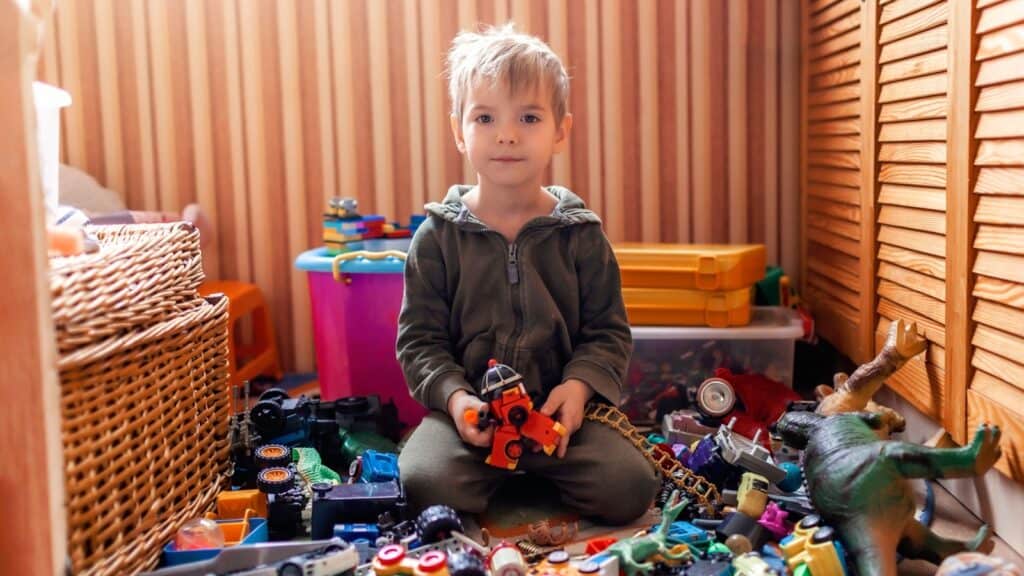
Parents say they are worried about screens, and that worry is one of the things keeping the traditional toy industry alive.
Industry analysts tracking the traditional toys and games market point to rising parental concern about excessive screen time as a factor strengthening demand for blocks, board games and building sets, even as the market overall grows modestly. Games and puzzles, in particular, are being marketed and bought explicitly as an antidote to screen time, not just as toys in their own right.
So the same anxiety that Toy Story 5 stages as an existential threat to its characters is, for toy companies, a genuine selling point. Worried parents are good for plastic dinosaur sales. That irony does not make it into the trailer, but it lies beneath the whole premise.
What the research actually says, which is messier than the movie

If Toy Story 5 wants viewers to leave convinced that screens are coming for imagination itself, the research is not nearly that clean.
A 2025 review of 35 studies on children’s play patterns found that free, unstructured play is consistently linked to creativity, emotional regulation, and social problem-solving, which aligns with the movie’s assumptions. But the same body of research describes the relationship between screens and imagination as more nuanced than a simple swap. One study of preschoolers found no relationship at all between time spent on gadgets and imaginative thinking and instead found that how a child uses a screen, alone versus with a sibling or peer, mattered more than whether they used one.
That distinction, control, and companionship over the device itself is something Toy Story 5 gestures at without quite landing on. Lilypad is not menacing because she is a screen. She is menacing because she replaces a relationship, the back and forth of pretend play with other kids and toys, with something that responds to Bonnie alone.
Researchers studying preschoolers’ digital play have flagged exactly that kind of contingent, responsive interaction as the variable that actually predicts healthy development, not screen time as a raw number.
What parents are left to figure out

None of this resolves into a tidy verdict, and that is probably the most honest thing about the movie’s timing. Parents are not choosing between a tablet and a cowboy doll in the abstract. They are choosing in the middle of a school night, deciding whether forty minutes of quiet is worth the trade-off, and doing it without consensus from pediatricians, psychologists, or the toy aisle to lean on.
Toy Story 5 does not settle that argument. It just puts a beloved cast of characters inside it, which may be the point.
A movie cannot tell a parent the right number of minutes of screen time. What it can do is make the stakes feel personal again by handing the fight to Woody instead of a research panel, and trusting that the discomfort in the theater is the same discomfort already sitting on the kitchen counter at home.
Disclaimer – This list is solely the author’s opinion based on research and publicly available information. It is not intended to be professional advice.
Like our content? Be sure to follow us.