Trump gets poor global marks as fewer countries see U.S. as a reliable partner
The United States has long depended on a simple global assumption: that despite political shifts in Washington, America would remain a steady, predictable partner on the world stage. That assumption is now under visible strain.
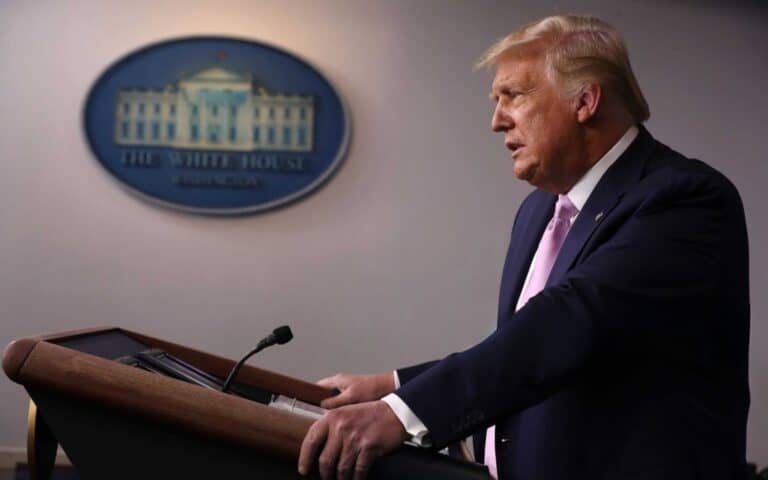
A new 36-country Pew Research Center survey shows that confidence in President Donald Trump’s handling of global affairs is low across much of the world, and, more importantly, fewer people now see the United States itself as a reliable partner. The findings land at a sensitive moment in Trump’s second term, when foreign policy decisions are once again shaping how allies and rivals interpret American intentions.
What makes the results stand out is not just the criticism of one leader, but the broader erosion of trust in the United States as a system of global leadership.
Trump’s global ratings point to a wider confidence Problem
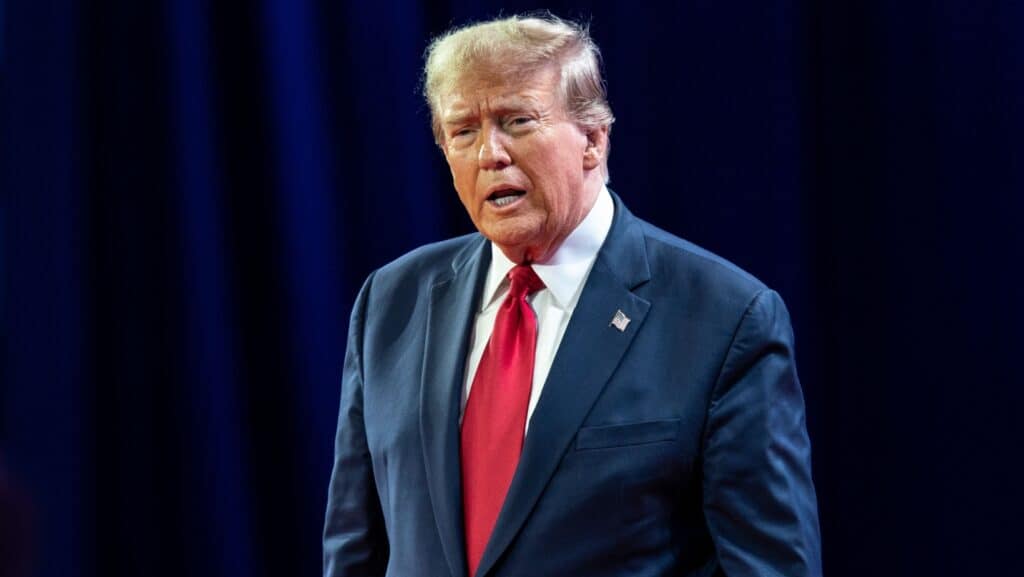
According to Pew Research, 23% of adults across 36 countries say they have confidence in Donald Trump to handle world affairs. That means more than three-quarters of respondents express little or no confidence in his leadership on global issues.
In 26 of the 36 countries surveyed, confidence in Trump stands at 30% or lower, and in several places it falls into single digits. Even more telling, none of the countries measured showed a net improvement in views of Trump compared with earlier trends.
This is not simply a popularity contest. In international politics, perceptions of leadership often translate into diplomatic flexibility. When confidence drops, negotiations become harder, and skepticism becomes the default setting.
The bigger shift: trust in America itself is falling

While Trump’s personal ratings are central to the survey, the deeper shift is about the United States as a global actor.
Across the 36 countries, the number of people who describe the U.S. as a reliable partner has dropped sharply compared with 2022 levels during the Biden administration. In some countries, the change is dramatic.
Canada offers the clearest example. In 2022, 83% of Canadians saw the United States as a reliable partner. By 2026, that figure had collapsed to 35%, as noted by Montreal News.
This kind of decline is not just statistical noise. Canada is one of America’s closest allies in trade, defense, and energy. When trust falls so sharply there, it signals that concerns are not confined to distant regions or political rivals.
Instead, they are appearing inside the United States’ core alliance network.
The bigger concern is America’s reliability

The more important story is not Trump’s personal standing alone. It is the decline in the United States’ view as a dependable partner.
That distinction matters. Presidents change. Alliances, military relationships, and economic systems are expected to endure. But when confidence in the country’s reliability falls, the concern becomes structural rather than personal.
Canada offers one of the clearest examples of that shift. In 2022, 83 percent of Canadians described the United States as a reliable partner. In 2026, only 35 percent said the same. That is a dramatic fall in one of America’s closest relationships, in which trade, geography, defense, and culture are deeply intertwined.
Such a decline does not mean Canada is breaking from the United States. It means the relationship is being viewed with more caution. That is the kind of change that can quietly alter how governments plan, how businesses invest, and how allies prepare for future policy swings.
Why allies are paying closer attention now
The timing matters because Trump’s second term has revived a more transactional view of U.S. foreign policy.
Tariffs, immigration restrictions, disputes over alliances, the handling of wars, and skepticism toward multilateral commitments all feed a broader perception that American policy can shift sharply depending on domestic politics.
For U.S. allies, the concern is practical. They do not need to agree with Washington on every issue. But they do need to know whether agreements will hold, whether commitments will withstand political pressure, and whether the United States will still consider their interests when major decisions are made.
That confidence appears to be weakening. According to Pew research, only 63% of adults say the United States does not contribute to global peace and stability.
That perception can have real consequences. Countries that feel less certain about U.S. dependability may build stronger regional alliances, reduce exposure to U.S. policy shifts, or seek additional partnerships with other major powers. They may still work with Washington, but with more backup plans.
Tariffs have become a symbol of unpredictability
Trade policy has become one of the clearest ways foreign publics experience American decision-making, and under Trump, tariffs have increasingly shaped how the United States is perceived by key trading partners.
Approval of Trump’s tariff approach is especially low in countries with deep economic ties to the U.S., where the policy is often seen less as a technical economic tool and more as a signal of how Washington intends to manage global trade relationships.
That concern is reflected in comments from Canadian officials responding to shifting trade dynamics. Canada’s Finance Minister François-Philippe Champagne has noted the growing global understanding of Washington’s approach, saying, “I think it is pretty well understood now in the world that the view of the American administration is that there’ll be a price to access the American market.”
For American voters, tariffs are often framed in a domestic context. But abroad, the interpretation is different and often more cautious. Many foreign governments and businesses see tariffs as a sign that trade rules may shift quickly. And that long-term cooperation with the United States may depend on short-term leverage rather than stable expectations.
That is why tariffs matter beyond economics. They become a test of whether partners believe U.S. commitments are durable.
Foreign policy disputes are shaping the U.S. image
The concerns are not limited to trade. Trump also receives low marks across several major global issues, including Iran, Gaza, the Russia-Ukraine war, Greenland, Venezuela, immigration and humanitarian aid.
Iran stands out as one of the most widely criticized areas. A large share of adults across the countries surveyed disapprove of Trump’s handling of Iran. As noted by Pew Research, about 61% of Americans disapprove of Trump’s handling of the conflict, while 37% approve,
These findings help explain why the debate over U.S. reliability has become more urgent. Foreign publics are not reacting to one policy in isolation. They are responding to a pattern of decisions that many interpret as more unilateral, more unpredictable, and less attentive to outside concerns.
The democracy question is becoming harder to separate from foreign policy

America’s image abroad has long rested on more than military strength or economic influence. It has also depended on the belief that the United States represents democratic values, personal freedom, and political stability.
That part of the American brand is now under growing pressure. In many countries, confidence in the United States’ commitment to civil liberties has weakened compared with previous years, adding to broader questions about the consistency of its global role.
This shift matters because soft power is strongest when a country is seen as both influential and trustworthy in principle. When perceptions tilt toward power without the same level of moral credibility, influence becomes more transactional.
Countries may continue working with the United States, but the basis of that cooperation becomes less about shared ideals and more about practical necessity.
What this means for America’s place in the world
The survey does not suggest that the United States is losing its central role. That would be too simple. America remains deeply embedded in the global system through its economy, military alliances, technology companies, universities, media, and financial power.
The sharper point is that America’s central role is becoming less automatic. More countries appear to be questioning whether U.S. leadership is stable enough to rely on without hesitation.
That shift can slowly change international politics. Allies may still sign agreements, but with more safeguards. Trading partners may still negotiate, but with more caution. Smaller countries may still seek U.S. support, but also look for alternatives. And Rivals may use the decline in trust to argue that Washington is no longer the steady leader it claims to be.
The world is not turning away from the United States. It is recalibrating its expectations.
The real warning behind the numbers
The deeper warning for Washington is that global leadership is not built on power alone. It also depends on predictability, credibility, and the belief that promises will last longer than one election cycle.
Trump’s second term has made that question harder for many countries to answer confidently. The United States remains impossible to ignore, but that does not make it easy to trust.
That may be the most important lesson in the data. America still has enormous influence, but influence without trust becomes harder to use. The world is still watching Washington closely. It is simply watching with more doubt than before.
Disclaimer – This list is solely the author’s opinion based on research and publicly available information. It is not intended to be professional advice.
Like our content? Be sure to follow us