AOC’s Billionaire Wealth Comments Reignite America’s Debate Over Money and Power
A billion dollars is not wealth. It is weather with a private security team. It can bend elections, swallow companies, buy media platforms, tilt tax debates, and still sit so far from daily life that most Americans can only measure it against rent, grocery bags, credit card debt, and the cold little jolt of a hospital bill.
Alexandria Ocasio-Cortez’s May 2026 comments on Ilana Glazer’s “It’s Open” podcast landed like a match in a dry field. TheWrap reported that she argued billionaire fortunes do not come from ordinary earnings, but from market power, broken rules, labor abuse, and workers being paid less than the value they create.
The numbers show why that line caught fire so fast. Federal Reserve data shows the top 1% of U.S. households held 31.7% of all household wealth in the third quarter of 2025, the highest share since the Fed began tracking the data in 1989. CBS News reported that this top group held about $55 trillion in assets, roughly equal to the wealth held by the bottom 90% of Americans combined.
So when AOC says America has built a myth around billionaire wealth, she is not strolling into a polite economics chat. She is stepping into the loudest money argument in the country.
The public mood has changed, too, and it is not exactly whispering. The Harris Poll’s 2025 Americans and Billionaires Survey found that 53% of Americans believe billionaires threaten democracy, up 7 points from 2024, and 73% say the wealth gap is a serious national issue.
At the same time, 60% still say they want to become billionaires someday, which may be the most American contradiction in the whole debate. We resent the castle, then wonder what the sunset looks like from the balcony. Here are 12 things AOC’s billionaire wealth comments reveal about America’s money debate.
The Wealth Gap Has Hit Record Levels
The wealth gap is no longer a shadow in the background. It is standing in the middle of the room, wearing a very expensive watch.
Federal Reserve data shows the top 1% held 31.7% of U.S. net worth in Q3 2025, a record share since the data series began in 1989, and CBS News reported that their roughly $55 trillion in assets nearly matched the wealth of the bottom 90% combined.
Oxfam America’s 2025 analysis adds an even sharper edge: between 1989 and 2022, the poorest household in the top 1% gained 987 times more wealth than the richest household in the bottom 20%.
That is the kind of number that makes “work hard and save” sound painfully small. AOC’s comments landed because many Americans already feel that the national ladder has not disappeared, but someone moved the top rungs into a gated room.
Billionaire Wealth Is Accelerating at Unprecedented Rates

The billionaire class is not just rich. It is gaining speed like a private jet with no turbulence. The Institute for Policy Studies reported in January 2026 that the United States had 935 billionaires at the end of 2025 with a combined $8.1 trillion in wealth, up from 813 billionaires worth $6.7 trillion at the end of 2024.
The same analysis found that the 15 richest Americans, each worth over $100 billion, saw their combined fortunes jump 33% in one year to $3.2 trillion, more than double the S&P 500’s 16% gain. UBS Global Wealth Management also found that U.S. billionaire wealth rose 18% in 2025 alone.
For regular households, a good year might mean paying down credit card debt. For the very top, a good year can mean adding the GDP of a mid-sized country to a balance sheet.
Public Opinion Has Turned Against Billionaires

Americans still love a success story, but the billionaire story now comes with side-eye. The Harris Poll’s 2025 Americans and Billionaires Survey found that 53% of Americans believe billionaires threaten democracy, up from 46% in 2024, and 69% wish billionaires played a smaller role in U.S. politics.
That does not mean the country has stopped admiring wealth. Harris also found that 64% agree that billionaires hold knowledge for financial success, while 60% say they want to become billionaires one day. That is the tension AOC tapped into so cleanly.
People can admire the hustle and still worry that extreme wealth has become too powerful, too insulated, and too good at whispering in Washington’s ear. America has not fallen out of love with money. It has started asking for ID.
The “Myth of Earning” Reflects Growing Skepticism About Meritocracy
AOC’s “myth of earning” argument stings because meritocracy has always been one of America’s favorite bedtime stories. Work hard, take risks, build something, win big.
That story still matters, but Oxfam America’s 2025 report makes it harder to tell without a pause: from 1980 to 2022, the share of national income going to the top 1% doubled, while the share going to the bottom 50% fell by one third.
CBS News also quoted Mark Zandi, chief economist at Moody’s Analytics, saying, “Household wealth is highly concentrated and becoming steadily more concentrated.” That line gives AOC’s claim a sober economic backbone.
The debate is no longer just about envy. It is about whether the rules still reward effort or reward ownership, scale, inheritance, market dominance, and access to money that already knows how to multiply itself.
CEO-Worker Pay Gaps Have Reached Extreme Levels

This is where the billionaire debate leaves the yacht and walks into the break room. The Economic Policy Institute reported in September 2025 that CEOs at major U.S. firms were paid 281 times as much as typical workers in 2024, compared with 21 times in 1965 and 60 times in 1989.
Oxfam and the International Trade Union Confederation reported in 2026 that top CEO pay rose about 20 times faster than worker pay in 2025, with U.S. S&P 500 CEO compensation climbing far faster than private-sector wages. Those numbers make the “earned it” argument feel less like a clean victory lap and more like a receipt with some lines missing.
If workers helped build the machine, stock the shelves, code the platform, deliver the packages, and calm the customers, the question becomes blunt: why does the reward tower so high at the top and spread so thin near the floor?
The K-Shaped Economy Is Intensifying
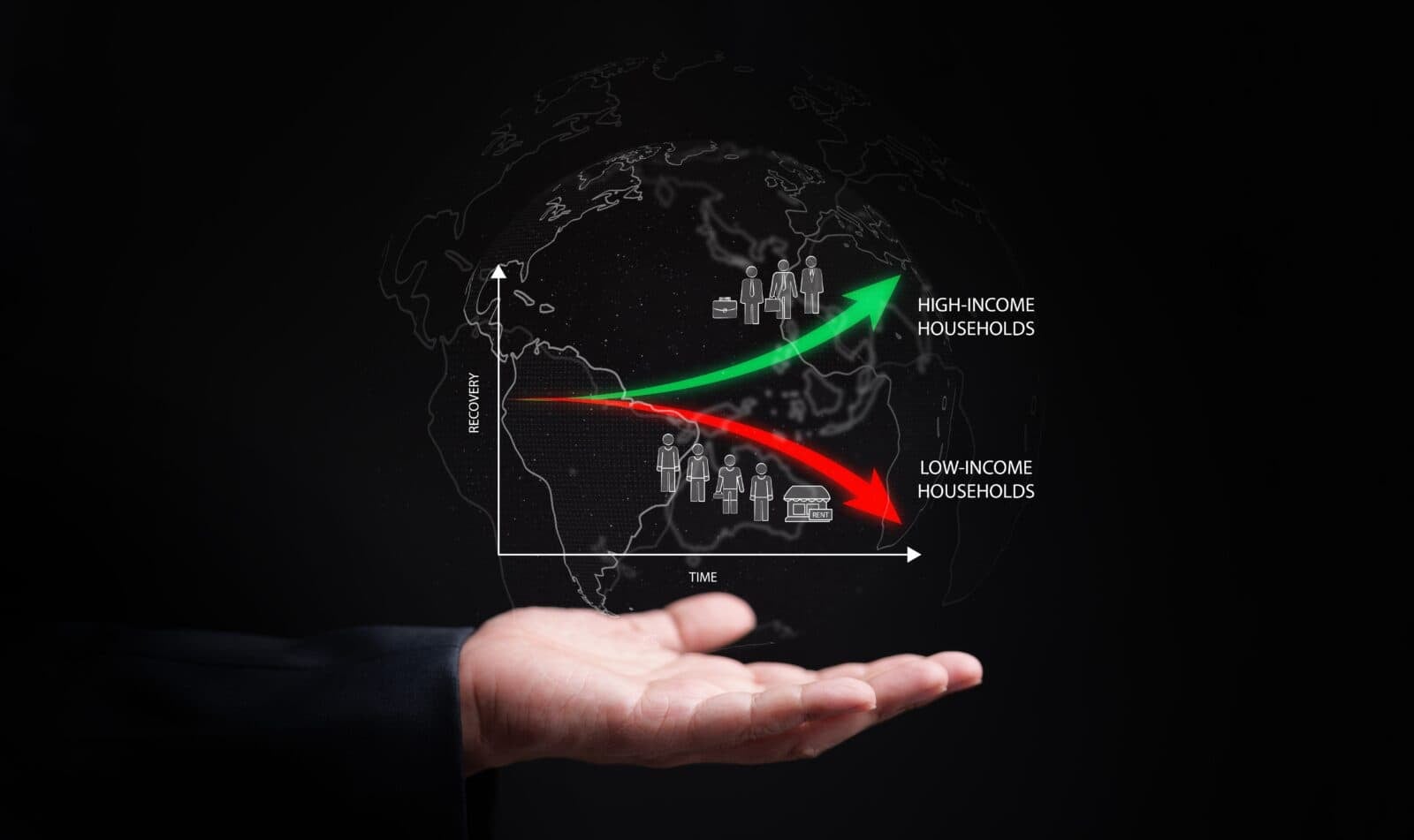
The K-shaped economy sounds like a term from a dry business panel, but the lived version is simple: one group rises, another group strains, and both are told they live in the same recovery.
Bank of America Institute data from January 2026 found that higher-income households saw 3.0% year-over-year after-tax wage growth in December 2025, compared with 1.5% for middle-income households and 1.1% for lower-income households.
The same report found a K-shaped spending pattern in late 2025, with lower-income households raising three-month average card spending only 0.4% year over year, compared with 2.4% for higher-income households. That split gives AOC’s comments their kitchen-table power.
The billionaire debate may sound lofty, but it lives inside grocery aisles, rent renewals, used-car loans, and the small sadness of putting something back because the total got rude.
Wealth Inequality Is Linked to Political Instability

AOC has also tied extreme inequality to democratic stress, and the public seems ready to hear that argument.
At the 2026 Munich Security Conference, she warned that severe income inequality can feed social instability and dangerous politics, framing it as part of a broader democratic failure to deliver higher wages and rein in corporate power.
Harris Poll’s 2025 data backs up the unease: 53% of Americans said billionaires threaten democracy, 69% wanted billionaires to play a smaller role in politics, and 35% said the U.S. economy is an uneven playing field that caters to the rich.
This is where money stops looking like private success and starts looking like public force. When a few fortunes can shape campaigns, platforms, lobbying fights, and public debate, ordinary voters can start feeling like extras in a movie funded by someone else.
Tax Policy Debates Center on Fairness

Tax policy can sound like a spreadsheet wearing a gray suit, but the billionaire tax debate is really about fairness. Harris Poll’s 2025 survey found that 64% of Americans believe billionaires do not pay their fair share of taxes, including 73% of Democrats and 48% of Republicans, and 83% believe billionaires are not paying enough.
Data for Progress polling from September 2024 found that more than 7 in 10 likely voters think American billionaires should pay more in taxes, including 87% of Democrats, 71% of Independents, and 53% of Republicans.
French economist Gabriel Zucman, who prepared a G20 blueprint for taxing ultra-high-net-worth individuals, wrote, “It is for citizens to decide, through democratic deliberation and the vote, how taxation should be carried out.” That is the heart of it. The fight is not just about taking money. It is about who gets to write the rulebook.
Economic Mobility Has Stalled for Most Americans
The American Dream has always had a staircase in it. The fear now is that the staircase still exists, but the building owners have locked most of the doors. Oxfam America’s 2025 analysis found that from 1989 to 2022, a household in the top 0.1% gained $39.5 million in wealth, a top 1% household gained $8.35 million, and a bottom 20% household gained less than $8,500.
The same research found that households in the top 1% gained at least 101 times more wealth than the median household. That is why AOC’s comments about billionaire wealth do not float above ordinary life. They crash right into it.
If people can work for decades and gain only a thin cushion, while the richest households watch assets bloom like spring trees, “mobility” starts to sound less like a promise and more like a brochure.
The Pandemic Accelerated Inequality

The pandemic did not create America’s wealth divide, but it poured fuel on it. Oxfam America reported in 2025 that the 10 richest U.S. billionaires gained $698 billion over the past year, and warned that decades of inequality had hardened into what it called a new American oligarchy.
Oxfam International also reported in January 2026 that global billionaire wealth jumped by more than 16% in 2025 to $18.3 trillion, its highest level on record. For millions of families, the pandemic years meant fear of illness, school chaos, job loss, risk pay that vanished too soon, and savings accounts drained to the bone.
For many billionaires, those same years brought asset booms, stock surges, and wealth that grew while the country was still counting losses. That contrast is why the resentment has not faded. It has fermented.
Generational and Demographic Divides Shape Attitudes

Younger Americans hear the billionaire debate through a different speaker. The Harris Poll’s 2025 survey found that 70% of Gen Z and millennials want to become billionaires one day, compared with 51% of Gen X and boomers.
It also found that 65% of Gen Z and millennials say billionaires make it harder to achieve their American Dream, compared with 47% of older adults. Harris also found that 73% of Gen Z and millennials say billionaire activity contributes to inflation in everyday goods and services, versus 59% of Gen X and boomers.
That is not simple anti-rich rage. It is a generation staring at rent, student debt, home prices, childcare costs, and healthcare bills, then trying to decide if billionaire wealth represents inspiration or a locked gate. For many younger readers, the answer may change from paycheck to paycheck.
The Debate Reflects Fundamental Questions About Capitalism
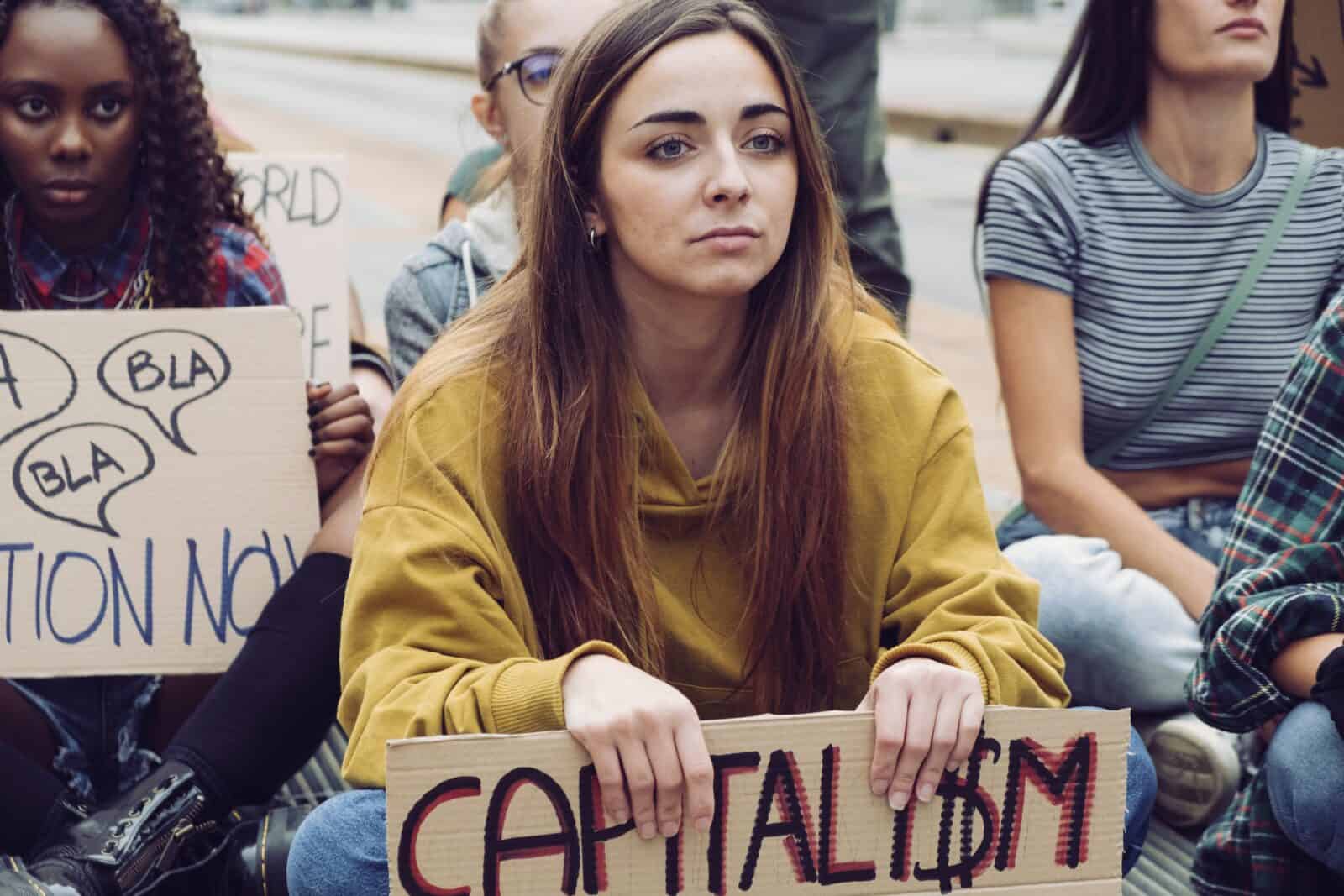
AOC’s comments cut so deep because they ask a question bigger than tax rates: what kind of capitalism still feels legitimate? Harris Poll’s 2025 survey found that 76% of Americans agree billionaires benefit the most from a broken system, yet 64% also agree billionaires hold knowledge for financial success.
That split is the whole country in miniature. People can respect innovation, risk, and business-building, yet still worry that the system now protects extreme wealth better than it protects ordinary stability.
In a 2026 Roosevelt Institute essay, Brian Galle of Berkeley Law put one democratic concern plainly: “A democratic tax system has to prevent great fortunes from passing from one generation to the next with their power intact.”
That is where the billionaire debate lands. It is not just about who got rich. It is about how much power wealth should carry once it arrives.
Reflective Close

A billion dollars is not just a big number. It is a national mood test. Federal Reserve data shows the top 1% held 31.7% of U.S. wealth in Q3 2025, and Harris Poll found that 73% of Americans see the wealth gap as a serious national issue.
AOC’s comments did not create that discomfort. They gave it a sentence people could fight over. Beneath the argument sits a quieter question, one that will keep humming through 2026: how much wealth can one person hold before success starts to look less like a trophy and more like power with a locked front gate?
Key Takeaways

The billionaire debate is really a debate about trust. The Federal Reserve’s 31.7% top-1% wealth share, Oxfam’s 987-times wealth gain comparison, and the Institute for Policy Studies’ $8.1 trillion U.S. billionaire wealth estimate all point to the same pressure point: Americans are watching wealth concentrate faster than faith in the system can keep up.
Public opinion has moved from admiration to suspicion, even though the dream of getting rich has not disappeared. Harris Poll found that 53% of Americans believe billionaires threaten democracy, 64% say they do not pay their fair share of taxes, and 60% still want to become billionaires someday. That mix makes the debate messy, emotional, and very American.
The next 6 to 12 months will likely keep this argument alive, as inflationary pressures, tax fights, election spending, CEO pay, and young adults’ housing anxiety are not going away quietly. AOC’s comments may fade from the news cycle, but the question behind them will stick around: Does America still reward work, or does it mostly reward wealth that already knows the secret handshake?
Disclaimer – This list is solely the author’s opinion based on research and publicly available information. It is not intended to be professional advice.
Like our content? Be sure to follow us