Arriving Too Early at the Gate Can Backfire: 12 Airport Mistakes Travelers Make
Arriving early at the airport feels like the safest move you can make. In a system where the cost of missing a flight is high, most travelers hedge by adding more time than they think they need.
But that instinct quietly assumes that all extra time is equally valuable and that airports reward caution in a linear way. They don’t. Global aviation data consistently shows that roughly 80–85% of flights depart on time, yet travelers routinely build in buffers that far exceed what the system actually demands.
Modern airports are dynamic environments shaped by fluctuating security capacity, real-time aircraft movements, and tightly coordinated ground operations. Beyond a certain point, adding more buffer doesn’t increase certainty; it starts to erode flexibility, drain energy, and create new costs that didn’t exist before.
Checking bags too early limits flexibility
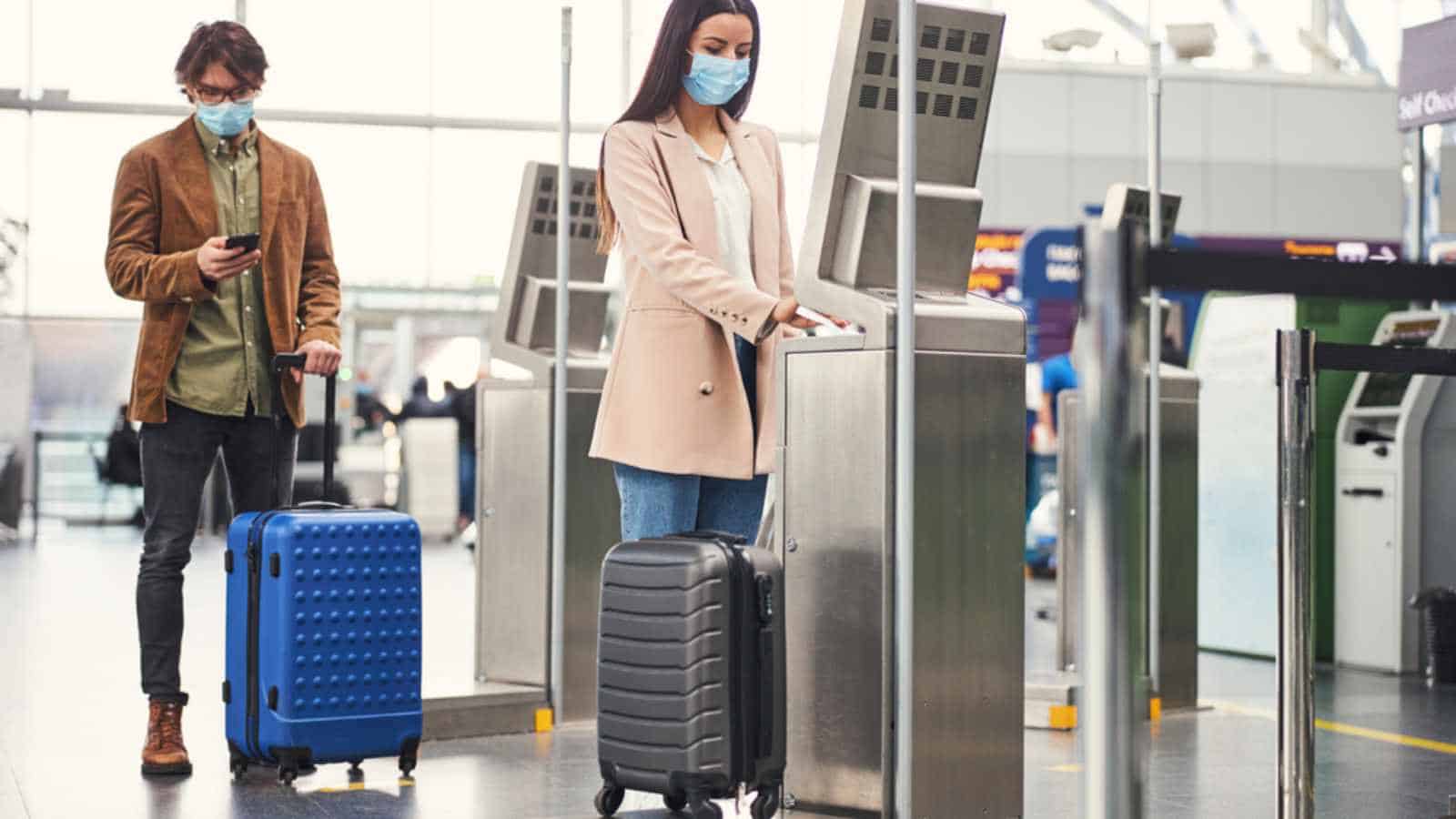
While it feels productive to offload a heavy suitcase the moment the check-in counter opens, you are effectively handcuffing yourself to a single flight path. Once that bag disappears behind the conveyor belt’s rubber flaps, your legal connection time and flight change options narrow significantly.
Bureau of Transportation Statistics reports major carriers saw a spike in mishandled baggage rates during peak travel seasons, often reaching 0.6% to 0.7% of all bags, and the longer a bag sits in the sorting system, the higher the risk of a logistical miss.”
If a mechanical delay hits your scheduled departure and an earlier flight to the same destination has seats, you cannot easily switch if your luggage is already buried in the belly of the airport’s automated sorting system.
You remain a free agent, able to pivot to other airlines or earlier slots, whereas a checked bag makes you a hostage to the specific tail number assigned to your original ticket.
Misjudging when security actually opens

Arriving four hours early for a 6:00 AM flight is a common strategy that frequently ends in a cold, metal-bench reality check. Many travelers assume airports are 24-hour machines, but TSA checkpoints at mid-sized hubs like Austin-Bergstrom or Nashville often don’t staff up until 3:30 or 4:00 AM.
The earliest arrivals are forced to congregate in the non-secure landside area, which, ironically, is often less monitored than the airside. A study by the Upgraded Points team found that average TSA wait times can fluctuate by over 20 minutes within a single hour at major hubs.
By arriving before the staff does, you aren’t beating the line; you are merely forming it. You end up standing in a stagnant queue that hasn’t started moving, draining your physical energy before you even reach the X-ray machine.
It is far more efficient to aim for the second wave, usually 20 minutes after the first scheduled opening, when the initial backlog has been processed and the airport’s machinery is at full throttle.
Overpaying due to idle time in terminals

The airport is a meticulously designed gold-plated cage where every idle minute is monetized.
When you arrive three hours early, you aren’t just buying a meal; you are buying boredom insurance in the form of overpriced magazines, $12 beers, and tech gadgets you don’t need.
Data from KPMG’s 2024 Market Insights highlights a critical divide: basic necessities (water, snacks, pharma) are typically purchased within the first 15–20 minutes of entering the airside zone. Beyond that, every additional 10 minutes of dwell time acts as a luxury trigger.
Every extra hour spent airside is an invitation for impulse spending. If you had stayed at home or in your hotel for an extra hour, that extra cost would still be in your pocket.
Fatigue from excessive waiting before long flights

There is a biological cost to the early-bird philosophy, especially before ultra-long-haul flights. Sitting in a pressurized, climate-controlled terminal for four hours before a 10-hour flight to London or Tokyo makes you pre-fatigued.
The dry air in terminals, often maintained at low humidity levels, sets the dehydration process in motion long before you board. By the time the gate agent calls your zone, your body has already endured hours of artificial lighting and low-grade noise pollution.
This mental wear-and-tear makes it harder to sleep once you are actually on the aircraft. Instead of being fresh for the journey, you are already entering the exhaustion zone. The goal should be to minimize total time spent in a sedentary, artificial environment, not maximize it.
Missing better earlier flights due to rigid planning

Rigidity is the enemy of the modern traveler. When you arrive four hours early and head straight to your gate to wait for a 4:00 PM departure, you often walk right past a 1:30 PM flight that is currently boarding with empty seats.
Many airlines allow Same-Day Standby or Same-Day Confirmed changes for a small fee or even for free for elite members. By being too focused on your specific safe arrival time, you miss the window of opportunity to actually arrive at your destination hours ahead of schedule.
Statistically, the first flights of the day have the highest on-time performance (averaging 86% according to OAG’s 2025 On-Time Performance Review).
If you are already at the airport, your goal should be to get out as quickly as possible. Rigidly adhering to a late-afternoon schedule when an early-afternoon option is physically present is a failure of travel intelligence.
Triggering unnecessary anxiety cycles

The hurry-up-and-wait phenomenon is a primary driver of travel-related cortisol spikes. Psychological studies on anticipatory anxiety suggest that the longer a person waits for a high-stakes event, like a flight, the more time the brain has to invent potential catastrophes.
You check your pockets for your passport every 10 minutes; you obsessively watch the delayed board even when your flight is on time. This state of hyper-vigilance is taxing. A survey found that 40% of travelers feel significant stress during the airport experience.
Those who arrived with a just-in-time buffer (roughly 90 minutes for domestic) report lower peak stress levels than those who arrived three hours early, because the former were focused on the task at hand rather than simmering in a soup of what-if scenarios.
Ignoring real-time airport data

Modern terminals are data-rich environments, yet travelers often rely on static schedules. Apps like FlightRadar24 or FlightStats provide the actual location of your incoming aircraft.
If your plane hasn’t even left its origin city, your early arrival at the gate is functionally useless. In 2025, the aviation sector saw a push toward A-CDM (Airport Collaborative Decision Making), which shares data between air traffic control and ground handlers.
Travelers who don’t utilize this, instead choosing to sit blindly at a gate, are ignoring the fact that their departure time is a fluid variable.
Staying in a nearby cafe or even at home until the incoming flight hits descending status is a power move that the average traveler ignores out of fear.
Confusing airline rules with airport conditions

Travelers often conflate “Check-in Closes 60 Minutes Prior” with “You Must Be at the Gate 60 Minutes Prior.” This confusion leads to thousands of hours of wasted human life every day. The airline’s requirement is a legal and logistical cutoff for luggage and manifests and not a suggestion that you should be staring at the tarmac for an hour.
In high-efficiency airports like Singapore Changi or Munich, the transit times are remarkably low. A Eurocontrol study found that over-buffering by passengers contributes to terminal congestion, worsening the experience for everyone.
If the airport is running at 98% efficiency, arriving 180 minutes early for a flight that takes 15 minutes to clear is a mathematical waste. Understanding the distinction between the airline’s safe paperwork deadline and the airport’s actual throughput speed is the mark of a seasoned traveler.
Poor lounge timing strategy
The airport lounge is often seen as a sanctuary, but it can be a trap for the early traveler. Lounge overcrowding has become a systemic issue, with many premium spaces reaching 100% capacity during peak hours.
If you arrive three hours early, hoping to relax, you might find yourself on a waitlist for a seat or standing in a buffet line that rivals a high school cafeteria. Data from lounge-access aggregators shows that peak saturation usually occurs 2-3 hours before a bank of international departures.
Additionally, the free food and drink in lounges often lead to over-consumption of sodium and alcohol, which are the primary culprits of jet lag and mid-flight bloating. A less-is-more approach to lounge time often results in a better physical state upon landing.
Underestimating gate change dynamics

When you arrive at a gate two hours early and nestle into a seat with your laptop and headphones, you become geographically fixed. However, gate changes are common in dynamic slot environments such as Heathrow and O’Hare.
If you are too settled, you might miss the overhead announcement or the subtle change on the monitor. In peak operations at major OEP 35 airports (the busiest hubs in the U.S.), significant gate-waiting delays, where more than 30% of arriving aircraft are delayed from entering their assigned gate, occurred at 10 out of the 35 hubs studied.
The traveler who arrives closer to the boarding time is naturally more mobile and alert to the terminal’s shifting landscape. They haven’t unpacked their belongings in the seating area, making them more agile when the Gate B12-to-C24 scramble begins.
Packing inefficiencies due to rushed early prep

The rush to get to the airport early often leads to last-minute panic packing, where you throw items into your bag just to make an arbitrary terminal departure time. This leads to a disorganized bag that slows you down at security.
A TSA report noted that secondary screenings, in which a bag must be opened, are often due to cluttered packing that obscures the X-ray view.
If you had spent an extra 20 minutes at home organizing your electronics and liquids rather than rushing to the airport to sit in a chair, you would likely clear security twice as fast.
The time debt you think you are paying by arriving early is often just transferred to the security line because of your disorganized luggage.
Over-buffering short-haul trips
For a 45-minute flight from Los Angeles to San Francisco or London to Paris, arriving two hours early is a massive misallocation of resources.
When the transit time to the airport and the waiting time in the terminal exceed the flight time by a factor of 3-to-1, the efficiency of air travel collapses.
In these cases, you are better off arriving with a lean buffer. A significant increase in travelers using Touchless ID and biometric bag drops has been observed, with 75% preferring them to traditional methods. These technologies have effectively shaved the unpredictable peaks out of the airport experience, allowing for more aggressive, precision-timed arrivals.
Any more than that, and you are losing the productivity that short-haul travel is designed to provide.
Key Takeaway

- More time doesn’t always mean more security beyond a certain point; an extra buffer delivers diminishing returns and can introduce new inefficiencies rather than reducing risk.
- Over-buffering reduces flexibility, early check-ins, checked bags, and rigid plans lock you into decisions that limit better options like switching flights or adapting to delays.
- Airports are dynamic systems, not fixed timelines. Real-time data, fluctuating security flow, and operational changes mean timing precision often beats blanket early arrival.
- Hidden costs accumulate quickly and extended time in terminals leads to higher spending, physical fatigue, and cognitive drain before the journey even begins.
- Smarter timing beats earlier timing, calibrated arrivals based on flight type, airport efficiency, and live conditions consistently outperform the default “arrive as early as possible” strategy.
Like our content? Be sure to follow us