Don’t have a Real ID yet? Here’s why you should, and how. Now.
As of today, REAL ID is fully in effect for federal purposes, the May 7, 2025 deadline has passed, and the stakes around having your core identity documents in order are even higher—including for voting if proposals like the SAVE Act become law.
What Is the REAL ID?
The REAL ID Act was passed by Congress in 2005, following a 9/11 Commission recommendation to create national standards for state-issued IDs and driver’s licenses. Before REAL ID, states could issue licenses under very different rules, and some did not require proof of lawful presence in the United States.
A REAL ID is a state-issued driver’s license or identification card that meets federal security standards, and you can usually spot it by a star—often gold or black—in the upper corner of the card. If your card doesn’t have that star (or an equivalent marking, in a few states), it is not REAL ID compliant. The goal is to make it harder to use fake or weak IDs to access secure federal facilities and commercial flights.
Who Really Needs a REAL ID?
Not everyone must get a REAL ID, but some people are more likely to run into problems if they don’t have one.
You should strongly consider getting a REAL ID if you:
- Fly domestically within the U.S. at least occasionally.
- Visit secure federal facilities or military bases that require ID for entry.
- Don’t have, or don’t want to carry, a U.S. passport or passport card for routine domestic travel.
If you already carry your U.S. passport or another TSA‑accepted ID for every trip, you technically don’t need a REAL ID to fly, but many travelers prefer the convenience of using a driver’s license alone at TSA checkpoints.
According to the TSA: “If you are unable to provide the required acceptable ID, such as a passport or REAL ID, you can pay a $45 fee to use TSA ConfirmID. TSA will then attempt to verify your identity so you can go through security; however, there is no guarantee TSA can do so.”
REAL ID in 2026: Where Things Stand Now
REAL ID enforcement for domestic air travel and secure federal facilities began on May 7, 2025 and remains in force in 2026. Adults 18+ must show either a REAL ID–compliant license/ID or another federally accepted document (such as a U.S. passport) to board domestic flights or enter certain secure federal buildings and military bases.
You still do not need a REAL ID to drive, receive federal benefits, access hospitals, or vote (yet) under current federal law.
Why REAL ID Matters Going Forward
Even now that the initial enforcement date has passed, the practical reasons to get or keep a REAL ID remain strong:
- It keeps your driver’s license usable at TSA checkpoints without needing to carry a passport for domestic flights.travel.
- It ensures your primary ID will be accepted at secure federal facilities that check REAL ID compliance.
- It positions you better if future federal or state rules lean more heavily on documentary proof of identity and lawful status (especially if federal voting rules tighten).
Because renewal cycles stretch several years, people updating IDs in 2026 are deciding whether they want an ID that will comfortably meet these standards for the life of that card.
REAL ID and ICE: Limited Protection
While REAL ID strengthens how states verify identity and lawful presence at the time a license is issued, it is not treated as proof of U.S. citizenship by immigration authorities. Recent cases involving U.S. citizens detained by ICE show that agents may disregard or even mistrust REAL ID licenses during enforcement actions, sometimes labeling them unreliable or potentially fake and continuing detention while they verify status through other means. Reporting and legal filings indicate that ICE and DHS still rely on separate, stronger evidence—such as passports, birth certificates, naturalization papers, or immigration records—when determining citizenship or lawful status, and a REAL ID alone has not been shown to reliably prevent or shorten detention.
How Much Does a REAL ID Cost?
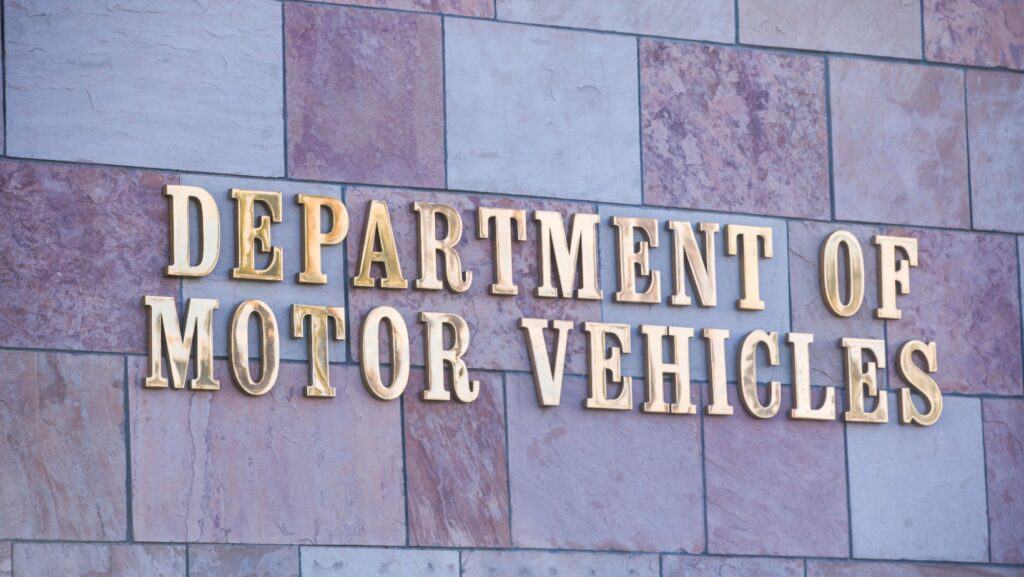
Costs vary by state, but a REAL ID typically costs about the same as, or slightly more than, a standard driver’s license renewal, often in the range of a modest additional fee when you upgrade. If your license isn’t up for renewal yet and you want a REAL ID now, you might have to pay an early‑renewal or replacement fee.
Some states waive extra fees if you upgrade during your regular renewal window, while others charge a flat REAL ID conversion fee—so it pays to check your state DMV’s pricing before you go.
Are All States Compliant Yet?
After years of phased implementation, all 50 states and U.S. territories are now issuing REAL ID–compliant credentials or have systems in place to do so, and DHS maintains an online map tracking each jurisdiction’s status. Even in compliant states, you may still have the option to choose between a standard license and a REAL ID license at renewal, so you must actively select the REAL ID version if you want the star.
Can Minors Fly Without a REAL ID?
Yes. Children under 18 are not required by TSA to show identification when traveling with an adult on domestic flights, though the adult they are traveling with must have acceptable ID under the REAL ID rules. Airlines may have their own rules for unaccompanied minors, so parents should confirm requirements when booking.
Clearing Up Confusion

REAL ID has caused a lot of confusion—some states upgraded licenses automatically, others made residents opt in, and card designs are not always intuitive. If you’re not sure whether your license is compliant:
- Look for a star or equivalent marking near the top of the card.
- If you still aren’t sure, check your state DMV website or call to confirm
Getting a REAL ID: Requirements and Persistent Roadblocks
The REAL ID application is document‑heavy compared to a standard renewal, which is where many people hit roadblocks. Gathering what you need before you book a DMV appointment can save you from being turned away or forced to make multiple trips.
States rely on the same basic REAL ID documentation buckets:
- Proof of identity and date of birth (U.S. passport, certified birth certificate, or equivalent).
- Proof of Social Security number (SSN card, W‑2, 1099, or pay stub with full SSN).
- Two proofs of state residency (utility bill, lease/mortgage, bank statement, or government mail with your name and address).
- Proof of lawful status for non‑citizens (green card, EAD, visa with I‑94, or other DHS‑recognized documentation).
In 2026, DMVs report that the same obstacles keep tripping people up:
- Missing or uncertified birth certificates, or bringing a hospital souvenir record instead of a state‑issued vital record.
- Name mismatches (e.g., married name vs. birth name) without original marriage certificates, divorce decrees, or court orders linking those names.
- Arriving with only one proof of address, when two separate documents are required.
- Non‑citizens with expired or incomplete immigration documents, or documents that do not clearly establish lawful status.
- Lack of a document that shows the full Social Security number, when the state requires full‑number proof.
Your success at the DMV is only as good as your preparation at home. Because DMVs won’t issue a REAL ID if any element can’t be verified, it’s worth spending an hour at home tracking down your documents instead of spending hours in line only to be sent away.
How to Get Original or Certified Copies of Key Documents
Birth certificate (U.S.‑born)
A certified birth certificate is usually issued by the state or territory vital records office where you were born—not by the hospital.
Typical steps:
- Identify the state or territory and, if needed, the city or county where you were born.
- Go to that state’s vital records website or USAGov’s birth certificate page to find ordering instructions (online, by mail, in person).
- Provide requested details (full name at birth, date and place of birth, parents’ names) plus a copy of your current photo ID and any required fees.
If you were born in the U.S. but have lost all ID, many states allow alternative identity verification such as sworn statements or notarized letters from a parent listed on the record.
Birth record or equivalent (U.S. citizen born abroad)
If you were a U.S. citizen born abroad, you likely have (or once had) a Consular Report of Birth Abroad (CRBA), issued by a U.S. embassy or consulate. You can request a replacement copy of a CRBA from the U.S. Department of State if needed.
Name change documents (marriage, divorce, court order)
To document your name history, you may need:
- A certified marriage certificate, obtained from the county or city that recorded your marriage, or from the state vital records office (procedures vary).
- A certified divorce decree, from the court that finalized your divorce (often a county family or superior court).
- A certified court order for name change, from the court that approved the change.
Most jurisdictions let you request certified copies in person, by mail, and sometimes online, in exchange for a fee; your state or local court and vital records websites list the exact process.
Social Security card (replacement)
To replace a lost or damaged Social Security card, the Social Security Administration (SSA) typically requires proof of identity and, in many cases, proof of U.S. citizenship or lawful immigration status.
The basic pattern:
- Create or log into an SSA “my Social Security” account, if your state participates in online card replacement; otherwise, use the paper application
- Provide acceptable ID (for U.S. citizens, often a U.S. driver’s license or passport; for non‑citizens, DHS‑issued immigration documents).
- Submit your request online, by mail, or in person at a Social Security office, following SSA’s instructions.
SSA’s website gives a state‑by‑state breakdown of where online replacement is available and what documents are accepted.
Proof of citizenship or lawful status

What you need depends on whether you are a citizen or non‑citizen:
- U.S. citizens can typically use a U.S. passport, certified U.S. birth certificate, CRBA, or a Certificate of Naturalization or Citizenship.
- To replace naturalization or citizenship certificates, U.S. Citizenship and Immigration Services (USCIS) uses Form N‑565; replacement or update requests require identity documents and a fee.
- Lawful permanent residents and other non‑citizens rely on documents such as a Permanent Resident Card, EAD, visa plus I‑94, or other DHS‑recognized evidence of lawful presence.
For non‑citizens, keeping immigration documents updated and accessible is critical—not just for REAL ID but also for employment verification, benefits, and travel.
The SAVE Act: How It Could Change Voter Registration
The Safeguard American Voter Eligibility (SAVE) Act has been introduced in Congress to tighten proof‑of‑citizenship requirements for federal voter registration. As written, it would:
- Require applicants to provide documentary proof of U.S. citizenship to register for federal elections, such as a passport, birth certificate plus photo ID, naturalization/citizenship certificate, or other specified documents.
- Block states from accepting and processing federal voter registration applications without such proof.
- Require states to develop alternative processes for applicants who lack standard documents but can present other evidence of citizenship.
- Require states to conduct ongoing checks to identify and remove non‑citizens from voter rolls, using specified data sources.
Analyses point out that the SAVE Act would not treat a REAL ID by itself as proof of citizenship because REAL ID establishes identity and lawful status, not citizenship; voters would generally still need a citizenship‑specific document like a passport or birth certificate.
If the SAVE Act Passes: What It Would Mean for Voters
If the SAVE Act (or a similar law) is ultimately enacted, the landscape for voter registration and updates could shift in several important ways:
- Document burden at registration: New and updating registrants would likely need to show a passport, citizenship certificate, or birth certificate plus photo ID in person, rather than simply attesting to citizenship under penalty of perjury.
- Limited role for REAL ID: A REAL ID would remain valuable for travel and general ID, but alone it would probably not satisfy proof‑of‑citizenship requirements; you would still need a citizenship document behind it.
- Higher stakes for document retrieval: People who changed names, moved frequently, or never obtained passports would face more urgent pressure to track down birth certificates or naturalization documents before registering or updating their registrations.
- Potential for more provisional or rejected registrations: Applicants who cannot immediately produce the required documentation might see registrations delayed, rejected, or conditioned on follow‑up proof.
Critics warn that this could be particularly burdensome for older voters, low‑income voters, married women whose current names differ from their birth records, and naturalized citizens who lack ready access to original documents.
Why Having Your Documents Ready Now Matters (Even Before Any New Law)
Taking the time in 2026 to assemble and protect your “identity portfolio” pays off across multiple fronts:
- Travel and federal access: Your REAL ID or passport keeps you moving through airports and secure facilities without drama.
- Voting resilience: If proof‑of‑citizenship requirements expand, having a certified birth certificate, passport, or naturalization certificate ready will mean you can register, update your registration, or respond to challenges without a scramble.
- Life admin: The same documents are regularly needed for jobs, school enrollment, benefits, and major life changes.
In a moment when the rules for travel and voting are both under intense scrutiny and active debate, getting your documents in order is one of the few things you can fully control. A REAL ID on your license, a certified birth certificate or naturalization paper in your files, a current Social Security card, and up‑to‑date proof of your name and address aren’t just bureaucratic boxes to check—they are the keys that keep doors open, from TSA checkpoints to polling places. Investing a little time now to track down, update, and safely store those records turns future deadlines, policy shifts, and new laws from potential crises into minor errands.
Like our content? Be sure to follow us on MSN and Newsbreak