Double Standards Men Often Notice Without Saying
A 2023 YouGov survey found that nearly half of men feel they “cannot express their struggles openly” without being dismissed or judged, and another Pew analysis shows that men are now significantly more likely than women to say society gives them “little to no support” when dealing with personal challenges. These sentiments point to a growing mismatch between how modern life treats men and how it expects them to behave.
Across dating, work, health, friendships, and the emotional life, a pattern emerges: the rules have changed, but the expectations placed on men haven’t kept pace. And because many of those expectations are unspoken, men often navigate them in silence, noticing contradictions they rarely articulate out loud.
What follows is a closer look at the quiet contradictions shaping the male experience right now, and why so many men feel stuck between identities they never chose.
‘Emotional Burden’ vs. ‘Silent Strength’

A man is expected to be his partner’s rock, absorbing emotional stress without needing the same in return. Studies on emotional labor often focus on women, but psychologist William Pollack’s work on the “Real Boys: Rescuing Our Sons from the Myths of Boyhood” points out the societal pressure for men to embrace “restrictive emotionality.”
This means if he cries or shows fear, he’s “weak” or “unmasculine”; if he doesn’t, he’s “cold” or “unfeeling.” He learns early that his primary value lies in his stoicism and problem-solving, not in sharing his inner landscape. This emotional gap creates a loneliness that often goes unaddressed in mental health discussions aimed at men. Ultimately, the expectation to be strong often blocks the path to true intimacy.
“Provider”
Sure, women are now often the primary earners—and that’s a fantastic change. However, data still shows that a man’s financial status remains disproportionately linked to his perceived dating value. A key study in the European Sociological Review confirms that men report significantly lower life satisfaction and higher psychological distress when they are jobless, and their female partner is the sole earner.
He might feel emasculated or fear that his lower income makes him a less desirable long-term partner. This unspoken financial pressure is a massive, stressful expectation still tied almost exclusively to male identity.
Sexual History
A man with an extensive sexual past is often tagged a “player” or sometimes even grudgingly respected for his perceived prowess. Contrast this with the way women’s sexual histories are frequently judged, often resulting in labels like “easy.” The double standard for men kicks in when it comes to relationship commitment.
The man with fewer partners might be seen as inexperienced or unexciting, while the man with many partners might be seen as less capable of settling down. He can’t win; he’s either too experienced to trust or not experienced enough to be intriguing. It’s a lose-lose assessment based solely on past intimacy, a truly archaic measurement of character.
Also on MSN: Why Women Profit From Multiple Marriages While Men Don’t
Parenting

When a father changes a diaper or takes his child to the doctor, it’s often framed as “helping out” his partner or “babysitting.” This phrasing inherently implies that the mother is the primary, competent parent and the father is a temporary caregiver.
Research published by the NIH consistently shows that fathers’ efforts, though increasing, are often discounted or treated as optional. He’s praised excessively for doing basic parental tasks that a mother does daily without comment. This double standard reduces his role from an equal partner to a supportive assistant, undermining his authority and confidence as a caregiver.
Handling Conflict
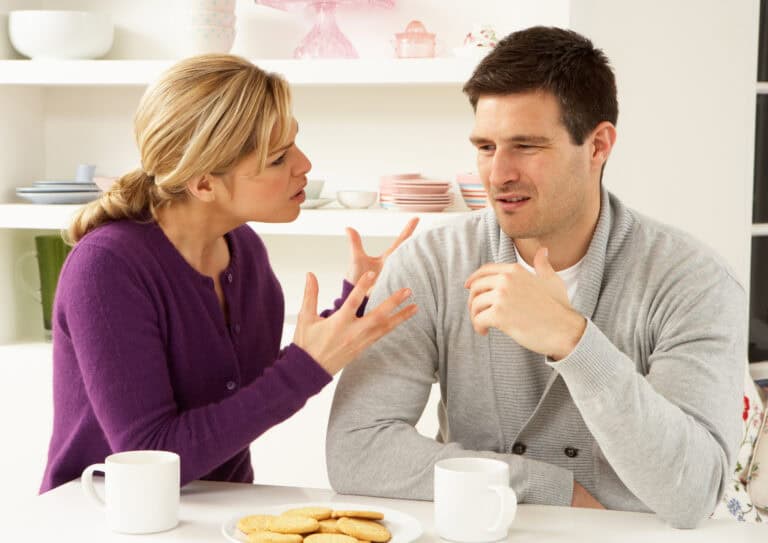
In a heated argument, particularly with a partner, a man has a microscopically small space for reaction. If he raises his voice or becomes physically expressive, he is immediately labeled threatening or aggressive. If he retreats, becomes quiet, or walks away to cool off, he is accused of being passive, stonewalling, or refusing to engage.
Friendship Dynamics
For women, having an inner circle of deeply supportive, talkative friends is the norm, and it is encouraged for mental health. Men, however, are often expected to have a wider, shallower network of “activity-based” friends—buddies for sports or work, not for emotional confessions.
Dr. Niobe Way’s research on adolescent boys showed how boys crave and practice emotional intimacy, only to suppress it as they enter manhood to fit the societal ideal. This results in an epidemic of friendship loneliness, where he lacks a safe space to discuss deep personal problems. He’s pressured to be a lone wolf, making his emotional world a private, isolated burden.
Dating Initiative
Despite years of progress, the overwhelming majority of dating etiquette still demands that the man initiate the first conversation, ask for the first date, and propose the next step in the relationship. He faces the constant risk of rejection and must perform emotional labor by gauging interest, making plans, and dealing with potential embarrassment.
If he waits for her to show interest or take the lead, he’s frequently viewed as uninterested or lacking confidence. This standard prevents women from exercising agency in the pursuit phase and forces men into a role of relentless, vulnerability-heavy pursuit. It’s a tiring default expectation that keeps old gender roles stubbornly in place.
The “Complainer” Label in Health and Injury
Men often face skepticism when they report pain or injury, sometimes leading to poorer diagnostic outcomes. This relates to the stereotype of the “tough guy” who is supposed to endure hardship without complaint.
A 2018 study in the Journal of Pain suggests that the perceived stoicism of men can lead clinicians to underestimate their actual pain levels. When a man does seek help or admits he is struggling with a cold or a headache, he’s often lightly mocked or called a “man-flu” victim. This double standard pressures him to downplay real health issues, contributing to worse outcomes.
Appearance and Age

As a man ages, grey hair and wrinkles often earn him terms like “distinguished,” “salt-and-pepper,” or “refined.” Yet, if he pays too much attention to his skincare, clothes, or grooming, he risks being called vain or high-maintenance.
He must strike a perfect, tiny balance: look healthy, successful, and put-together without appearing to have tried too hard. Meanwhile, the beauty and anti-aging industries constantly pressure women to look young and flawless, often without the same societal reverence for their aging process.
Victimhood
When a man reports being the victim of domestic abuse, sexual assault, or even workplace harassment, he faces a specific kind of disbelief. The stereotype of the physically dominant male means his claims are often met with questions like, “Why didn’t you just leave?” or “How could you let that happen?”
This societal cognitive bias instantly positions him as less credible and often reduces his chances of accessing support or justice. The Men’s Health Forum notes that many male victims struggle to come forward due to the shame of not conforming to the image of the strong, invulnerable male. He loses his right to victim status because of his gender.
The ‘Nice Guy’ vs. ‘Masculine Alpha’ Spectrum
This is perhaps the cruelest bind in the modern dating market. A man is encouraged to be sensitive, respectful, and emotionally articulate—the “nice guy.” Yet, he often finds that these traits are perceived as low-value or non-sexual, earning him the dreaded “friend zone.”
Conversely, the man exhibiting strong, dominant, and traditionally “alpha” traits is often more sought after, yet risks being labeled as toxic or controlling. He is forced to oscillate between two extremes, neither of which is a healthy, authentic expression of self. Authenticity is often sacrificed for perceived appeal.
Key Takeaways
- Emotional Inequity: Men are expected to be emotional sponges for partners but denied a safe place for reciprocal vulnerability, driven by the pressure of Restrictive Emotionality.
- Financial Mandate: A man’s worth, particularly in dating, remains heavily tied to his Provider Prerequisite, creating undue financial stress.
- Caregiver Discount: Fathers’ hands-on efforts are often framed as “helping out,” reducing them to secondary caregivers through the Assistant Dad Stigma.
- Conflict Trap: Men face an impossible standard in arguments; they are either Too Aggressive or engaging in “stonewalling” if they retreat, leaving no room for moderate conflict.
- Credibility Gap: Male victims of abuse or pain are often met with skepticism, facing a Perpetrator-First Bias due to stereotypes of strength.
Disclosure line: This article was developed with the assistance of AI and was subsequently reviewed, revised, and approved by our editorial team.
20 Odd American Traditions That Confuse the Rest of the World
20 Odd American Traditions That Confuse the Rest of the World
It’s no surprise that cultures worldwide have their own unique customs and traditions, but some of America’s most beloved habits can seem downright strange to outsiders.
Many American traditions may seem odd or even bizarre to people from other countries. Here are twenty of the strangest American traditions that confuse the rest of the world.
20 of the Worst American Tourist Attractions, Ranked in Order

20 of the Worst American Tourist Attractions, Ranked in Order
If you’ve found yourself here, it’s likely because you’re on a noble quest for the worst of the worst—the crème de la crème of the most underwhelming and downright disappointing tourist traps America offers. Maybe you’re looking to avoid common pitfalls, or perhaps just a connoisseur of the hilariously bad.
Whatever the reason, here is a list that’s sure to entertain, if not educate. Hold onto the hats and explore the ranking, in sequential order, of the 20 worst American tourist attractions.