The real evidence that proves early church history was changed
Many wonder if the Bible on the nightstand matches what was actually written two thousand years ago. There’s a massive paper trail of edits, deletions, and additions left by ancient scribes. This manuscript evidence proves that early church history was actively reshaped over centuries.
Textual scholar Bart Ehrman famously pointed out that scribes occasionally altered their sacred texts to push an orthodox agenda. Even raw statistics show a massive shift in public belief. According to a 2022 Gallup poll, only 20% of Americans now believe the Bible is literally true.
Surviving manuscripts contain hundreds of thousands of variations
Scribes copying texts by hand made an astronomical number of mistakes. Estimates of these textual variations range from 200,000 to a staggering 750,000. The sheer volume of copies created a massive pile of errors over time.
Most of these differences are simple spelling errors or minor blunders. Yet, text critic Daniel Wallace notes that only about 1% of variants make a real difference. Even so, the original wording remains a puzzle that scholars are still trying to solve.
Scribes added the Trinity to the bible centuries after it was written

The most blatant theological change is a passage called the Johannine Comma. Found in 1 John 5:7-8, it lays out the clear doctrine of the Trinity. It was actually a Latin marginal note that accidentally slipped into the main text.
There’s just one problem: it’s not in any early Greek manuscripts. Out of over 5,000 Greek manuscripts, only about eight 11 copies contain the Comma. Its late insertion proves that scribes altered scripture to beef up their theological arguments.
The oldest ending of Mark does not mention Jesus rising
The Gospel of Mark originally ended with fear and silence, not a resurrection. The earliest manuscripts, Codex Sinaiticus and Codex Vaticanus, end right at Mark 16:8. There are no resurrection appearances to the disciples in these ancient books.
Scribes found this abrupt ending highly uncomfortable and decided to fix it. They cooked up at least five different endings to smooth things over. This major change shows that early copyists felt free to finish the story themselves.
The story of the adulterous woman was a floating anecdote
The famous story of Jesus telling accusers to cast the first stone wasn’t originally in John’s Gospel. This beloved passage, John 7:53-8:11, is completely missing from the oldest papyri. Copyists eventually shoved it into various places in John and even Luke.
Early manuscripts such as Papyrus 66 and Papyrus 75 omit the story entirely. It was actually a popular floating tradition that wandered around for centuries. While it’s a beautiful story of grace, it’s a late addition to the biblical text.
Orthodox copyists altered verses to fight competing sects

Ancient scribes often acted like theological editors to silence their rivals. Scribes intentionally changed verses to make them more orthodox. They even changed Jesus’s baptism scene to combat adoptionist heretics.
For example, some early manuscripts omitted the words “nor the Son” from Matthew 24:36. Scribes did so because they hated the idea that Jesus didn’t know the hour of the end times. These deliberate tweaks prove that early theology drove scripture, not the other way around.
Gnostic gospels were hidden away and systematically suppressed
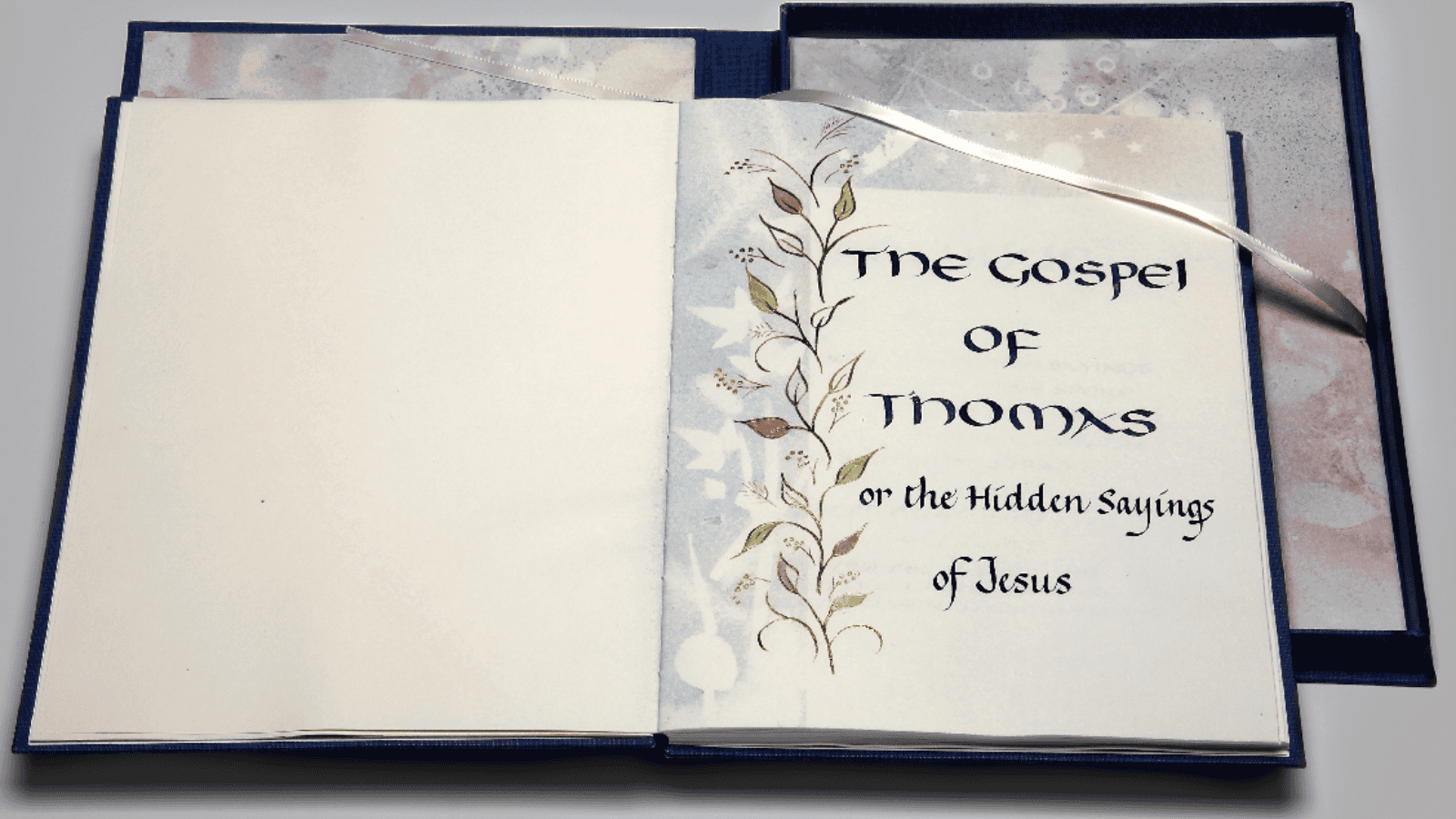
The early Church was a wild, diverse mix of competing Christian groups. Gnostics and Marcionites had their own scriptures that differed wildly from mainstream views. To save their sacred texts, some Christians buried them deep in the desert.
In 1945, Egyptian farmers found the Nag Hammadi Library. This cache contained 13 ancient books with 52 different texts, including the Gospel of Thomas. This discovery exposed a whole universe of early Christian beliefs that the church successfully erased for centuries.
Church leaders voted on the bible to control the narrative
Contrary to popular myth, Emperor Constantine didn’t decide which books made the cut at Nicaea. The 325 AD council actually focused on Jesus’ divinity and the Arian controversy. These councils chose only texts that backed their own power structures and views.
The official New Testament was decided later at regional church councils. Councils at Laodicea (363 AD), Hippo (393 AD), and Carthage (397 AD) finalized the 27 books. The final Bible was as much a political statement as it was a religious one.
Public belief in a literal bible is hitting record lows
Modern trends show that the public is catching on to this edited history. A major Gallup poll reveals a massive shift in how Americans view scripture. Meanwhile, more people than ever see the Bible as a collection of human-written fables.
Only 20% of Americans now believe the Bible is the literal, word-for-word voice of God. This is a record low, down from 24% in 2017 and half of what it was in the 1980s. The rising access to manuscript data is slowly changing how the world reads ancient texts.
Key takeaway

The evidence is clear: the New Testament did not drop from the sky perfectly intact. Early church history was a battleground of ideas, and the winners literally rewrote the script.
By altering verses, burying competing gospels, and standardizing texts, early leaders crafted a unified narrative that hid centuries of diversity. For busy readers, knowing this human backstory changes everything about understanding the ancient church.
Disclaimer – This list is solely the author’s opinion based on research and publicly available information. It is not intended to be professional advice.
Like our content? Be sure to follow us