The Teachers Who Changed History: 10 Educators Who Shaped the World
Behind revolutions, breakthroughs, and social change, a quiet force often stands: a teacher.
Every October 5, the world pauses to honor educators on World Teachers’ Day. It is a moment to reflect not just on the lessons we learned in school but on the ways teachers shape societies. While many of us remember the individuals who encouraged us to dream bigger or work harder, history reveals that some educators influenced entire movements, challenged cultural norms, and even altered the course of nations. Their stories remind us of the extraordinary power one teacher can hold.
Here are ten teachers who changed the world, leaving lessons that endure long after their classrooms closed.
Anne Sullivan: The Miracle Worker
When Anne Sullivan began working with Helen Keller in the late 19th century, most believed that a deaf and blind child could never communicate with the outside world. Sullivan, herself visually impaired, refused to accept that limitation. Through painstaking patience and creativity, she taught Keller to read, write, and eventually speak. Their triumph became a symbol of what education could achieve for people with disabilities. Beyond Keller’s personal success, Sullivan’s work redefined special education and opened new possibilities for countless others.
Jaime Escalante: Changing Expectations in East L.A.
In the 1980s, a math teacher named Jaime Escalante walked into a Los Angeles classroom and decided his students—most of whom came from working-class Latino families—could master calculus. His belief was radical at the time. Escalante challenged stereotypes, held high standards, and demanded excellence. When his students passed Advanced Placement exams in record numbers, skeptics accused them of cheating because success at that level had been considered impossible. Their achievements were real, however, and his story inspired the film Stand and Deliver. Escalante’s legacy is proof that expectations can define outcomes.
Maria Montessori: A Revolution in Early Childhood Learning
Dr. Maria Montessori’s name is now synonymous with a teaching method, but in her own time, her approach was considered revolutionary. Observing that children learned best by doing, she created classrooms filled with hands-on activities and self-directed exploration. She believed education should nurture independence, curiosity, and confidence rather than enforce rote memorization. Today, Montessori schools exist in more than 100 countries, influencing the way millions of children grow into lifelong learners.
Booker T. Washington: Education as Empowerment
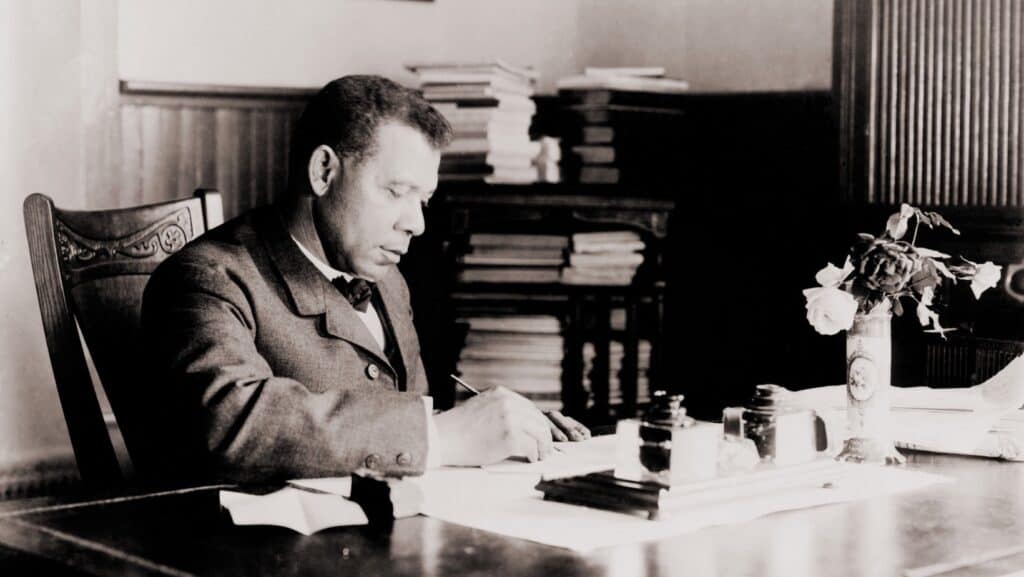
Born enslaved in Virginia, Booker T. Washington rose to become one of the most prominent educators of the late 19th and early 20th centuries. He founded the Tuskegee Institute in Alabama, training generations of African American teachers, farmers, and tradespeople. Washington’s philosophy emphasized education as the key to economic empowerment and social progress. At a time when opportunities for Black Americans were severely restricted, his work provided both skills and hope, building a foundation for future generations.
Ziauddin Yousafzai: Father, Teacher, and Advocate
While his daughter Malala Yousafzai became a Nobel Peace Prize laureate, Ziauddin Yousafzai was the teacher who first gave her the courage to fight for education. In Pakistan’s Swat Valley, he ran a school and defied Taliban restrictions that forbade girls from learning. He not only educated Malala but also encouraged her to speak out, even when it meant risking their safety. His commitment to teaching and his belief in equality sparked a global movement for girls’ education, proving that advocacy often begins in the classroom.
Confucius: The Original Master Teacher
Long before formal schools existed, Confucius taught in China more than 2,000 years ago. He believed education should cultivate morality, respect, and wisdom rather than simply pass along facts. His teachings spread through oral tradition and later through texts that shaped Chinese society and influenced educational philosophy across Asia. Confucius emphasized that learning was a lifelong pursuit, a principle that still resonates in classrooms today. His ideas helped define the role of teachers as moral guides, not just instructors.
Christa McAuliffe: A Teacher’s Dream and Legacy
Christa McAuliffe captured the world’s attention in 1985 when she was selected as the first teacher to travel into space. She planned to give lessons from orbit to inspire children worldwide. Tragically, she died in the Challenger explosion in January 1986, before completing her mission. Yet her legacy endures. Schools and scholarships bear her name, and programs continue to connect students with space exploration in her honor. McAuliffe’s story is a reminder that teachers’ ambitions often extend far beyond the classroom walls.
Savitribai Phule: Breaking Barriers for Girls in India
In 19th-century India, when women were largely denied education, Savitribai Phule and her husband opened the first school for girls. She endured harassment and resistance—sometimes even having mud and stones thrown at her—but refused to stop teaching. Her efforts not only gave girls access to literacy but also challenged deep-rooted social hierarchies, including caste discrimination. Today, she is remembered as India’s first female teacher and a pioneer of both women’s rights and educational reform.
Aristotle: Educator of Kings and Thinkers

Aristotle’s influence stretches across millennia. As tutor to Alexander the Great, he educated a future conqueror who carried Greek culture across the known world. Beyond that, Aristotle’s own writings on science, ethics, and philosophy became foundational texts for Western civilization. His teaching method, based on dialogue and observation, shaped not only his students but also the very structure of academic inquiry for centuries to come.
Erin Gruwell: Giving a Voice to the Forgotten
In the 1990s, Erin Gruwell took a job at a troubled high school in Long Beach, California. Her students, many of whom faced violence, poverty, and prejudice, had been written off by the system. Gruwell encouraged them to write their own stories, helping them see value in their voices. The collection, published as The Freedom Writers Diary, became a bestseller and inspired a film starring Hilary Swank. Many of her students went on to graduate, breaking cycles of hopelessness. Gruwell’s story is a modern example of how a teacher’s belief can unlock potential.
The Lasting Lesson
World Teachers’ Day is not just about celebrating the present—it is about honoring a lineage of educators who have proven time and again that teaching is among the most powerful professions on Earth. From ancient philosophers to modern advocates, these figures remind us that knowledge is more than information. It is a force for transformation. They also remind us that behind every movement, every breakthrough, and every leader, there is often a teacher who lit the first spark.
As we celebrate this day, we can take inspiration from their legacies and remember the teachers in our own lives who may never make history books but have changed our personal histories all the same.
Read More On MSN:
- Freddie Mercury’s brilliance shines in these 10 deep cuts
- 10 Owl Facts That Show Why These Birds Are Nature’s Silent Assassins
- World Space Week: 12 Stunning Milestones in Human Space Exploration