The Wright Brothers Did Not Invent Speed. They Invented Control
The Wright brothers’ real breakthrough wasn’t getting airborne, but proving that flight could be controlled, repeated, and trusted.
When people talk about the Wright brothers, the conversation often jumps straight to the idea of firsts. First airplane. First flight. First time humans left the ground under their own power. That framing makes for a tidy history lesson, but it glosses over what Wilbur and Orville Wright actually understood about progress. They were not chasing spectacle. They were not racing to impress crowds or newspapers. They were quietly focused on something far less glamorous but infinitely more important. Control. At a time when many inventors believed flight was simply a matter of building a strong enough engine or a large enough wing, the Wright brothers recognized a deeper problem. Getting into the air was not the hard part. Staying there deliberately was. Their story is not about speed, altitude, or daring leaps into the unknown. It is about patience, observation, and the unglamorous work of mastering movement. That is why their achievement still matters long after the thrill of first flight has faded.
The Era Obsessed With Power

By the late nineteenth century, the dream of flight had captured imaginations across continents. Inventors sketched winged contraptions, tested gliders off hillsides, and theorized endlessly about lift. Engines were improving. Materials were becoming lighter. Many believed the final breakthrough was just a stronger motor away.
The problem was that these machines behaved unpredictably once airborne. A gust of wind could tip a craft sideways. A slight imbalance could send it spiraling downward. Some designs flew briefly, but none could be reliably guided. Pilots were passengers rather than participants.
The prevailing assumption was that stability should be built into the machine itself. If an aircraft were designed perfectly, the human aboard could simply ride along. The Wright brothers quietly rejected this idea.
Why Control Changed Everything
Wilbur and Orville approached flight as an active process. They believed that a pilot needed to constantly interact with the aircraft, making adjustments the way a cyclist balances on two wheels. This belief led them to focus on three axis control: pitch, roll, and yaw.
Their most famous contribution, wing warping, allowed the pilot to control roll by twisting the wings slightly. This was not a dramatic visual change, but it was revolutionary. For the first time, a pilot could steer intentionally in the air.
This insight reframed the entire problem of aviation. Once control was possible, power became meaningful. Before control, power was dangerous.
Learning From Failure Instead of Avoiding It
The Wright brothers failed constantly. Early gliders did not behave as expected. Lift calculations from respected sources turned out to be wrong. Weather conditions complicated testing.
Instead of abandoning their efforts, they treated failure as information. If a result did not match theory, they questioned the theory. This willingness to challenge accepted data set them apart from many contemporaries who assumed published research must be correct.
They built their own wind tunnel and conducted systematic experiments. Hundreds of wing shapes were tested and measured. This slow, methodical work lacked drama, but it produced reliable knowledge.
The Flight That Looked Too Small to Matter
On December 17, 1903, the Wright Flyer stayed aloft for just twelve seconds. The distance covered was barely longer than a city bus. There was no cheering crowd. Only a handful of witnesses stood in the cold wind.
Yet that flight mattered because it was controlled. The aircraft did not simply lift and fall. It responded to the pilot. It could be guided.
This distinction separated a milestone from a miracle. Miracles cannot be repeated. Systems can.
Why the World Was Slow to Believe Them

Despite their success, the Wright brothers were initially met with skepticism. Their flights were modest. Their publicity minimal. Some doubted their claims altogether.
Ironically, this hesitation stemmed from how understated their work appeared. There was no dramatic leap into the clouds. Just careful progress. Over time, as demonstrations became more frequent and distances longer, doubt faded.
Control allowed improvement. Improvement proved the point.
Control as the Foundation of Modern Aviation
Every modern aircraft relies on the principles the Wright brothers established. Control surfaces evolved from wing warping, but the philosophy remains unchanged. Pilots guide aircraft through constant adjustment.
Automation has increased, but control remains central. Even autopilot systems are built on the assumption that flight must be actively managed.
This legacy extends beyond aviation. It reflects a broader truth about innovation. Progress depends not on raw power, but on mastery.
The Quiet Lesson Hidden in Their Success
The Wright brothers remind us that the most important breakthroughs often look unimpressive at first. Control does not photograph well. It does not generate headlines. But it changes what is possible.
They did not invent speed. They invented confidence. The confidence to take off, adjust course, and land safely. That confidence turned flight into a reality we now take for granted.
Why Supersonic Flights Vanished From Our Skies
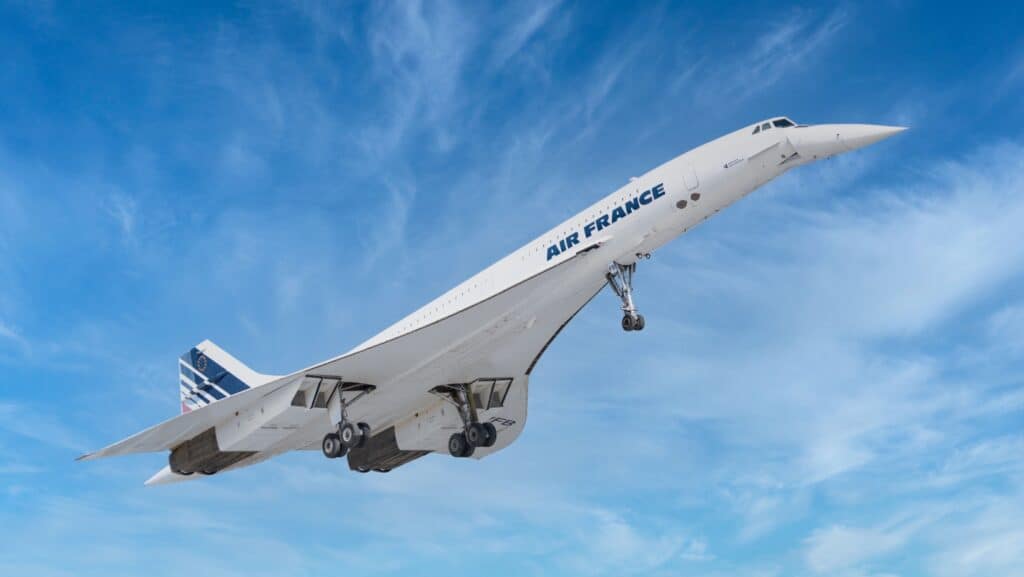
Every year on August 19th, National Aviation Day celebrates the marvels of flight and the pioneers who made it possible. But as we look to the skies, one question lingers. If we could fly from New York to London in under three and a half hours back in the 1970s, why are we still taking nearly seven today? Supersonic travel was once a thrilling reality. So, what grounded it? Learn why.