What we often get wrong about Muslim American women
There is no single experience of being a Muslim woman in America—and that’s perhaps the first stereotype worth abandoning.
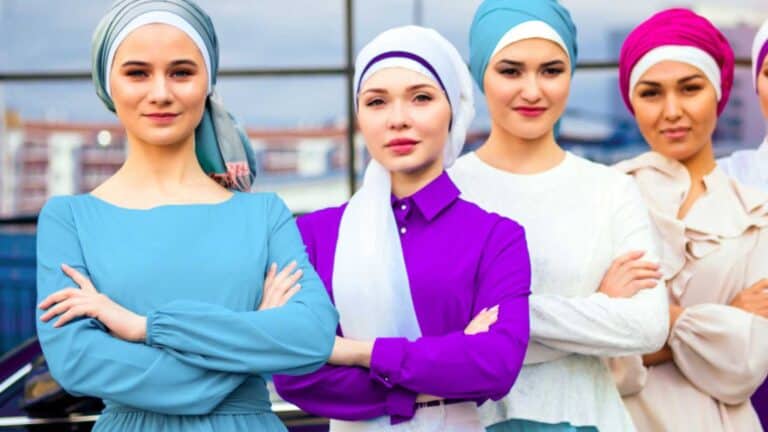
Muslim women in the United States are Black, Arab, Asian, white, Latina and multiracial. Some are immigrants; others come from families that have been American for generations. Some wear hijab every day, some occasionally, and some never do. Some are deeply religious, while others identify with Islam primarily through family, culture or heritage.
Yet Muslim women also share experiences that distinguish them from both Muslim men and many other American women. Research has found that they are particularly likely to encounter religious and racial discrimination, while many also describe strong identification with both their faith and American life.
In the Institute for Social Policy and Understanding’s 2018 American Muslim Poll, 69% of Muslim women reported experiencing religious discrimination and 75% reported racial discrimination, compared with 26% and 40%, respectively, among women in the general public.
Those are striking numbers. But discrimination is only one part of the story.
Here’s what research tells us about the complicated, diverse and frequently misunderstood experience of being a Muslim woman in America.
Being Muslim and American aren’t competing identities
One persistent assumption is that Muslim Americans must choose between their religious and national identities. Research suggests something considerably more complicated.
In a major Pew Research Center survey of Muslim Americans, 89% said they were proud to be both Muslim and American. Four in five said they were satisfied with the way things were going in their lives, and 70% believed people can get ahead in America through hard work.
Muslim women nevertheless expressed somewhat more concern than Muslim men about their place in American society. In that survey, 52% of Muslim women said they had “a lot” in common with most Americans, compared with 68% of Muslim men. Women were also more likely to say it had become more difficult to be Muslim in the United States.
That produces an interesting contradiction: feeling thoroughly American doesn’t necessarily mean feeling thoroughly accepted as one.
Being visibly Muslim can change the experience

For some Muslim women, religion is something strangers can identify before a word is spoken.
ISPU found that 46% of Muslim women surveyed said they always wore a visible symbol of their faith, such as a head covering or hijab.
That visibility can matter.
Pew found that 49% of Muslim women said there was something about their appearance, voice or clothing that other people might associate with being Muslim, compared with 27% of Muslim men. Muslims who believed their appearance visibly identified them as Muslim were also substantially more likely to report experiencing discrimination.
The hijab itself can carry very different meanings for different women. For some it represents religious obligation, modesty, identity or connection to their faith. Other Muslim women choose not to wear it.
What it doesn’t reliably tell a stranger is how conservative a woman is, how independent she is, what she thinks about politics, how she understands her religion or what kind of life she leads.
Muslim women report more discrimination than Muslim men
One of the clearest gender differences found in Pew’s 2017 research involved discrimination.
Eighty-three percent of Muslim women said there was a lot of discrimination against Muslims in America, compared with 68% of Muslim men. More importantly, women weren’t simply perceiving more discrimination. They were also more likely to say they had personally experienced it.
In the year before the survey, 55% of Muslim women reported experiencing at least one of several discriminatory incidents, compared with 42% of men. Those experiences included being treated with suspicion, called offensive names, singled out by airport security or other law enforcement, or threatened or attacked.
Muslim women were also considerably more likely than Muslim men to say American media coverage of Muslims was unfair.
For women who are both visibly Muslim and members of a racial or ethnic minority, those experiences can overlap in ways that aren’t easily separated into “religious discrimination,” “racism” or “sexism.”
Sometimes they are all operating at once.
The stereotype of the uneducated Muslim woman doesn’t fit the American data
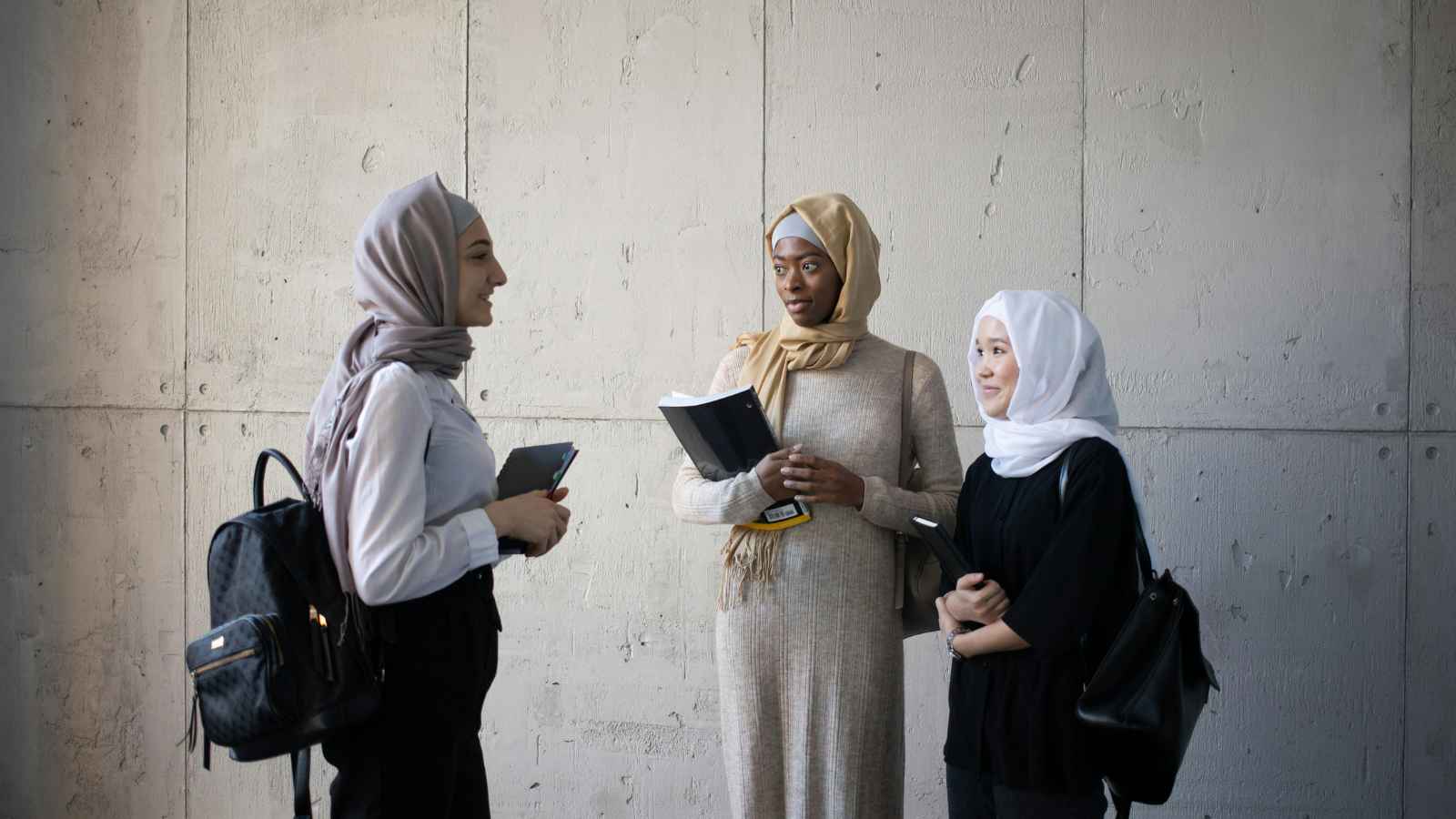
One of the most persistent Western stereotypes portrays Muslim women as poorly educated and denied intellectual opportunity.
The reality in the United States is much more complicated.
Pew’s research found that American Muslims overall have educational attainment levels broadly comparable with the U.S. public, although there are substantial differences within the Muslim population. Muslim immigrants, for example, tend to be more highly educated than U.S.-born Muslims.
Muslim women also aren’t a single educational group. Their experiences vary with age, immigration history, income, race, family background and access to education.
What the national data don’t support is the simplistic image of Muslim American women as a population largely excluded from education or public life.
Like other American women, they can be found throughout universities and professions as well as in working-class jobs, small businesses, homes and community organizations.
The hijab doesn’t necessarily mean what outsiders think it means
Few pieces of clothing generate as many assumptions as a Muslim woman’s headscarf.
A woman wearing hijab may be assumed to be conservative, submissive, oppressed, intensely religious or controlled by the men in her family.
But when ISPU examined why Muslim women choose to wear hijab, the most common answers centered on religious devotion and identity.
That doesn’t mean coercion never occurs. Muslim women, like women in other religious and cultural communities, can experience pressure from families or communities over clothing and behavior.
But assuming that every woman wearing hijab has been forced into it removes her agency just as surely as forcing a woman to wear one would.
For many Muslim American women, the decision is their own—and the meaning attached to it may be deeply personal.
Muslim women aren’t politically or socially monolithic
There’s another stereotype that collapses quickly under scrutiny: the idea that “Muslim women” constitute a predictable political bloc.
American Muslims include conservatives, progressives and people who don’t fit comfortably into either category. Their views on abortion, LGBTQ rights, feminism, racial justice, immigration, foreign policy and the role of religion in public life vary considerably.
Race matters too.
Roughly one-fifth of Muslim Americans identified as Black in Pew’s 2017 survey, while others identified as Asian, Arab or Middle Eastern, white, Hispanic, multiracial or other backgrounds.
Those aren’t superficial differences. A Black Muslim woman whose family has lived in America for generations may experience religion, race and American identity very differently from a Pakistani immigrant, a second-generation Arab American or a white woman who converted to Islam.
The category “Muslim woman” tells you something about a person. It doesn’t tell you everything.
Women are challenging traditions within Muslim communities too
Discrimination doesn’t come exclusively from outside Muslim communities.
Muslim women themselves have raised questions about women’s participation in mosques, access to religious leadership, the quality of women’s prayer spaces and cultural traditions that they believe are mistakenly treated as religious requirements.
Women-led Muslim organizations and advocacy groups have increasingly created their own educational programs, nonprofits, study groups and community initiatives.
That distinction between religion and culture can be particularly important.
Islam is practiced across enormously different societies, from Indonesia and Pakistan to Nigeria, Iran, Bosnia and the United States. Customs surrounding marriage, clothing, gender roles and family authority can therefore vary dramatically even among people who share the same religion.
For some Muslim American women, part of defining their identity involves deciding which traditions they consider genuinely Islamic and which they see as cultural practices they aren’t obligated to preserve.
Converts can find themselves between two worlds
Converting to Islam can introduce another set of challenges.
A woman who converts may suddenly have to explain her new religion to parents, siblings and friends while simultaneously learning how to navigate a Muslim community whose cultural customs may be unfamiliar to her.
Some converts describe feeling caught between worlds: no longer entirely understood by their non-Muslim social circle but not automatically feeling at home in every Muslim space either.
Race and ethnicity can complicate that further. A white American convert, for example, may enter a mosque community shaped heavily by Arab, South Asian or African immigrant cultures and discover that adopting Islam doesn’t automatically mean understanding those cultures—or being immediately accepted by them.
At the same time, converts can become bridges between communities because they understand what Islam looks like from both sides of that divide.
Faith can be a source of resilience, not simply restriction
Coverage of Muslim women frequently focuses on what religion supposedly prevents them from doing.
That misses another important part of the picture: many Muslim women describe their faith as something that gives them meaning, identity, community and strength.
That’s especially significant when discussing discrimination.
A Muslim woman experiencing Islamophobia isn’t necessarily struggling against her Muslim identity. Her faith may be one of the resources she uses to cope with that experience.
Mosques, families, friendships, Muslim organizations and women’s groups can provide community and emotional support. At the same time, women who encounter sexism or exclusion within those communities may push for change rather than abandoning their religious identity.
Those two experiences aren’t mutually exclusive.
A woman can deeply value her faith while criticizing practices within her religious community.
Muslim women are increasingly telling their own stories
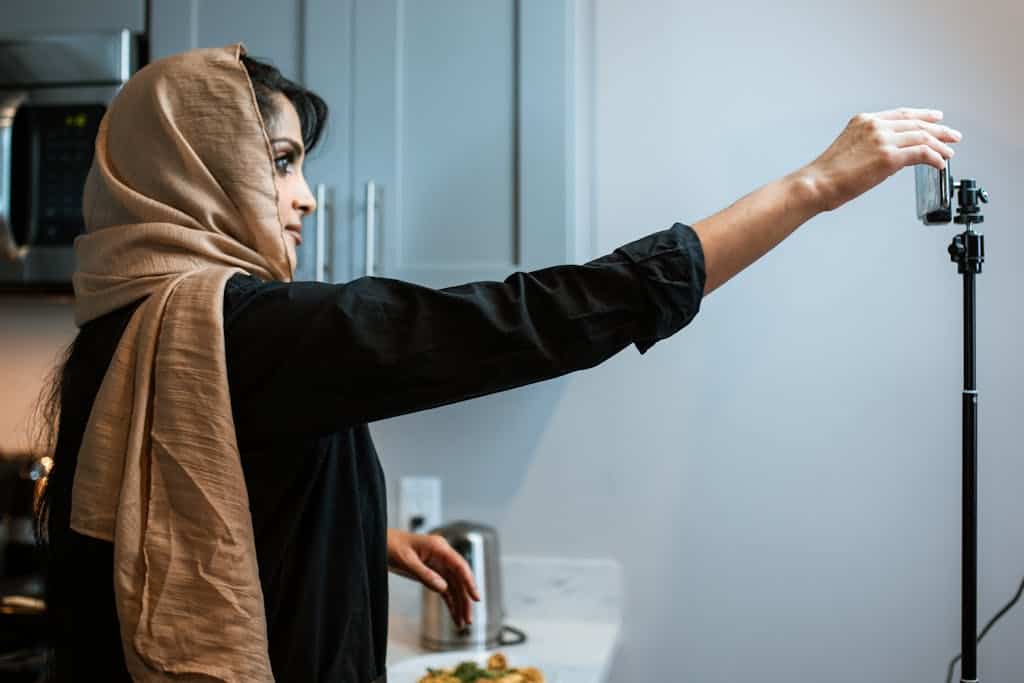
For decades, Muslim women in American popular culture were frequently presented through a remarkably narrow set of images: the veiled woman, the oppressed wife, the immigrant mother or the victim of religious extremism.
Those women exist, but they never represented the whole population.
Muslim American women are also physicians, teachers, lawyers, entrepreneurs, artists, journalists, activists, students, elected officials, stay-at-home mothers, academics and community organizers. Some cover their hair. Some don’t. Some pray five times a day. Others rarely enter a mosque.
The growing visibility of Muslim women in public life has made those contradictions harder to ignore.
And perhaps that’s the most important change of all.
Muslim women are increasingly able to describe themselves rather than simply being described by everyone else.
What the numbers can’t tell us
Statistics help reveal patterns. They can show us that Muslim women report substantial levels of discrimination, that visible religious identity can affect how they’re treated, and that Muslim women sometimes experience American society differently from Muslim men.
But statistics can also create another kind of stereotype if we aren’t careful.
There are millions of Muslim women in the United States with different families, beliefs, politics, ambitions, struggles and relationships with religion.
Some experience serious discrimination. Others may encounter relatively little. Some struggle with expectations within their religious communities. Others find those communities enormously supportive. Some see Islam as the defining element of their identity, while for others it is one part among many.
Understanding Muslim women in America may therefore begin with something remarkably simple: stop assuming that being Muslim tells us what kind of woman someone is.
It tells us her religion.
The rest of her story is still hers to tell.
You may be interested in reading:
- Factors that shape how some women view life in America
- 12 reasons women’s growing liberalism is deepening America’s divide