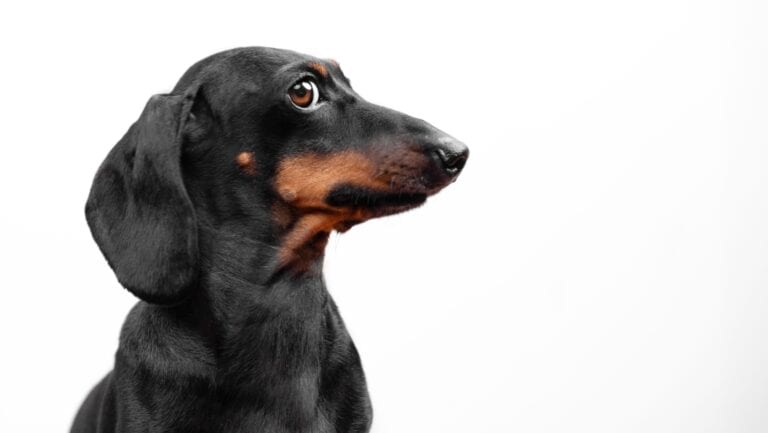
Your dog will do these 12 things when he’s truly fallen in love with you
Dogs bond to their owners with brain chemistry that mirrors the attachment between parents and infants, according to leading neuroscience research.
Dogs don’t just like their people; research from the National Institutes of Health shows many form deep attachment bonds to owners that look surprisingly similar to the way human infants bond with caregivers. Neuroscientists from Science.org have even found that when dogs and owners share loving eye contact, both experience a surge in oxytocin, the same “bonding hormone” involved in parent–child attachment.
If your dog is truly in love with you, you’ll see it in a dozen small, everyday behaviors long before you ever say the word “bond.”
He Can’t Stop Looking Into Your Eyes
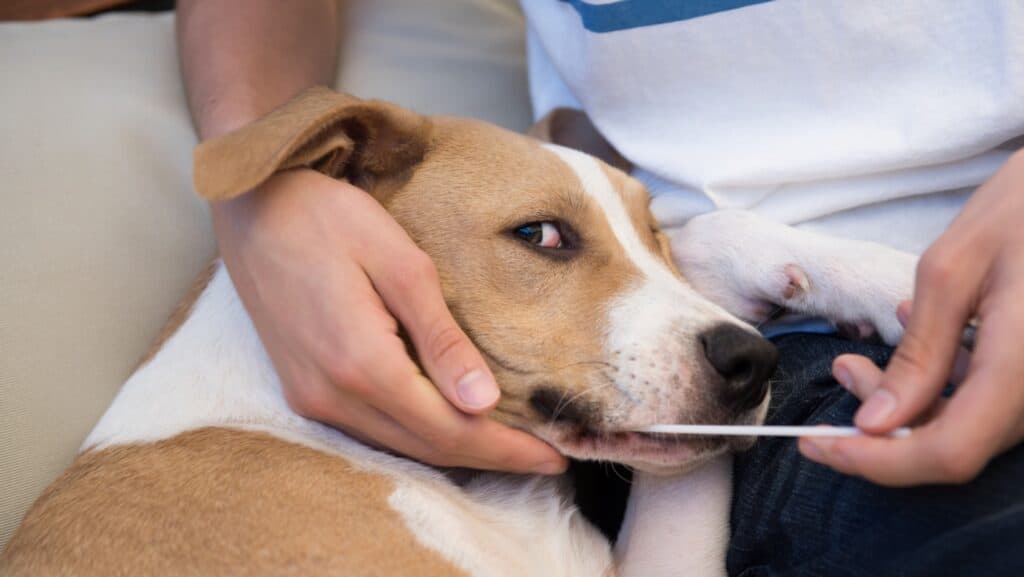
When dogs gaze softly at their owners, it’s not just cute, it’s chemical. A landmark study in Science found that mutual eye contact between dogs and their people significantly raised oxytocin levels in both, creating a positive feedback loop similar to the bond between mothers and infants. This effect did not occur in hand‑raised wolves, suggesting that it evolved specifically in dogs to strengthen the human–canine relationship.
Scientific American notes that this soft “puppy gaze” is one of the clearest biological signals of attachment and trust between dogs and humans. If your dog often seeks your eyes, then relaxes or wags gently when you meet his gaze, that’s a powerful sign of love.
He Follows You from Room to Room

Many dogs quietly trail their favorite person around the house, waiting outside the bathroom or shifting rooms when you do. A review of attachment behavior notes that securely attached dogs often show “proximity seeking”; they want to stay near their primary attachment figure, especially in mildly stressful or unfamiliar situations.
Behavior experts say this “little shadow” routine reflects both affection and a sense of safety. The Kennel Club and other organizations point out that dogs who trust their people tend to stick close, not because they can’t be alone, but because your presence is their favorite place to be.
He Sleeps Curled Up Against You

In the wild, dogs and their ancestors slept in close contact for warmth and protection. Modern pet dogs often recreate that by sleeping pressed against their humans, even when they have comfy beds of their own.
A Petplan article on dog–owner attachment found that securely attached dogs showed distinct sleep patterns and appeared to use their owners as a “safe haven” during mildly stressful situations. If your dog consistently chooses your bed, your feet, or the space right next to you at night, it’s a strong sign he feels safest when he can touch you.
He Brings You His Favorite Toys

When a dog proudly drops a slobbery toy in your lap, it’s about more than play. Veterinary and insurance experts note that bringing prized toys to you is a sign of trust and affection; they’re sharing something valuable and inviting you into their world.
Attachment researchers describe this as “social referencing”: dogs look to their owners during play and often direct their favorite activities toward them. A dog that repeatedly chooses you as their designated playmate is telling you that you’re at the center of their social circle.
He Checks on You Even When He’s Busy

In off‑leash areas or at home, strongly bonded dogs often pause their exploring or playing to glance back or trot over for a quick check‑in. Owners on dog‑training forums and in observational studies report that securely attached dogs “keep track” of their person’s location, even when they’re having fun elsewhere.
According to Medical Daily, this behavior aligns with attachment theory: your dog uses you as a secure base. He’s confident enough to explore, but he still wants to know exactly where his favorite person is.
He Listens to You Even When You Don’t Have Treats
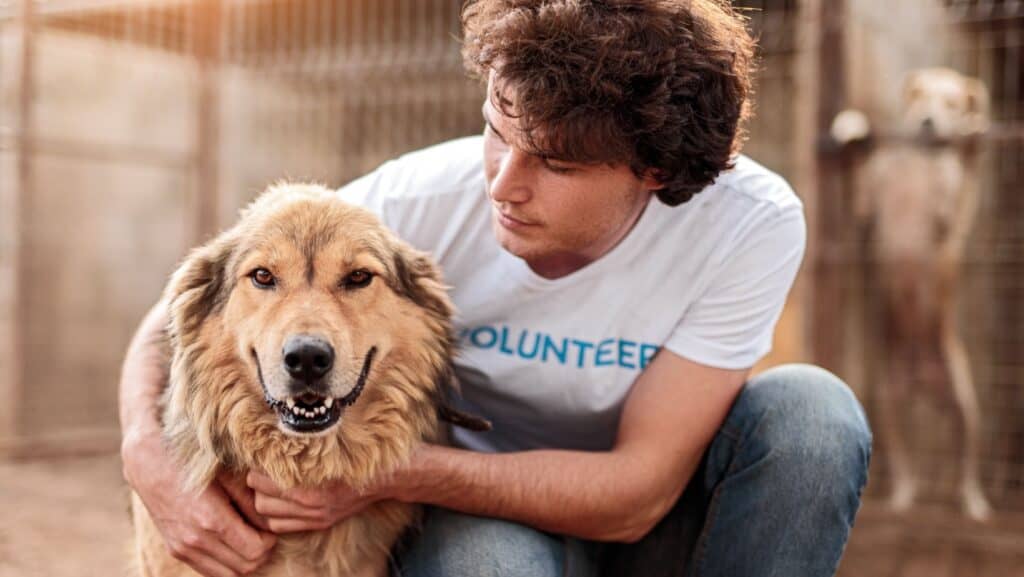
Training isn’t just about commands; it’s an attachment test. Dogs that obey only when there’s food on the line may be motivated more by rewards than by relationship. But dogs with strong bonds often respond reliably to cues even when there’s nothing obvious in it for them.
Research on dog behavior and owner satisfaction finds that owners who feel strongly attached to their dogs tend to report better responsiveness and cooperation. If your dog comes when you call in the middle of a fun game or busy park, that’s a sign your relationship matters more than the distraction.
He Mirrors Your Emotions and Comforts You

Dogs are famously sensitive to human emotions. Post Insurance notes that they can distinguish between happy and angry facial expressions and often adjust their behavior when their owners are distressed. Many caregivers report that their dogs approach, lean on, or lick them when they cry or seem upset.
Behavior experts describe this as emotional contagion and empathy‑like responding; dogs feel and react to our moods. When your dog chooses to lie quietly beside you on hard days or gets visibly excited when you’re joyful, he’s not just reading you; he’s emotionally invested.
He “Protects” You or Your Space (Without Going Overboard)

A dog who positions himself between you and strangers, watches the door, or becomes more alert when someone approaches you is showing affiliative protectiveness. Dogs often treat their owners as members of their social group or “family,” and guarding those group members is natural.
Of course, healthy protectiveness shouldn’t tip into aggression or reactivity, but a dog that gently keeps an eye on you, especially in new environments, is signaling that your safety matters to him.
He “Talks” to You and Greets You Like You’re His Favorite Person

Some dogs are quiet, others very vocal, but many exhibit distinctive greeting rituals for their favorite human: happy whines, excited barks, full‑body wiggles, or zoomies when you walk through the door. Studies find that dogs show more intense greeting and longer contact with their owners than with unfamiliar people, even if they like the stranger.
If your dog’s reaction to you is clearly different and more joyful than to anyone else in the room, that’s attachment in action.
He Chooses Your Scent When You’re Gone
In separation tests, dogs often orient toward their owner’s last known location, scratch at the door, or settle near the owner’s chair or belongings. One study found that when left alone in a room, dogs gravitated to their owner’s chair or clothing rather than a stranger’s, suggesting comfort in the familiar scent.
Behaviorists say this is similar to children holding a parent’s sweater or scarf for comfort. If your dog curls up on your pillow or on a pile of your laundry when you’re out, he’s using your smell as an emotional anchor.
He Stays Relaxed Enough to Sleep Deeply Around You
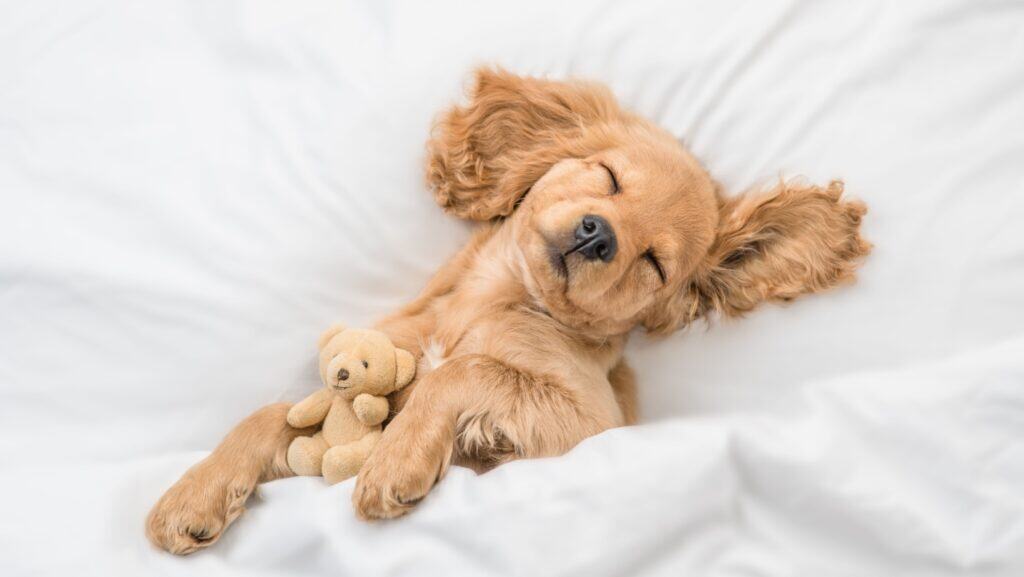
Attachment studies using EEG have shown that dogs more strongly attached to their owners display sleep patterns suggesting better emotional regulation when resting near them. Essentially, the dog’s brain can shift into deeper, more restorative sleep when the owner is present, indicating he truly experiences you as a safe haven.
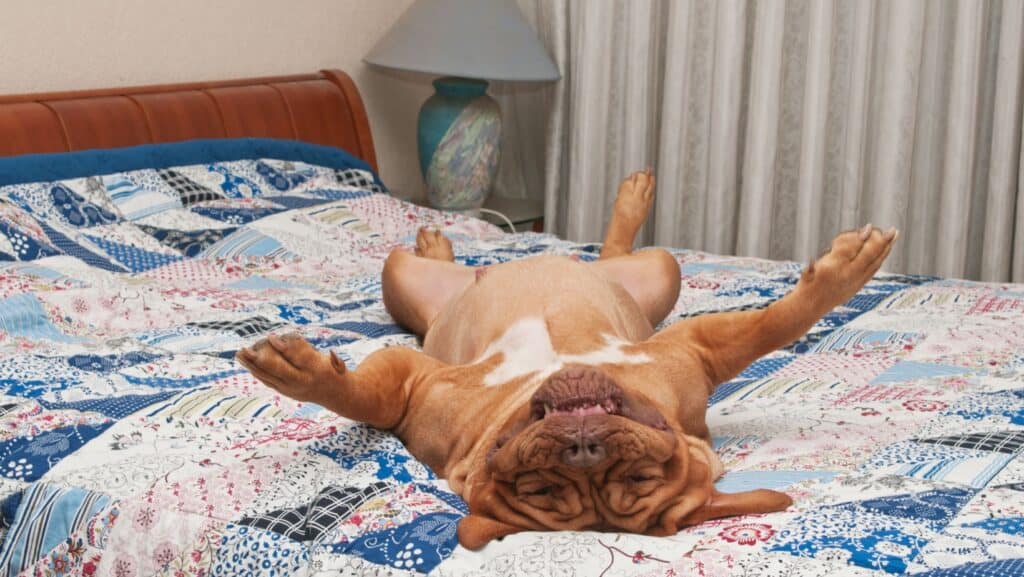
A dog that sprawls on its back, sighs deeply, or twitches through dreams next to you is showing profound trust. That kind of vulnerability around a human is a strong, science‑backed signal of secure attachment.
He Uses You as His “Secure Base” in New or Stressful Situations (The Ultimate Proof of Love)

Perhaps the clearest scientific proof that your dog is in love with you is something researchers call the “secure base effect.” In classic experiments, dogs explored more, played longer, and persisted with problem‑solving tasks when their owner was present, but not when only a stranger was there. When separated, they showed distress behaviors, such as staring at the door or their owner’s chair, and greeted their owners far more enthusiastically than strangers upon reunion.
Attachment researchers say this pattern closely mirrors human infant–caregiver relationships: your dog feels braver and more curious when you’re nearby and more anxious when you’re gone. If your dog explores the world, then returns to you for quick “emotional refills”, especially in new places, that secure base behavior is the ultimate, evidence‑based sign he’s truly fallen in love with you.
Disclosure line: This article was developed with the assistance of AI and was subsequently reviewed, revised, and approved by our editorial team.
20 Odd American Traditions That Confuse the Rest of the World
20 Odd American Traditions That Confuse the Rest of the World
It’s no surprise that cultures worldwide have their own unique customs and traditions, but some of America’s most beloved habits can seem downright strange to outsiders.
Many American traditions may seem odd or even bizarre to people from other countries. Here are twenty of the strangest American traditions that confuse the rest of the world.
20 of the Worst American Tourist Attractions, Ranked in Order

20 of the Worst American Tourist Attractions, Ranked in Order
If you’ve found yourself here, it’s likely because you’re on a noble quest for the worst of the worst—the crème de la crème of the most underwhelming and downright disappointing tourist traps America offers. Maybe you’re looking to avoid common pitfalls, or perhaps just a connoisseur of the hilariously bad.
Whatever the reason, here is a list that’s sure to entertain, if not educate. Hold onto the hats and explore the ranking, in sequential order, of the 20 worst American tourist attractions.