11 everyday traditions you might not know have pagan roots
Your holiday decorations, wedding rituals, birthday wishes, and even your calendar may have roots older than your group chat is ready to handle. Americans still pour billions into traditions that feel totally normal, yet many of those customs began in older pre-Christian festivals, folk beliefs, agricultural rites, and ancient polytheistic cultures. Halloween spending alone is expected to reach a record $13.1 billion in 2025, so clearly the old spirits have a very healthy marketing department.
Pagan does not mean spooky, evil, or automatically anti-Christian. In this article, it simply means customs that grew from older folk religions, seasonal rituals, nature symbolism, or polytheistic cultures before later religions and modern consumer culture reshaped them. Pew Research has found that 70% of U.S. adults describe themselves as spiritual in some way, which makes America’s love for old symbols feel less surprising, right?
Decorating Christmas trees

That glowing Christmas tree in the living room feels cozy, wholesome, and very “pass the cocoa before Uncle Mike starts talking politics.” Yet the love of evergreens reaches far back into older winter customs.
Britannica notes that ancient Egyptians, Chinese, and Hebrews used evergreen trees, wreaths, and garlands as symbols of eternal life, and it also links European tree worship to pagan traditions that survived in Scandinavian customs. So yes, that fir tree with sentimental ornaments and one suspiciously ugly childhood craft carries a much older winter message than most people realize.
The modern American version now runs on nostalgia, family photos, retail displays, and a tiny bit of emotional blackmail from children who demand “the big tree.” USDA data show that U.S. growers cut more than 14.5 million Christmas trees in 2022, with cut-tree sales reaching $553 million, so this ancient love of winter greenery still supports a serious seasonal economy.
The trend has also split into camps over real versus artificial trees, which somehow turns a symbol of renewal into an annual household debate. Still, the root idea remains simple and oddly beautiful: people bring green life indoors when the world outside looks cold, bare, and dramatic.
Kissing under mistletoe

Mistletoe sounds romantic until you remember Kew Gardens calls it a “poisonous parasitic evergreen plant.” Lovely, right? Still, ancient Greek, Roman, Celtic, and Norse traditions treated mistletoe as special long before office holiday parties made it awkward.
Kew says mistletoe held high value in ancient Greek, Roman, and Celtic culture, and the Smithsonian ties its mystical reputation to Norse myth, where the plant appears in the story of Balder.
The kissing part grew later, especially in English Christmas customs, but the older symbolism gave the plant its strange power. It stayed green in winter, grew high in trees, and looked like it belonged halfway between earth and sky, which probably impressed people before we had streaming services and indoor heating.
NRF says 91% of consumers planned to celebrate the winter holidays in 2025, with an average seasonal budget of about $890, so even tiny traditions like mistletoe live inside a massive cultural machine. Ever kissed someone under a plant that technically steals nutrients from trees? Romance really does have range.
Hanging wreaths on doors

A wreath on the front door now says “welcome,” “festive,” or “I found a sale at HomeGoods and got carried away.” Older cultures read circles and greenery in deeper ways. Time traces wreath symbolism through ancient Greece and Rome, where wreaths marked honor, victory, and divine association, before Christian and holiday customs gave them new meanings. The circular shape also helped people express continuity, renewal, and the return of life, which hits differently during the dark half of the year.
Americans still love that old combination of circle plus greenery, even if most of us just want the porch to look cute. Holiday spending keeps proving it. NRF projected 2025 winter holiday retail sales between $1.01 trillion and $1.02 trillion, and decorations sit inside that giant seasonal ritual of buying, arranging, gifting, and making the house feel warmer than the weather.
A wreath may look simple, but it quietly carries ancient victory symbols, evergreen hope, and modern curb appeal in one neat circle. Honestly, that is a lot of pressure for something hanging on a nail.
Wearing Halloween costumes

Halloween costumes may look like superheroes, pop stars, horror villains, or whatever the internet bullied into trending that year. The deeper root reaches into Samhain, the ancient Celtic festival that Smithsonian describes as “summer’s end.”
According to Smithsonian, costumed trick-or-treating takes inspiration from Samhain, a festival more than 2,000 years old, when people believed the boundary between the living and the dead grew thin. So the costume aisle at Target has a much older ancestor than plastic vampire teeth would suggest.
The modern numbers look wild. NRF expected 51% of Halloween celebrants to dress in costume in 2025, and estimated costume spending at $4.3 billion. That means Americans still spend serious money on a ritual built around disguise, performance, fear, play, and seasonal transformation.
The old idea involved confusing or warding off spirits, but today we mostly confuse neighbors, coworkers, and children, who cannot understand why Dad dressed as a giant hot dog. Some traditions mature with grace; this one grabbed glitter makeup and ran.
Carving jack-o’-lanterns

The pumpkin on the porch looks deeply American, especially when it slowly collapses into orange soup by November. Yet the jack-o’-lantern tradition did not start with pumpkins.
The Library of Congress says that people in Ireland carved turnips before pumpkins entered the picture, and that the custom is connected to the legend of Stingy Jack. Irish immigrants later found pumpkins in America and, honestly, upgraded the carving experience because turnips fight back like tiny root-vegetable enemies.
USDA data shows how huge this autumn habit has become. In 2024, total U.S. pumpkin production reached 1.44 billion pounds, with Illinois alone producing about 485 million pounds. That is a lot of porch décor, pie filling, school field trips, and Instagram pumpkin patch content.
The old folk purpose involved frightening spirits or marking eerie seasonal nights, but today the ritual lets families make art, toddlers make messes, and adults pretend they enjoy scooping pumpkin guts. Ever noticed how ancient protection magic somehow became a carving contest?
Decorating Easter eggs
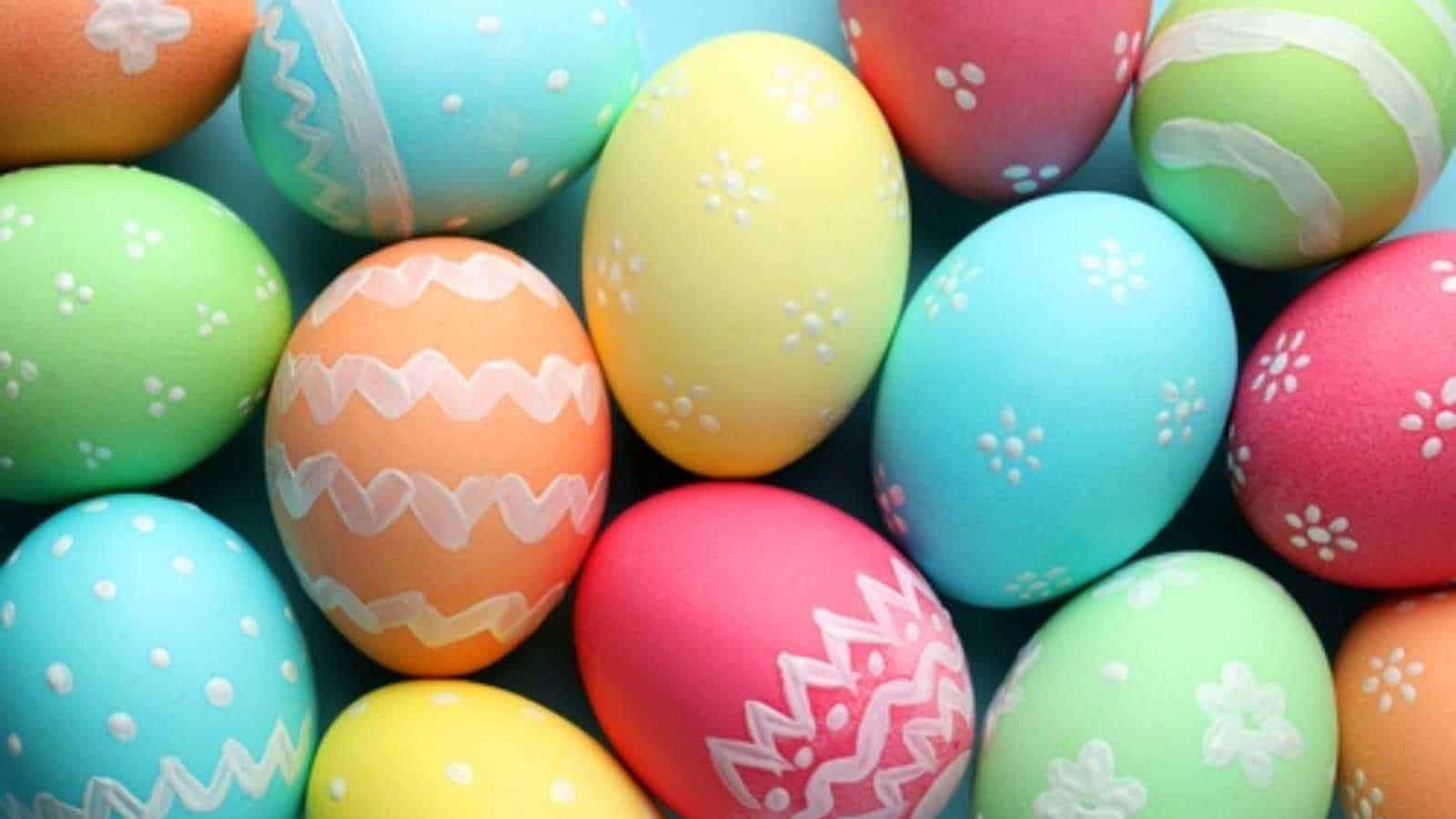
Easter eggs now mean candy, pastel dye kits, backyard hunts, and at least one child crying because a sibling found the golden egg first. The symbol goes much deeper.
Britannica says early Christians borrowed the pre-Christian image of eggs as a symbol of regeneration and applied it to the Resurrection. History also links eggs to ancient symbols of life, renewal, and rebirth across many cultures, including pre-Christian pagan traditions.
The American version still leans hard into spring, color, children, and candy. NRF reported that Easter spending reached $23.6 billion in 2025, with 92% of shoppers buying candy and major spending also going to food, gifts, clothing, flowers, and decorations. That is quite the glow-up for an ancient fertility and rebirth symbol.
The egg survived because it makes visual sense: it looks plain, then something alive breaks out of it. Nature already wrote the metaphor, and humans simply added dye, chocolate, and questionable plastic grass.
Welcoming the Easter bunny

The Easter Bunny makes very little logical sense if you stare at it too long. A rabbit lays eggs; children accept this without complaint, and adults spend money to keep the plot moving.
The Smithsonian explains that European traditions treated hares as powerful fertility symbols, and the Easter hare later entered German folklore before becoming a familiar American spring figure. Britannica also connects hares with rebirth in ritual contexts, going back to Neolithic societies.
That older fertility symbolism still shows up in the modern spring shopping season, even if most shoppers now think in terms of baskets and chocolate. NRF’s 2025 Easter survey found that shoppers expected to spend $3.3 billion on candy, $1.9 billion on flowers, and $1.7 billion on decorations.
The bunny works because spring practically begs for symbols of new life, and rabbits, with their famously rapid reproduction, arrive with a very obvious résumé. Subtle? Not at all. Effective? Absolutely.
Exchanging wedding rings
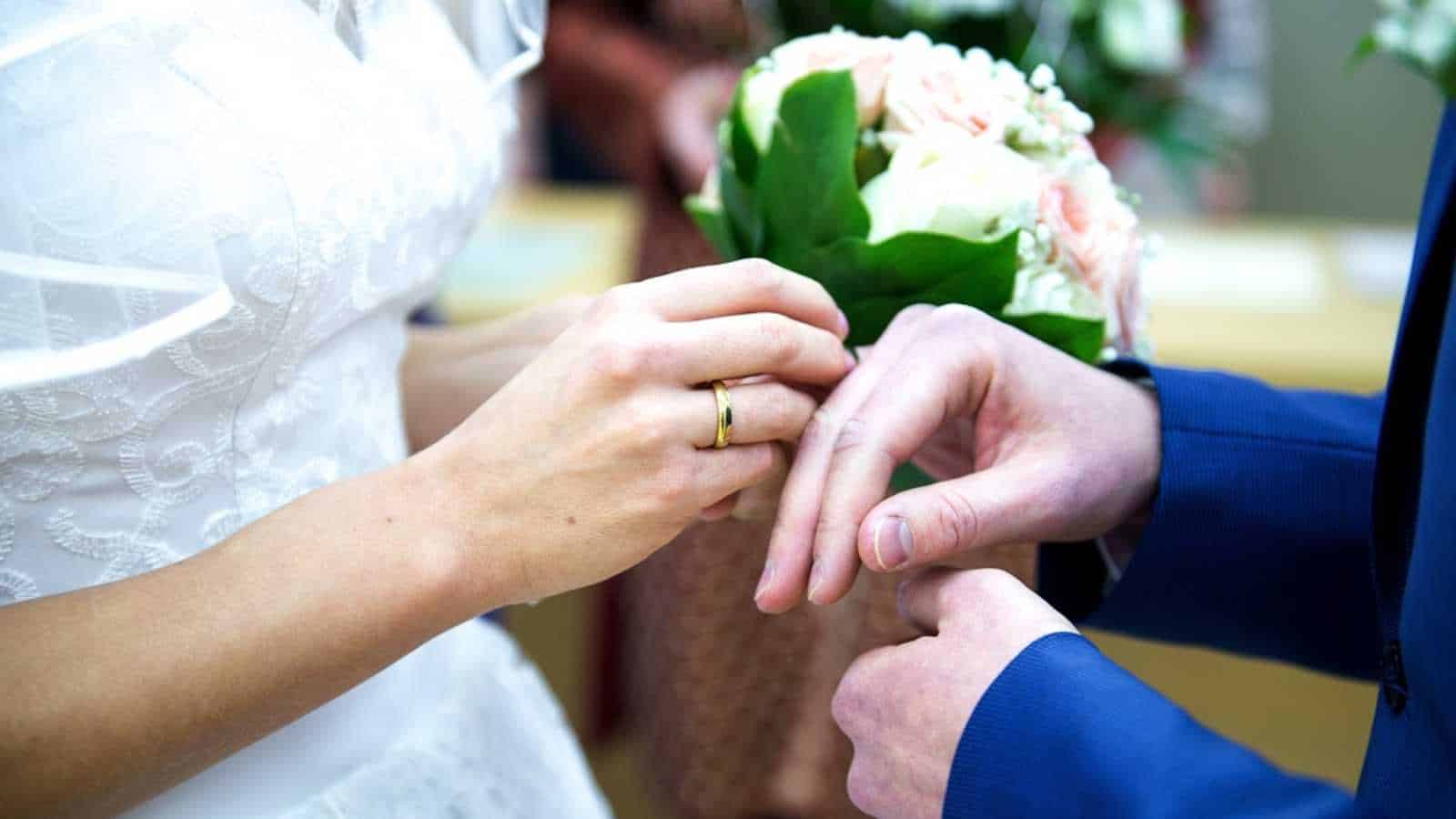
Wedding rings feel timeless because people keep attaching giant emotions to tiny circles. GIA traces the ring symbol to Egyptian pharaohs, who used rings to represent eternity because a circle has no beginning or end.
Britannica says the earliest concrete evidence for engagement rings comes from ancient Rome, where the ring signaled a legal agreement rather than a fairy-tale romance. So that emotional ring exchange carries older ideas about eternity, property, alliance, and public commitment. Romantic? Sometimes. Historically messy? Very much so.
The tradition still matters in a country where marriage has changed dramatically. CDC provisional data for 2023 lists 2,041,926 marriages in the United States, and The Knot’s 2026 Real Weddings Study put the average 2025 wedding cost at about $34,200.
People may customize vows, skip churches, stream ceremonies, or trade diamonds for lab-grown stones, but many still keep the circular token. Why? Because a ring says something the human brain understands fast: this bond has a shape, a symbol, and a public meaning. Also, it photographs well, which never hurts.
Throwing rice or confetti at weddings

Throwing rice at newlyweds may look like harmless chaos with cleanup fees attached. The older meaning points to fertility, prosperity, and protection. Britannica says the ancient custom of throwing rice symbolized the wish that the couple would be fruitful, and wedding sources trace grain-tossing back to older European and Roman customs.
Guests were once showered with grain because grain signified abundance, children, harvest, survival, and good fortune. Today, couples often choose petals, bubbles, birdseed, or biodegradable confetti because venues enjoy rules almost as much as they enjoy deposits.
The trend has changed, but the idea of blessing remains. The Knot Worldwide reported that around 2 million U.S. couples married in 2025, feeding a wedding industry valued at more than $100 billion. That means even the tiny send-off moment sits inside a massive modern ritual economy.
People may not say, “May your fields grow and your household multiply,” because that would make the reception weird. Instead, they toss petals, cheer loudly, and hope the couple starts life together with luck, love, and no rice stuck in anybody’s hair.
Blowing out birthday candles

Birthday candles look innocent until you realize the whole ritual involves fire, wishes, breath, cake, and everyone staring at one person. Ancient Greek tradition is often credited with the early candle-and-cake connection.
Food and Wine traces candlelit cakes to worshippers who brought moon-shaped cakes to Artemis, the Greek goddess of the moon and hunt, and lit candles to make the cakes glow like the moon. So your birthday wish may carry a faint echo of offerings, smoke, and divine attention. No pressure, but maybe choose a better wish than “new phone.”
The custom evolved across Europe, especially in German birthday celebrations for children, before becoming the familiar American party moment. National Geographic notes that candles later came to represent inner light, personal growth, and the “light of life.” That explains why the ritual still feels emotional, even when the cake comes from a grocery store, and someone sings badly on purpose.
We keep doing it because the action feels satisfying: light the candles, make the wish, blow them out, start another year. Humans love symbolic resets, especially when frosting rewards the effort.
Naming the days of the week

The most everyday pagan-rooted tradition may sit right on your phone calendar. Tuesday, Wednesday, Thursday, and Friday carry the names of old Germanic and Norse deities, including Tiw or Tyr, Woden or Odin, Thor, and Frigg.
Britannica explains that Thursday comes from Thor’s day and Friday from Frigg’s day, with the Roman planetary naming system shaping the wider pattern. So every time someone says “Thank God it’s Friday,” language quietly hands Frigg a tiny cameo.
That one feels especially funny because Americans use these names constantly without thinking about them. Work schedules, school calendars, church bulletins, airline tickets, sports lineups, and medical appointments all carry old divine names in plain sight.
The Viking Ship Museum explains that the Romans named days after the sun, moon, planets, and gods, and that Nordic cultures later mapped several Roman gods onto similar Nordic deities. We do not worship Thor when we say Thursday, of course, but we keep his name alive every week. That is impressive branding, thunder god edition.
Making New Year’s resolutions

New Year’s resolutions feel modern because gyms, budgeting apps, and influencers attack us every January with suspicious optimism. The habit reaches much further back. History traces the first New Year’s resolutions to ancient Babylonians about 4,000 years ago, when people made promises to the gods during Akitu, a major New Year festival.
Britannica also says some scholars connect early resolutions to Babylonian attempts to curry favor with the gods. So yes, your promise to drink more water belongs to a tradition that once involved divine accountability.
Americans still love the reset, even when February quietly exposes the lie. Pew found that three in 10 Americans made at least one New Year’s resolution in 2024, and YouGov found that 31% planned resolutions or goals for 2025, with younger adults much more likely to join in.
The old promise once focused on debts, borrowed goods, kings, crops, and divine favor. Today, it focuses on fitness, money, mental health, relationships, and pretending that one planner will fix everything. Different gods, same human hope: please let this year go better than the last one.
Key takeaway

Many everyday traditions did not arrive in one clean, tidy historical package. They moved through older pagan festivals, folk customs, ancient symbols, Christian reinterpretations, immigrant traditions, consumer culture, and family habits until they became normal American life. That makes them more interesting, not less meaningful.
So the next time you light a birthday candle, hang a wreath, carve a pumpkin, check your Thursday schedule, or swear that this year you will finally keep a resolution, remember this: humans have always used rituals to make time, love, fear, luck, and hope feel a little easier to hold.
Disclaimer: This list is solely the author’s opinion based on research and publicly available information. It is not intended to be professional advice.
Like our content? Be sure to follow us.