11 ways Jesus’s teachings challenged how society treated women
Jesus did not treat women like background characters, and that still feels shockingly fresh. In the U.S., religion still shapes a significant part of public life, with Pew’s 2023 to 2024 Religious Landscape Study finding that 62% of American adults identify as Christian, down from 78% in 2007. Women also remain more religious than men on several measures, including daily prayer, with 50% of women saying they pray daily compared with 37% of men.
That makes this topic bigger than a dusty Bible study with weak coffee and folding chairs. Gallup reported in April 2026 that young men aged 18 to 29 now show a sharp rise in the share saying religion matters deeply to them, suggesting the gender conversation around faith keeps shifting in real time.
So, when we look at 11 ways Jesus’s teachings challenged how society treated women, we are not just revisiting ancient stories; we are asking why those stories still poke modern America right in the conscience.
He treated women as serious students
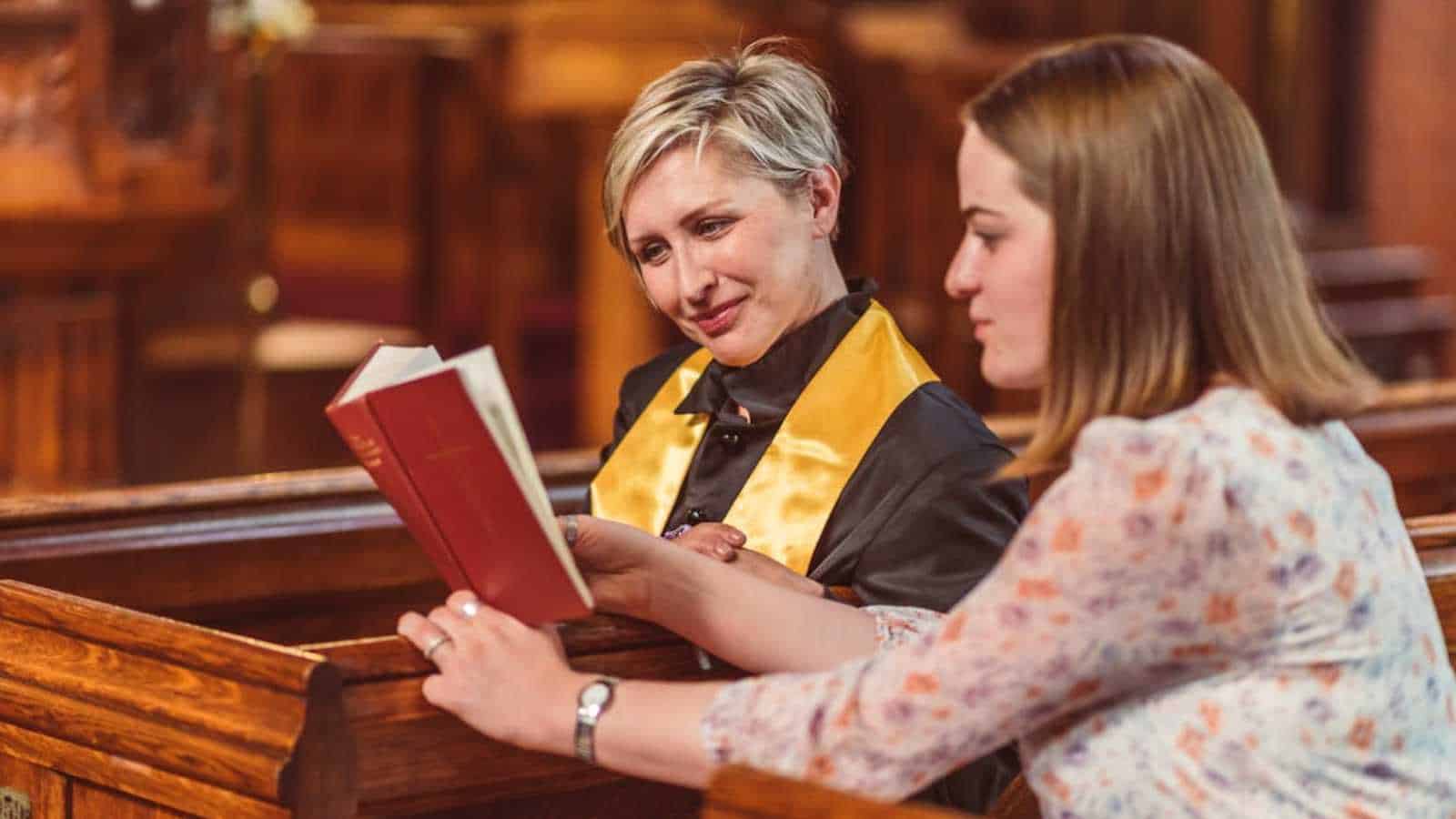
One of the clearest examples comes from Mary of Bethany, who sat listening to Jesus while Martha handled the household work. That scene in Luke 10 looks calm on the surface, but it quietly flips the room upside down because Jesus lets Mary take the posture of a learner instead of pushing her back into kitchen duty. Ever noticed how some people still get weird when women study, teach, lead, question, or know more than they “should”? Same energy, different century.
I love this moment because Jesus does not pat Mary on the head like a sweet little helper. He treats her mind as worthy of attention, which challenges every culture that says women should serve first and think later. That point still matters because women continue to face limits in church leadership, and one 2024 study notes that women make up about 13% of head or senior pastors in U.S. Protestant churches.
He spoke publicly with a woman others avoided

The Samaritan woman in John 4 had every social label working against her. She was a woman, a Samaritan, and someone with a messy personal history, which basically made her the kind of person polite society preferred to whisper about from a safe distance. Jesus did the opposite, because apparently he missed the memo about protecting his image from neighborhood gossip.
Their conversation turns into one of the longest one-on-one theological exchanges in the Gospels. Jesus discusses worship, truth, and living water with her, not with a panel of approved experts in shiny robes. He gives a morally complicated woman a voice before many people would even give her eye contact.
He challenged public shame around women’s reputations

Luke 7 gives us another uncomfortable dinner scene, because apparently dinner parties in the Gospels had more tension than Thanksgiving with cable news running in the background. A woman known for a sinful life enters a Pharisee’s house, weeps near Jesus, and anoints his feet while the host silently judges both of them. Jesus does not join the judgment parade, which must have ruined the evening for everyone who came for free food and moral superiority.
Instead, Jesus turns the spotlight toward love, forgiveness, and the host’s coldness. He challenges the easy habit of reducing a woman to her worst rumor, a habit society has kept alive with impressive dedication. If social media had existed then, that woman would have trended for all the wrong reasons, but Jesus refuses to let shame write her whole story.
He restored dignity to a suffering woman

Mark 5 tells the story of a woman who had bled for 12 years, spent everything on doctors, and grew worse instead of better. That detail hits modern readers because medical suffering still drains people emotionally, physically, and financially, especially when nobody seems to listen. Jesus stops in a crowd, makes space for her voice, and calls attention to her faith rather than treating her pain as an inconvenience.
This moment challenges the old habit of hiding women’s bodies, illnesses, and pain behind embarrassment. Jesus does not shame her for touching him, and he does not treat her condition like something dirty that makes her less human. In a country where women still talk openly about being dismissed in medical settings, this story feels painfully current, even though it comes from a world without insurance forms and waiting room magazines.
He questioned the easy divorce that harmed women

Jesus’s teaching on divorce in Matthew 19 may sound strict at first, but the social context matters. Men held far more power in marriage decisions, and casual divorce could leave women economically and socially exposed. When Jesus points to the hardness of heart, he pushes the conversation away from male convenience and toward moral responsibility.
That challenge still speaks to any society that treats women as disposable once a man changes his mind. Jesus does not frame marriage as a playground for powerful people who can walk away while someone else carries the wreckage. He forces the question nobody enjoys asking: who pays the price when rules protect the person with more power?
He accepted women as financial supporters

Luke 8 names women who traveled with Jesus and supported his ministry from their resources. That detail may sound small until you remember how often religious history highlights male preachers, male patrons, male decision makers, and male everything else, because subtlety apparently took the day off. Mary Magdalene, Joanna, Susanna, and others helped fund the mission, which means women did not just watch the movement from the sidelines.
This matters today because churches still wrestle with the gap between women’s labor and women’s authority. Lifeway Research found that 68% of women churchgoers say ministry to women helps them build strong relationships, and 65% say it gives them space to feel refreshed, which shows how central women’s ministry remains in real church life. Jesus’s circle already showed women investing resources, energy, and leadership long before modern church committees discovered spreadsheets.
He made women key resurrection witnesses

Mary Magdalene stands at the center of the resurrection story in John 20. She goes to the tomb, sees what happened, and becomes the first person connected to the announcement that Jesus has risen. Britannica describes Mary Magdalene as one of Jesus’s most celebrated disciples and notes her fame as the first person to see the resurrected Christ.
That choice still carries weight because public testimony often belonged to men in ancient settings. Vatican News highlights the old title “Apostle of the Apostles” for Mary Magdalene, which says a lot in four words. Jesus gives the first Easter announcement to a woman, and that move still bothers anyone who prefers their messengers predictable, polished, and male.
He defended women’s worship from criticism

In Mark 14, a woman pours expensive perfume on Jesus, and the people nearby complain about the waste. Honestly, that reaction feels very human because somebody always finds a way to turn another person’s devotion into a budget meeting. Jesus stops the criticism and says her act will live in memory wherever the gospel spreads.
That response challenges the habit of policing women’s spiritual expression. He does not let the room reduce her act to poor planning, emotional excess, or bad financial judgment. He recognizes beauty, courage, and timing in her worship, which tells us something powerful: Jesus saw meaning where others saw a woman doing too much.
He called a disabled woman a daughter of Abraham

Luke 13 tells us Jesus healed a woman bent over for 18 years, then defended her when a synagogue leader objected to the timing. The phrase that grabs me comes when Jesus calls her a “daughter of Abraham,” because that title places her inside the covenant story with full dignity. He does not call her a problem, a distraction, or a case file.
That line challenges religious spaces that prioritize rules over relief. Jesus sees a woman’s suffering and acts, even when the respectable people complain about the procedure. If bureaucracy had a patron saint, that synagogue leader might have applied, but Jesus makes the woman’s freedom the point.
He welcomed women into public discipleship

Women did not merely appear in private domestic scenes around Jesus. Luke 8 shows women traveling with him, and the crucifixion and resurrection narratives keep women close to the story when many others disappear from view. Scholar Amy-Jill Levine’s essay frames the women at the cross and tomb as “witnesses, patrons, faithful disciples,” which sums up their role without pretending they were spiritual decoration.
That matters because public discipleship changes everything. A woman who follows, funds, witnesses, learns, and proclaims does not fit neatly into a society that wants her quiet and useful. Jesus’s movement gave women visible roles, and honestly, some modern institutions still act surprised by that ancient fact, which is a little awkward for them.
He valued women’s faith over social ranking

Jesus repeatedly praises faith in people who lack social power, and several women appear in those moments. The bleeding woman in Mark 5 receives public affirmation, the woman in Luke 7 receives defense and forgiveness, and Mary of Bethany receives approval for listening. Jesus keeps turning attention from status to trust, courage, love, and spiritual hunger.
That shift challenges every ranking system that treats wealthy, male, educated, or socially approved people as more spiritually believable. Jesus does not seem impressed by the room’s hierarchy, which must have made certain powerful people deeply uncomfortable. Isn’t that the point, though, that faith can show up in the person everyone else has already underestimated?
He exposed the gap between religion and compassion

Jesus’s interactions with women often reveal a bigger problem: people can sound religious while acting cold. The Pharisee in Luke 7 hosts Jesus but judges the woman, the synagogue leader in Luke 13 protects the schedule but misses the miracle, and the critics in Mark 14 discuss money while missing devotion. Jesus keeps dragging compassion back to the center, which is exactly where it belongs.
That lesson still fits the American religious landscape. Pew says women remain more religious than men across several measures, although younger adults show a smaller gender gap than older generations. So the real question for churches, families, and readers is simple: if women keep showing up in faith spaces, will those spaces treat them the way Jesus did, or just thank them for volunteering and hand them another cleanup list?
Key takeaway

Jesus’s teachings challenged how society treated women by taking their minds, bodies, voices, faith, pain, leadership, and testimony seriously. He spoke with women others avoided, defended women others judged, healed women others ignored, and trusted women with news that changed the world. That is not soft sentiment; that is social disruption with sandals on.
Disclaimer: This list is solely the author’s opinion based on research and publicly available information. It is not intended to be professional advice.
Like our content? Be sure to follow us.