12 cities younger Americans are moving to for lower costs and less stress
The American dream used to come with a skyline. Now, for many younger adults, it comes with a rent bill they can actually survive.
That shift says a lot. A city starts looking different when your paycheck doesn’t vanish into housing, when the coffee shop down the street doesn’t feel like a luxury, when the commute doesn’t steal your mood before 9 a.m., and when the quiet at night feels like relief instead of loneliness.
Younger Americans are still chasing big lives, but many are no longer willing to buy them at panic-level prices. Zillow’s 2024 analysis of U.S. Census data found that 58.6% of Gen Z renters were rent-burdened, meaning they spent more than 30% of their income on housing, while Redfin reported that buyers under 35 took out 39.7% of new U.S. mortgages in 2023.
That’s the real story behind this migration wave: younger people aren’t giving up on ambition. They’re looking for cities where ambition leaves room for groceries, savings, friends, fresh air, and a little peace.
Pittsburgh, Pennsylvania

Pittsburgh feels like the city younger adults mention after they’ve done the math and realized life should leave a little change in the jar. Redfin found that buyers under 35 took out 48% of new mortgages in Pittsburgh in 2023, the highest share among the 50 biggest U.S. metros in its analysis, which says a lot in a country where many young adults feel locked out of ownership.
Travel + Leisure’s 2026 young-adult ranking also put Pittsburgh at No. 1, pointing to lower housing costs, paychecks that stretch farther, and nearly 350 restaurants and coffee shops per 10 square miles. Redfin Premier agent Antonia Ketabchi captured the mood behind younger buyers when she said, “First-time buyers aren’t as spooked by high rates.”
That line fits Pittsburgh’s appeal. It is not pretending to be cheap magic. It simply gives young workers a rare mix of rent relief, neighborhood life, and a real shot at buying before hope turns brittle.
Cincinnati, Ohio

Cincinnati has the kind of appeal that sneaks up on people who are tired of watching their income disappear by the fifth of the month. Redfin found that 46.5% of new mortgages in Cincinnati went to buyers under 35 in 2023, placing it right behind Pittsburgh among major metros for young borrowers.
Zillow’s 2024 rent-burden table adds another layer: Gen Z renters in Cincinnati had a median gross rent of $1,041, compared with the national Gen Z median of $1,415, though 60.4% were still rent-burdened. That last number keeps the story honest.
Cincinnati is not a fairy tale where every bill vanishes. It is more like a door that still opens when you push. For younger Americans craving stability, the city offers strong bones, Midwest prices, old neighborhoods, sports, food, healthcare jobs, logistics work, and a housing market where the word “ownership” does not sound like something their parents got to keep for themselves.
Detroit, Michigan

Detroit’s story has been written too many times as a warning, but younger buyers are starting to read it as an opening chapter. Redfin reported that 46.1% of new mortgages in Detroit went to buyers under 35 in 2023, putting it in the same youth-buyer tier as Pittsburgh, Cincinnati, and Philadelphia.
Zillow’s Gen Z rental data gives the city more context: Detroit’s Gen Z renters had a median gross annual income of $45,015, median gross rent of $1,180, and a rent-burden rate of 57.1%, which was still painful but lower than the national Gen Z rate of 58.6%.
For a young person coming from a coastal city where a closet-sized apartment can swallow a paycheck whole, Detroit can feel like a deep breath in an old brick building with sunlight coming through the windows.
The trade-off is real, since reinvestment sits beside uneven recovery, but the city offers space, creative energy, lower entry prices, and the powerful feeling that a young buyer can still plant a flag somewhere.
Philadelphia, Pennsylvania

Philadelphia gives younger Americans something many still want: city life with a pulse, but without the full New York rent bruise. Redfin found that 46.3% of new mortgages in Philadelphia went to buyers under 35 in 2023, making it one of the strongest large metros for young homebuyers.
Zillow’s 2024 data counted 84,624 Gen Z renter households in the metro, with a Gen Z median gross annual income of $46,947, a median gross rent of $1,420, and a rent-burden rate of 58.1%, almost right at the national Gen Z level. That blend explains the draw.
Philly is not dirt cheap, but it offers young movers trains, rowhomes, corner stores, restaurants, hospitals, universities, art, sports heartbreak, and a sense of place that doesn’t feel manufactured.
For someone priced out of Manhattan or exhausted by D.C. rent, Philadelphia can feel like a compromise with soul. It still asks for a budget, but it also gives something back: walkable neighborhoods, real history, and a chance to build an adult life without giving every dollar to the landlord.
Raleigh, North Carolina

Raleigh has become the soft landing for young professionals who want opportunity without feeling chewed up by the city that provides it. PODS’ 2025 Moving Trends Report ranked Raleigh No. 3 among the top move-in cities, after it climbed from 20th in 2023 to 6th in 2024, and the same report noted that North Carolina had five of the top 20 move-in destinations in 2025.
GOBankingRates added that Raleigh’s cost of living ran 2% below the national average, with a median household income of $82,424 and a livability score of 84 out of 100. Zillow Rental Trends Expert Emily McDonald explained the trade-off many young renters face: big metros are expensive because they are also “where the jobs are.”
Raleigh’s charm is that it narrows that painful gap. With Research Triangle jobs, universities, trees, breweries, and weekend drives to the coast or the mountains, it suggests to younger movers that they may not have to choose between ambition and a nervous system.
Wilmington, North Carolina
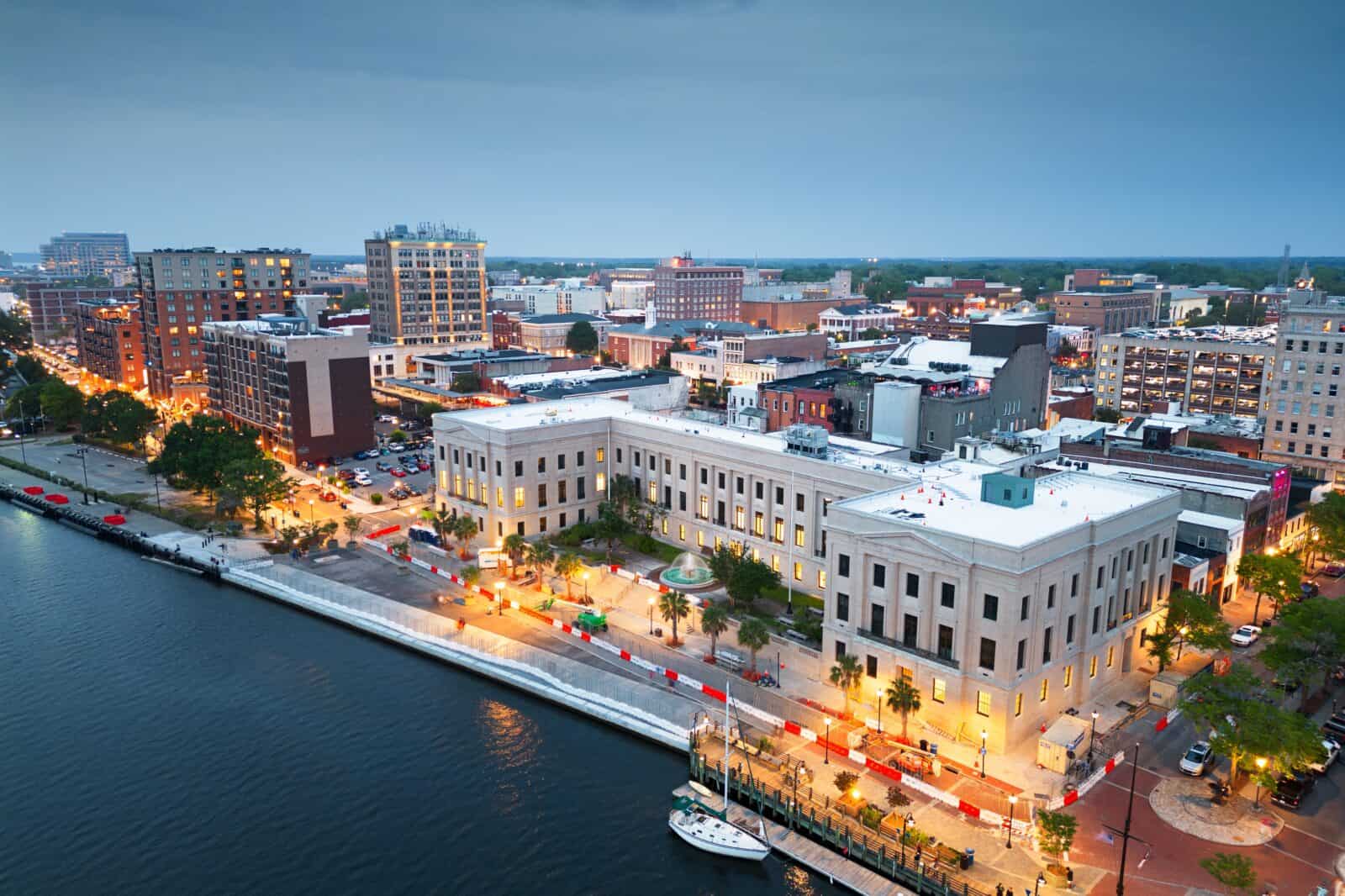
Wilmington sells a softer version of the coastal dream. It has salt in the air, porches in the evening light, and a pace that can feel like someone finally turned down the volume. PODS ranked the Myrtle Beach, SC/Wilmington, NC area as the No. 1 move-in destination in 2025 for a record-setting third year, and the report said the area checks boxes like affordability, friendliness, and access to nature.
GOBankingRates listed Wilmington as the No. 1 city Americans were moving to in its cost-of-living and livability breakdown, with a cost of living 4% below the national average, a median household income of $63,900, and a livability score of 70 out of 100.
That makes the city especially tempting for younger remote workers, hospitality workers, nurses, creatives, and service professionals who want ocean-adjacent life without Miami-level pressure.
The warning label is real, since the Atlantic hurricane season is part of the deal, but for many movers, Wilmington offers something priceless: a life where the day can end near the water, and the rent does not eat the whole paycheck.
Greenville–Spartanburg, South Carolina

Greenville–Spartanburg has that “why didn’t anyone tell me sooner?” feeling. It sits close to mountains, lakes, trails, manufacturing jobs, healthcare work, and a growing food scene, but it still carries a calmer price tag than many bigger metros.
PODS ranked Greenville–Spartanburg No. 4 among the top move-in cities in 2025 and noted that it has appeared on its list every year for the last half-decade. GOBankingRates found that Greenville’s cost of living was 7% below the national average, while Spartanburg’s was 9% below; it also listed median household incomes of $74,624 in Greenville and $64,195 in Spartanburg, with livability scores of 82 and 75, respectively.
For a younger American leaving a place where rent, traffic, and noise feel like a daily tax, this part of South Carolina can feel like a breath of fresh air. It does not ask people to abandon their goals. It just gives them a cheaper grocery run, a shorter drive, a trail after work, and a little room for life to feel less squeezed.
Myrtle Beach, South Carolina
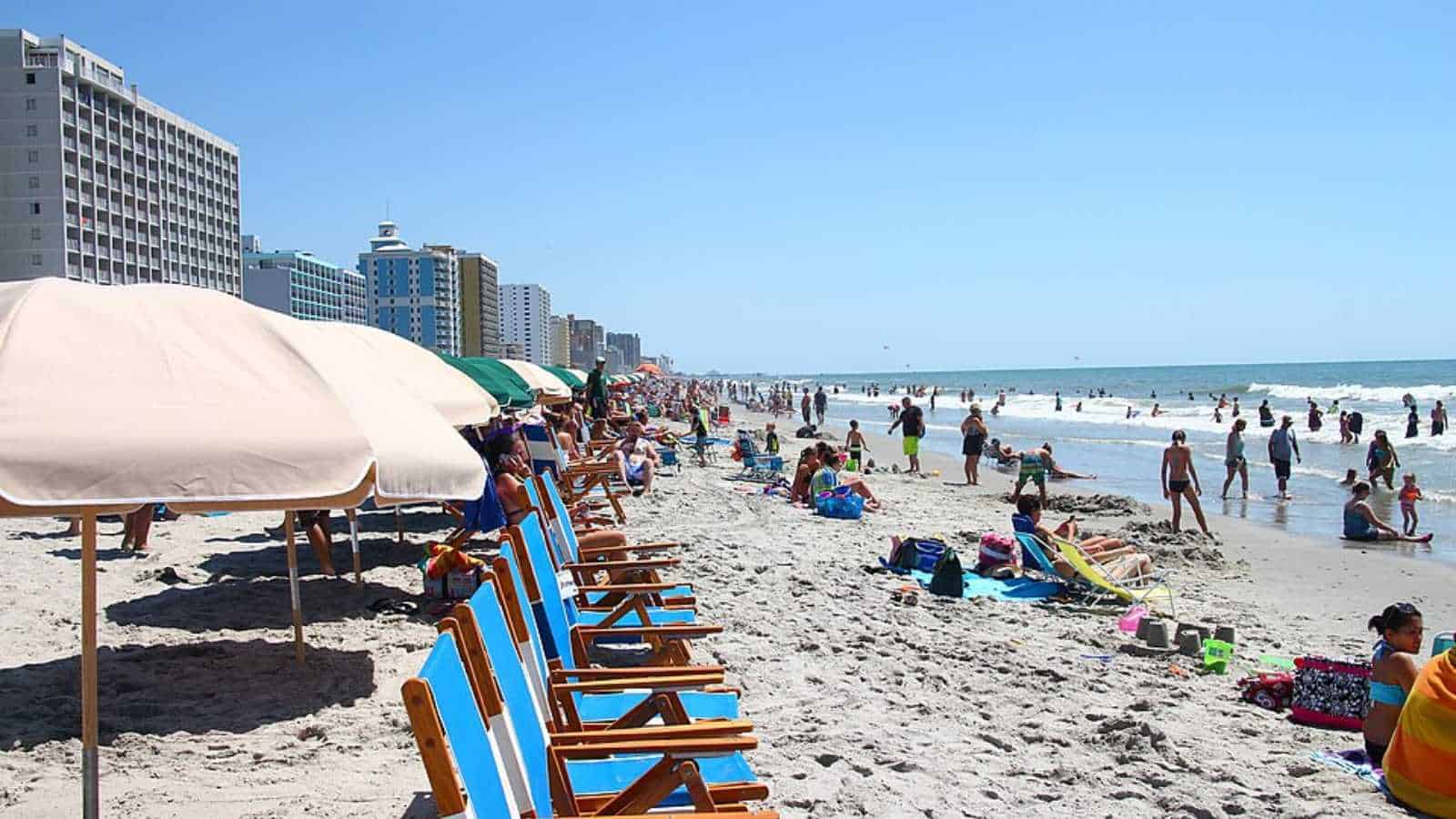
Myrtle Beach used to sound like vacation first, relocation second. Now the moving data says plenty of people are staying after the beach day ends. PODS ranked the Myrtle Beach/Wilmington area as the top move-in destination for the third straight year in 2025, calling out affordability, friendliness, and nature access as major draws.
GOBankingRates listed Myrtle Beach’s cost of living at 7% below the national average, with a median household income of $53,679 and a livability score of 67 out of 100. For younger workers, that combination can feel almost rebellious after years of hearing that adulthood must mean sky-high rent, a brutal commute, and a tiny apartment with no sunlight.
Myrtle Beach offers a different bargain: service jobs, remote-work setups, tourism energy, lower daily costs, and water close enough to change the mood of a whole week. The trade-offs include storm risk and a seasonal economy, but for young adults burned out by hard cities, living near the ocean can feel like a mental-health upgrade with a mailbox.
Ocala, Florida

Ocala is not the loud Florida fantasy of velvet ropes, packed beaches, and rent that climbs like a rocket. It is horse country, inland roads, more space, and a slower kind of sunshine.
PODS ranked Ocala No. 2 among top move-in cities in 2025, right behind Myrtle Beach/Wilmington, and noted that Florida’s overall pull had cooled compared with the pandemic boom, with only two Florida cities on the 2025 move-in list after stronger showings in earlier years.
GOBankingRates listed Ocala with a median household income of $53,520 and a livability score of 71 out of 100, though its cost of living was listed as 14% higher than the national average, a useful reminder that “cheaper than Miami” does not always mean cheap in every category.
Still, Ocala gives younger movers a Florida option with more breathing room, equestrian culture, logistics work, healthcare jobs, and space for side hustles or hobbies. For those who want warmth without big-coastal chaos, it can feel like a quieter page in the same sunny book.
Dallas–Fort Worth, Texas

Dallas–Fort Worth is not small, sleepy, or hidden, but it continues to attract younger workers because it offers a large job market at a cost that still makes sense. PODS ranked Dallas–Fort Worth No. 5 among its 2025 top move-in cities, calling it a newcomer to the annual list, and its fall 2025 pulse check placed the metro No. 8 among top summer move-in destinations.
GOBankingRates found that Dallas had a cost of living 2% above the national average, while Fort Worth was 4% below, with median household incomes of $67,760 in Dallas and $76,602 in Fort Worth. Zillow’s Gen Z table also counted 143,772 Gen Z renter households in Dallas, with a median gross rent of $1,444 and a Gen Z rent-burden rate of 60.4%.
That means DFW is not a stress-free wonderland. It is a scale play. Young adults come for tech, finance, logistics, healthcare, airports, suburbs, apartments, nightlife, and a sense that the career ladder still has rungs they can reach.
Austin, Texas

Austin is complicated now, and that may be why it still belongs on this list. It is no longer the easy, cheap, cool city people talked about a decade ago, but Zillow’s 2024 analysis found that Austin had the largest drop in young-adult rent burden among the 30 largest metros, falling by 9.5 percentage points over the decade.
Zillow’s table showed that Gen Z renters in Austin had a median gross annual income of $45,000, a median gross rent of $1,415, and a rent-burden rate of 59.6%, compared with 69.2% for millennials of the same age in 2012. StreetEasy Senior Economist Kenny Lee put the stakes of rent pressure in human terms, saying, “Rent burden makes it a struggle.”
That is the quiet truth behind Austin’s continued pull. More housing supply has helped soften some pressure, but young renters still feel the squeeze. Even so, Austin keeps offering music, tech, startups, parks, tacos, social life, and a sense that a young person can build something bright if they can make the budget behave.
Phoenix, Arizona

Phoenix has heat, sprawl, and plenty of critics, but it also has something younger movers keep chasing: a shot at keeping more of their paycheck.
Zillow’s 2024 data showed 88,933 Gen Z renter households in Phoenix, with a Gen Z median gross annual income of $59,190, a median gross rent of $1,623, and a rent-burden rate of 55.0%, lower than the national Gen Z rate of 58.6% and down from 64.2% for millennials at the same age in 2012.
PODS’ 2025 annual report said Phoenix dropped off its main move-in list, but the fall pulse check placed Phoenix No. 5 for summer move-ins, showing the city still has a strong seasonal and Sunbelt pull. Phoenix is not gentle in July, and water, heat, and car dependence are serious concerns.
Still, for younger Americans comparing it with Los Angeles, San Diego, Seattle, or the Bay Area, Phoenix can look like a practical bargain with sunshine attached. It offers jobs, newer housing, desert beauty, and a chance to trade coastal rent panic for a wider, warmer kind of possibility.
Younger Americans are not running away from ambition. They are running toward a better ratio: income to rent, work to rest, errands to sunlight, stress to joy. The new map is less about chasing the most famous city and more about finding a place where life can stretch its legs.
In 2025, PODS found the Southeast still dominating move-in patterns, while Zillow found nearly 3 in 5 Gen Z renters still carrying a rent burden. That is the whole story in two numbers: pressure is real, but movement is still possible.
Key Takeaways

- Younger Americans are moving to cities where housing offers more space to breathe.
- Pittsburgh, Cincinnati, Detroit, and Philadelphia stand out as ownership gateways for younger buyers.
- Raleigh, Wilmington, Greenville–Spartanburg, Myrtle Beach, and Ocala show the pull of the Carolinas and the Southeast.
- Dallas–Fort Worth, Austin, and Phoenix still attract young movers through jobs, lifestyle, and Sunbelt growth.
- The larger trend is hopeful: younger adults are choosing places that make everyday life feel less squeezed.
Disclaimer – This list is solely the author’s opinion based on research and publicly available information. It is not intended to be professional advice.
Like our content? Be sure to follow us