Target Knows When You’re Stealing… Here’s How
Target has invested heavily in technology and training to spot shoplifting long before a person reaches the doors, and in some cases, long before they are ever confronted. Retail theft has risen across the industry, and Target’s response blends surveillance, data analytics, and on-the-ground loss prevention teams to reduce what retailers call “shrink.”
Modern retailers increasingly rely on high‑resolution cameras and AI‑enhanced video tools to detect suspicious behavior, and Target is part of that shift. These systems can monitor activity in real time and flag behaviors such as lingering in one area, concealing items, or moving repeatedly between aisles without making a purchase. While Target does not publicly disclose every detail of its in‑store systems, it has been reported that the company operates a sophisticated forensic lab that processes surveillance video, helps identify suspects, and prepares evidence packets for law enforcement when needed.
In practical terms, this means that what looks like ordinary overhead cameras can be part of a much larger analytics pipeline, where footage is stored, reviewed, and cross‑referenced with other data if a pattern of theft is suspected. These tools are designed not only to review incidents after they happen, but also to help loss‑prevention teams intervene earlier and more accurately.
Self‑checkout: cameras, limits, and real‑time alerts
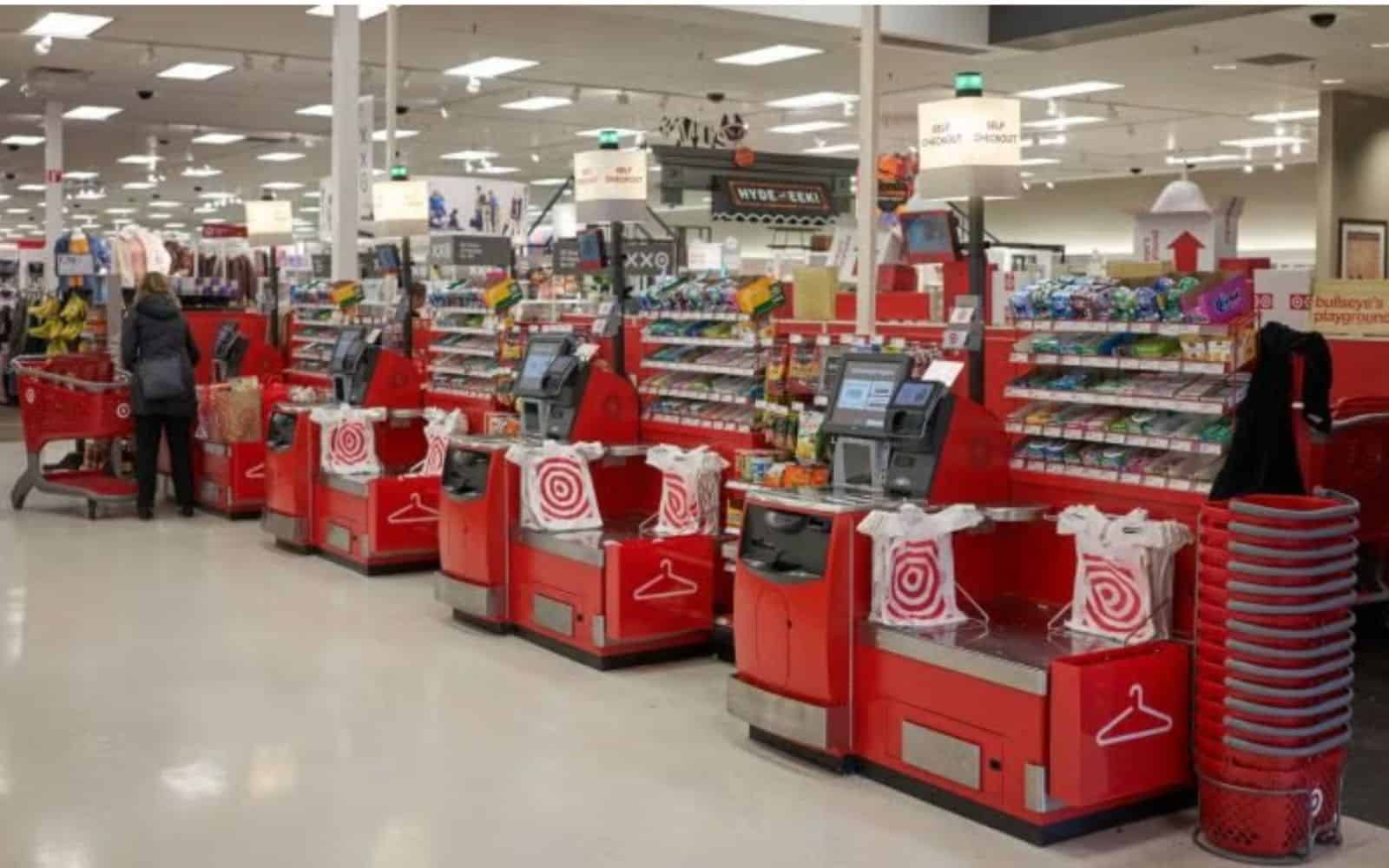
Target has also focused on self‑checkout, where accidental and deliberate non‑scanning can both contribute to losses. In 2024, the company began rolling out a technology called TruScan, which uses cameras at self‑checkout stations to detect items that have not been properly scanned and to alert shoppers with visual and audio cues. Reports indicate that TruScan can also keep track of customers who repeatedly fail to scan items correctly, giving Target a way to identify possible repeat offenders over time.
At the same time, Target imposed a 10‑item limit at many self‑checkout kiosks and expanded staffed checkout lanes, a move the company said was aimed at improving speed and the overall customer experience. These changes also have a secondary effect: they reduce opportunities for high‑volume self‑checkout theft by pushing larger baskets toward traditional registers, where employees can better observe the transaction.
The people watching the screens
Technology is only one part of the system. Target employs asset protection (loss prevention) staff who monitor cameras, walk the floor, and coordinate with local law enforcement when theft occurs. These teams are trained to look for behavioral cues rather than relying solely on a single suspicious action, and they often observe a person across multiple aisles or visits before taking any action.
Public posts by police departments and task forces show how this cooperation plays out in practice: officers are sometimes called in after Target’s asset protection team has already documented multiple incidents involving the same individual, resulting in arrests for repeat shoplifting or organized retail crime. In some cases, a suspect may not be confronted immediately at the door; instead, evidence is collected over a series of events, creating a stronger case later on.
Data, patterns, and “the long game”

Behind the scenes, aggregated data helps retailers identify hotspots and recurring issues. Target’s forensic and analytics operations are reported to use surveillance footage, time‑stamped events, and store‑level inventory data to understand when and where theft is happening most frequently. Similar systems across retail can identify trends such as specific products frequently going missing, certain times of day with higher risk, or repeat appearances of the same suspect.
This data‑driven approach lets Target adjust staffing, reposition cameras, modify store layouts, or add additional controls like locked cases in high‑risk categories. Over time, it also supports building more complete cases against individuals or groups engaged in repeated theft, especially when combined with law‑enforcement partnerships.
Deterrence, mistakes, and what shoppers see
For most customers, these systems are designed to be unobtrusive. Shoppers are more likely to notice surface‑level measures, like cameras at self‑checkouts, clear signage, greeters near entrances, or locked displays for certain high‑value goods than the analytics running in the background. Technologies like TruScan are explicitly framed as tools that can also prevent honest mistakes, gently prompting customers when an item hasn’t been scanned before any accusation is made.
In the end, the message is straightforward: Target approaches theft prevention as a combination of visible deterrents, behind‑the‑scenes technology, and coordinated human oversight. For everyday shoppers who are paying for their items, most of this system stays invisible. For people repeatedly trying to walk out with unpaid merchandise, it’s designed to ensure that someone — or something — is paying very close attention.
Like our content? Be sure to follow us on MSN and Newsbreak