12 things men wish more women understood about their feelings
Despite persistent stereotypes, research suggests that men experience emotions just as intensely as women. The difference often lies in how those emotions are expressed. Studies have found that many men are socialized from an early age to suppress vulnerability, avoid discussing emotional pain, and prioritize self-reliance.
This can have significant consequences. According to the U.S. Centers for Disease Control and Prevention, men account for nearly 80% of suicide deaths in the United States, while mental health experts note that men are generally less likely than women to seek emotional support or professional help. Researchers have also found that men often report smaller emotional support networks and higher rates of loneliness, particularly in midlife and older age.
These findings don’t mean all men think or feel the same way. However, relationship experts say there are several emotional realities that many men wish were better understood. Here are 12 of them.
Men Experience More Emotional Pain After Breakups Than Women
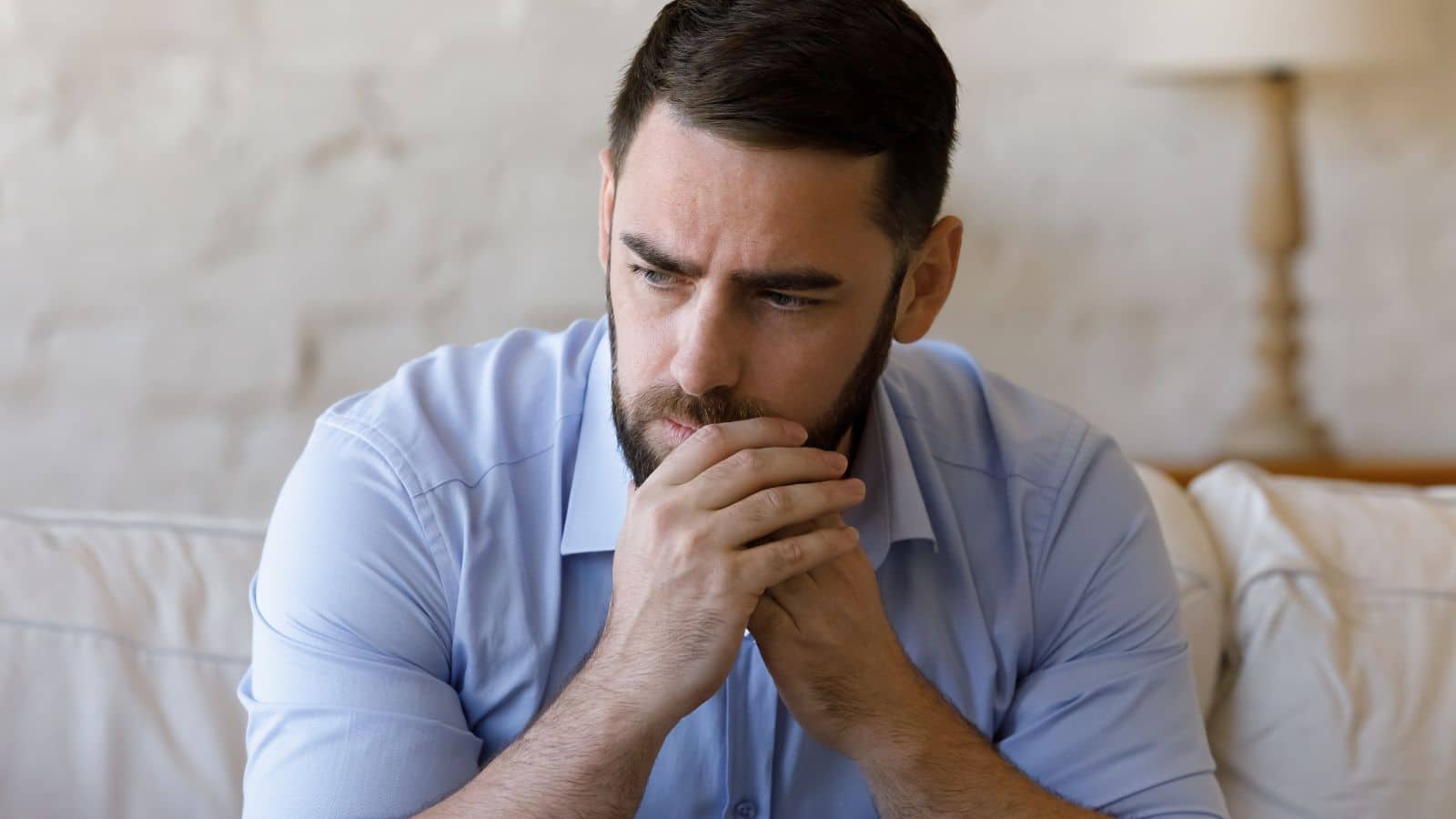
Breakups can hit men harder than many people expect, partly because some men lose their main source of emotional closeness when a relationship ends. Lancaster University researchers analyzed more than 184,000 anonymous online posts about relationship problems and found that men discussed heartbreak more than women.
Dr. Ryan Boyd, lead researcher on the project, asked a sharp question: “Are men truly less emotionally invested in relationships than women, or is it the case that men are simply stigmatized out of sharing their feelings?”
A 2024 Behavioral and Brain Sciences article also argues that men often benefit more from romantic relationships, rely more on them for emotional support, and suffer more after relationship dissolution. That does not mean women hurt less. It means men’s hurt may travel through fewer doors.
Respect Matters More Than Love

Many men hear love through respect, trust, appreciation, and belief in their judgment. That does not mean women should tiptoe around men’s egos, and it does not mean women need less respect. It means that for many men, feeling mocked, dismissed, belittled, or treated as incapable can feel like emotional rejection.
Relationship researcher and author Shaunti Feldhahn writes that men may not be moved by hearing the exact phrase “I respect you,” but they often respond deeply to words like “I’m so proud of you” and “I trust you.”
Her work also stresses respect for a man’s judgment and abilities. The softer truth is that many men do not ask, “Do you love me?” They quietly ask, “Do you still believe in me?”
Men Suppress Emotions Because They Fear Looking Weak

Many men do not hide emotions because they lack depth. They hide them because they learned early that sadness, fear, and tenderness can cost them status.
Priory Group found that 40% of men surveyed had never spoken to anyone about their mental health, and among those who did not talk, 29% said they were too embarrassed, 20% cited negative stigma, and 16% said they did not want to appear weak.
Dr. Natasha Bijlani, Consultant Psychiatrist at Priory Hospital Roehampton, said men have been less likely to seek support because of stigma and the traditional “strong male” stereotype, including “the idea that expressing emotion is a sign of weakness.” That kind of training sticks. A man may want comfort and still feel ashamed for needing it.
77% of Men Have Mental Health Symptoms But Stay Silent

The silence around men’s mental health is not a small side issue. Priory Group found that 77% of men polled had suffered symptoms of anxiety, stress, or depression, yet 40% had never spoken to anyone about mental health.
The same survey found the top pressures men named were work (32%), finances (31%), and health (23%). In the U.S., CDC data shows the male suicide rate was about four times higher than the female rate in 2023, which makes silence more than a personality style. It can become dangerous isolation.
Many men still go to work, joke with friends, pay bills, and say “I’m good” while carrying a private weight. Women are not responsible for carrying that weight for them, but understanding that it exists can change the way a relationship hears silence.
Vulnerability Feels Like a Direct Threat to Masculine Identity

For some men, vulnerability does not feel like emotional honesty. It feels like stepping out without armor. Priory’s survey helps explain why: among men who did not talk about mental health, 40% said they had learned to deal with it, 36% said they did not want to be a burden, and 16% said they did not want to appear weak.
That is why a man may finally open up, then seem distant afterward. The moment may have been real, but the shame rush afterward can be real too. This does not excuse shutting a partner out, snapping, or refusing support.
It explains the emotional tug-of-war. Many men want to be known and respected at the same time, and they fear that showing the broken place will make someone see only the break.
Anger Is Often Masked Depression

A man’s sadness does not always look like sadness. Mayo Clinic explains that depression in men can be hidden by unhealthy coping behavior and may show up as irritability, anger that gets out of control, reckless behavior, alcohol or drug problems, overworking, isolation, physical pain, or conflict with loved ones.
That does not make anger harmless. A partner still deserves safety and respect. But it does mean some men are not “just angry.” They may be depressed, ashamed, overwhelmed, or emotionally trapped with no clean language for what is happening inside.
Priory’s survey also lists anger and irritability, working obsessively, sleep problems, substance abuse, and reckless behavior as signs that can appear more often in men. Sometimes the storm on the surface is grief underneath, asking for help in the only rough language it learned.
Silence Often Means Thinking, Not Ignoring

Silence can feel scary in a relationship because it leaves so much room for guessing. Many women may read a man’s quietness as rejection, coldness, or lack of care. Sometimes that is true. Other times, he is trying to process before speaking.
Mayo Clinic says many men may have learned to focus on self-control and may try to cover up emotions related to depression because they think it is not “manly” to express those feelings. Priory found that 40% of men had never spoken to anyone about mental health, which shows how common emotional privacy can become.
The healthier version of silence includes a bridge: “I need time, but I’m not ignoring you.” The damaging version disappears, leaving the other person alone. Men may wish more women understood that quiet can be processing, but they also need to learn that silence needs reassurance to feel safe.
Men Depend on Romantic Partners as Primary Emotional Support

Many men do not have the same emotional safety net that women often build through friends, family, and close social circles. Priory found that when men did speak about mental health, 66% said they would share feelings with their partner above anyone else.
A 2024 Behavioral and Brain Sciences article also argues that men may rely more on romantic partners for intimacy and emotional support, and may suffer more after relationship loss because their wider support networks are often thinner. This is one reason breakups can hit men like a house going dark.
They may lose the person they love, the person they confide in, and the one place they felt allowed to soften. That is too much for one partner to carry forever, which is why men need friendships, therapy, family ties, and emotional language beyond romance.
Validation Matters More Than “Fixing” the Problem

Men often get stereotyped as the ones who fix instead of feel, but many men also want validation and do not know how to ask for it. Priory’s finding that 66% of men who talk about mental health share with their partner first matters here.
It suggests that many men do reach for emotional support, just in ways that can be quiet, indirect, or awkward. Validation does not mean agreeing with everything. It can be as simple as saying, “That sounds heavy,” “I get why that hurt,” or “I’m glad you told me.”
Men may wish more women understood that they are not always looking for a debate, a correction, or a full solution. Sometimes they want the same thing everyone wants: proof that their feelings make sense to someone who loves them. That kind of response can turn a hard moment into a bridge instead of a wall.
They Want to Hear “I’m Proud of You” More Than “I Love You.”

“I love you” matters. But for many men, love lands deeper when it sounds like pride, trust, admiration, and confidence. Feldhahn writes that men often love hearing “I’m so proud of you” and “I trust you,” and that respect can be shown through trusting his judgment and abilities.
This does not mean men should need constant praise or that women should become cheerleaders for poor behavior. It means that many men carry a quiet fear of failing as partners, fathers, workers, protectors, sons, or providers.
Priory’s survey found that work and finances were the top two pressures men named, at 32% and 31%, respectively. So a sincere “I see how hard you’re trying” can reach places a simple “love you” may not touch. It tells him his effort is visible, not just expected.
They Feel Unloved When They Feel Inadequate

Many men associate love with usefulness, competence, and trust. That can be painful, especially in a culture that still measures men by earnings, strength, performance, and emotional control.
Priory found that work-related pressure and financial pressure were the two biggest sources of mental-health strain for men. Feldhahn’s writing also notes that men can become especially sensitive to disrespect during seasons when work, illness, aging, job loss, or failure has already damaged their sense of value.
This is not a demand that women flatter men through every mistake. It is a reminder that some men hear “you failed” as “you are failing me.” Healthy love should not depend on performance, but many men have been taught to prove love by doing, fixing, earning, or protecting. When they cannot, they may feel unloved even if love is still being spoken.
Therapy Helps, But Stigma Still Blocks Too Many Men

Therapy can give men a place to practice emotional honesty without performing toughness, but stigma still stands at the door.
Priory found that 22% of men surveyed would not feel comfortable speaking to a GP or professional about mental health, and among men who did not talk about mental health, 29% cited embarrassment, 20% cited stigma, and 16% said they did not want to appear weak.
Mayo Clinic says male depression often gets better with treatment, yet many men avoid diagnosis or care because they fear stigma, career harm, or loss of respect. The hopeful part is simple: help works better than silence.
Therapy is not about making men less masculine. It is about giving them tools for grief, fear, stress, anger, love, and shame, so they do not have to turn every feeling into a locked room.
A Short Reflective Close

Men’s emotional lives are not empty rooms. They are often crowded rooms with the lights turned down.
Women are not responsible for fixing men’s pain, and love should never become unpaid therapy. But understanding helps. It helps a woman hear silence with more nuance. It helps a man see that hiding everything is not strength. It helps couples stop treating vulnerability as a threat and start treating it as information.
The real hope is not that men suddenly become perfect communicators. The hope is smaller and more human: one honest sentence, one safer conversation, one man learning that being known does not have to mean being weakened.
Key Takeaways

Men feel deeply, but many were trained to hide pain, solve alone, and treat vulnerability as risk. Priory found that 77% of men surveyed had symptoms of anxiety, stress, or depression, yet 40% had never spoken to anyone about their mental health. That silence is not proof that men do not need support. It is proof that many still do not know where to put their pain.
Relationships often carry more emotional weight for men than stereotypes suggest. Lancaster University found that men discussed heartbreak more than women in anonymous online support spaces, and a 2024 Behavioral and Brain Sciences article argues that men may rely more on romantic partners for emotional support and suffer more from breakups.
The best path is not to blame. It is a shared responsibility. Men need wider emotional support systems, better friendships, therapy without shame, and more practice naming what they feel. Women can listen with compassion, but they should not have to carry everything alone. Healthy love gives both people room to be strong and soft.
Disclaimer – This list is solely the author’s opinion based on research and publicly available information. It is not intended to be professional advice.
Like our content? Be sure to follow us