12 reasons socialism is becoming part of America’s economic debate
Socialism used to enter American politics like a warning siren. Now it shows up in everyday conversations about rent, hospital bills, student loans, billionaires, wages, taxes, and the uneasy feeling that a full-time job no longer guarantees a stable life. Gallup reported in 2025 that only 54% of U.S. adults had a positive view of capitalism, down from 60% in 2021 and the lowest level in Gallup’s 15 years of tracking.
Socialism still trails behind, with 39% viewing it positively, but the gap has narrowed enough to make the conversation harder to dismiss. Fox News polling in 2026 found that 38% of voters said it would be good for the United States to move away from capitalism and toward socialism, up from 32% in 2022 and 18% in 2010.
That does not mean America has suddenly turned socialist. It means more people are looking at the economy and asking why life feels so expensive, insecure, and uneven. The argument is not only about a political label. It is about the pressure people feel in their actual lives.
For some voters, the word sounds like fairness, protection, and a stronger safety net. For others, it sounds like government overreach and loss of freedom. Either way, socialism is no longer waiting on the sidelines of America’s economic debate. It has pulled up a chair.
Capitalism’s Image Problem
Capitalism still has more support than socialism, but its shine has dimmed. Gallup’s Jeffrey M. Jones reported in 2025 that “Americans are more positive toward capitalism than socialism,” yet the same Gallup survey found capitalism’s positive rating had fallen to 54%, down from 60% in 2021, while socialism stood at 39%.
Only 37% of adults viewed big business positively, and Democrats were even colder toward it, with just 17% holding a positive view. That matters because, for most people, capitalism is not judged in the abstract. It gets judged at the grocery store, in rent notices, in medical bills, and in the gap between executive pay and hourly wages.
The system may still feel like the best engine to many Americans, but more people now ask who gets to drive it and who keeps getting dragged behind. That softening image creates room for socialism, or at least social-democratic ideas, to sound less forbidden than they once did.
Rising Inequality and “Rigged System” Sentiment
A lot of the renewed socialism debate grows from a simple, bitter feeling: the game looks tilted. Ipsos reported in 2023 that 69% of Americans thought the economy was rigged to advantage the rich and powerful, and in 2020, 64% of respondents agreed that the very rich should contribute an extra share of their total wealth each year to support public programs.
That wealth-tax idea drew support from 77% of Democrats and 53% of Republicans, showing how far anxiety about inequality extends beyond party labels. People can dislike the word ‘socialism’ and still support policies that redistribute money or curb concentrated wealth. That is where the debate gets interesting.
Many voters are not reading political theory. They are looking at billionaire wealth, housing prices, medical debt, and wages that feel too thin for the month. Socialism enters the room because fairness has become an economic demand, not just a campaign slogan.
Generational Shifts in Economic Values

Younger Americans are pushing this debate into louder territory because they often hear “socialism” differently from their parents and grandparents. A 2025 Heartland/Rasmussen poll, reported by the Pacific Research Institute, found that 53% of likely voters ages 18 to 39 said they wanted a democratic socialist candidate to win the 2028 presidential election.
The same polling found 76% of young likely voters supported nationalizing major industries such as health care, energy, and big tech, a striking result that even included 79% of self-identified conservatives in that age group. Since the source is ideologically conservative groups, the numbers should be treated as a single poll rather than the last word on young voters.
Still, the trend lines are clear across many surveys: younger adults are more open to government economic action. Many came of age through the Great Recession, student debt, soaring rents, pandemic shocks, and health care costs that made “just work hard” feel incomplete. For them, socialism often sounds less like Cold War fear and more like a demand for backup.
Polling Shows Growing Openness to “Socialist” Policies

The word socialism still divides Americans, but many policies linked to it poll far better than the label itself. Fox News reported in 2026 that 38% of voters thought moving away from capitalism and toward socialism would be a good thing, more than double the 18% level recorded in 2010.
Reuters/Ipsos found that 64% supported an annual wealth contribution from the very rich to fund public programs, and Gallup’s review of tax polling has also noted broad support for raising taxes on high incomes in several surveys. This split between label and policy matters. A voter may recoil at “socialism” but support Medicare, Social Security, higher taxes on billionaires, stronger labor rules, or larger child benefits.
Healthcare as a “Gateway” Socialist Debate

Health care may be the strongest bridge between ordinary frustration and socialist-style policy talk. Gallup reported in 2024 that 62% of U.S. adults said the federal government should make sure all Americans have health care coverage, the highest level in more than a decade. The same Gallup survey found 46% supported a government-run health care system, while 49% preferred a system based mostly on private insurance.
Support for government responsibility reached 90% among Democrats, 65% among independents, and 32% among Republicans. That is not a fringe conversation. It is a national argument sitting inside hospital bills, premiums, deductibles, prescription costs, and the fear that one illness can wreck a family’s finances.
Health care changes the tone because people do not experience it like a normal market. No one compares calmly during a stroke. No one wants their life to depend on a network rule. That is why social-democratic ideas gain traction here first: medical fear makes public guarantees sound less radical.
Democratic Socialism as a Rebranded Tradition
Much of America’s current socialism debate is really a debate over social democracy: stronger public services, labor protections, safety nets, and limits on corporate power, not the abolition of every market.
Brookings scholars E.J. Dionne Jr. and William A. Galston wrote that “the crash of 2008, rising inequality, and an intensifying critique of how contemporary capitalism works” brought socialism back into the mainstream. Brookings also explains that modern socialism in advanced democracies often evolved into systems that kept markets while expanding welfare states and public protections.
That distinction matters because many Americans who like democratic socialism are not asking the government to own every corner store or restaurant. They are asking why the richest country on Earth leaves so many people exposed to medical debt, child care costs, housing insecurity, and weak bargaining power at work.
Critics still warn that even soft versions can grow into excessive state control. Supporters answer that markets need guardrails. The label carries old baggage, but the argument underneath is very current.
Populism and the “Creeping Socialism” Narrative
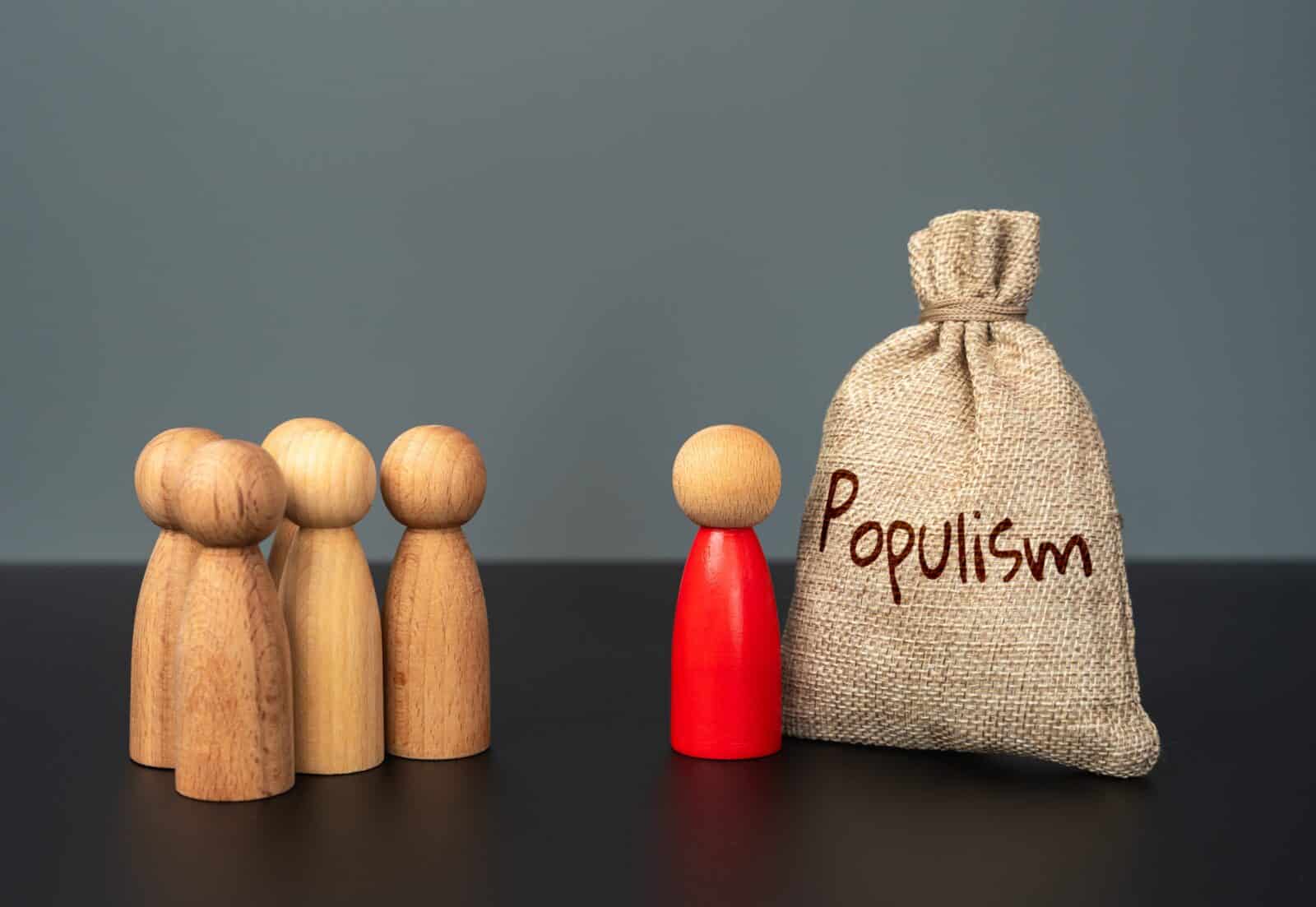
Socialism also stays in the headlines because opponents use the word as a warning siren whenever the government expands its role in markets.
That argument grew louder in 2025 after the U.S. government took a 10% stake in Intel by converting $11.1 billion in government grants and pledges into 433.3 million non-voting shares, according to AP. Forbes commentator Steve Forbes warned in 2025 of “a new creeping socialism,” pointing to federal stakes in companies, tariff pressure, pharmaceutical price fights, and more industrial policy as signs of unusual peacetime intervention.
Supporters call some of these moves strategic policy, especially around chips, supply chains, and national security. Critics see the state becoming too comfortable as investor, planner, and referee.
That tension keeps socialism in circulation even among people who hate the word. The right talks about it as a danger. The left talks about it as protection. The middle hears both and wonders why the old free-market script now has so many footnotes.
Young Conservatives’ Surprising Support for Nationalization

One of the stranger twists in this debate is that some younger conservatives now sound more open to state action than old-school free-market Republicans would expect.
The 2025 Heartland/Rasmussen poll, reported by Pacific Research Institute, found that 76% of likely voters ages 18 to 39 supported nationalizing major industries such as health care, energy, and big tech, and the figure rose to 79% among self-identified conservatives in that age range.
Again, one poll does not define an entire generation, and the source has a clear ideological lens. Still, it points to a real crack in the old map. Some young conservatives distrust big tech, global corporations, foreign supply chains, and Wall Street power enough to support state intervention for nationalist or anti-corporate reasons.
That is not the same as left-wing socialism, but it overlaps with socialist thinking on public control of key sectors. So the debate is no longer just left versus right. It is also people versus institutions, voters versus corporations, and young Americans versus an economic order many feel did not keep its promises.
Redefining “Socialism” as Equality and Fairness
A major reason socialism is becoming easier to discuss is that many Americans no longer define it in strict textbook terms. Britannica defines socialism as a doctrine calling for public rather than private ownership or control of property and natural resources, but its American socialism debate page also notes that many public policies already blend market and public goals.
Gallup found in 2025 that Democrats viewed socialism more positively than capitalism, 66% to 42%, while independents favored capitalism over socialism, 51% to 38%, and Republicans favored capitalism by 74% to 14%. That partisan split shows how much the word has become a cultural signal.
To some, socialism means fairness, equality, universal health care, stronger unions, and less billionaire power. To others, it means bureaucracy, lost freedom, and government control. The same word now carries different pictures in different minds. That makes the debate louder, because people often argue over the label before they agree on the meaning. America is not just debating socialism. It is debated what socialism means.
Economic Insecurity and Mobility Stagnation

Socialism gains oxygen when people feel stuck. Brookings researchers wrote in 2022 that Americans are unlikely to move far up or down the wealth ranks, and that the likelihood of moving declines with age. Their report called wealth status “sticky,” meaning the rung you start on can stick with you for a long time.
Brookings also found that Black Americans experience less upward wealth mobility and more downward wealth mobility than white Americans, even from the same starting point. Add the broader mobility story from economist Raj Chetty’s team, whose research found absolute mobility fell from about 90% for children born in 1940 to about 50% for children born in the 1980s, and the emotional logic becomes clear.
If hard work feels less likely to lift people into security, bigger policy fixes start sounding less extreme. Socialism enters the debate because the American Dream feels less automatic. People are not just asking for more money. They are asking why the ladder feels greased.
Polarization and Media Amplification
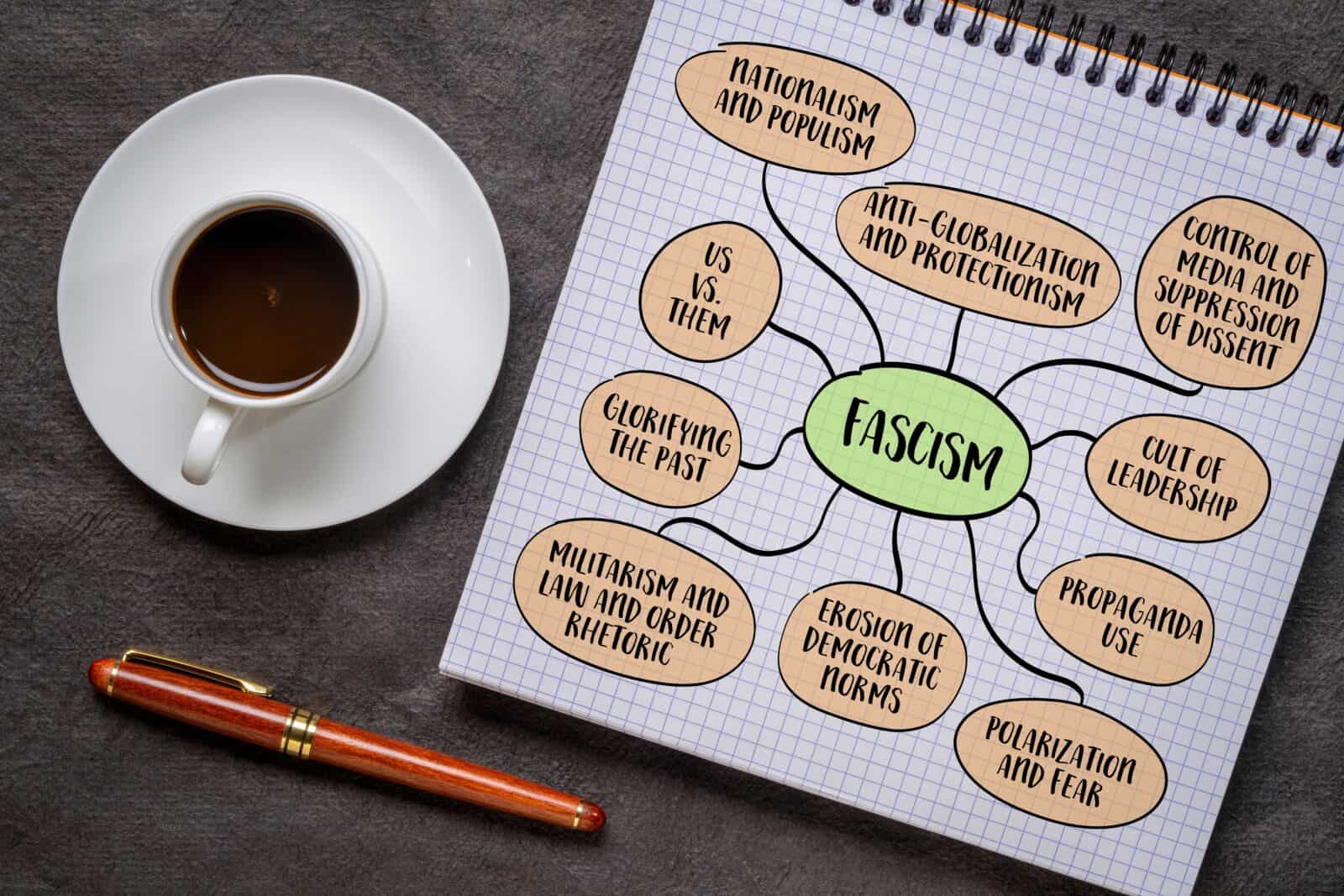
Socialism also stays hot because modern media turns policy language into identity language. Britannica’s American socialism debate page ties the issue to fights over universal health care, college costs, minimum wages, Social Security, and the proper role of government.
Hoover Institution writing and other conservative arguments often warn that heavy regulation, industrial policy, or welfare expansion can edge the country toward statism, while left-leaning voices frame those same moves as basic protection against corporate power.
Fox News polling in 2026 found 38% support for moving toward socialism, and Gallup found 39% positive views of socialism in 2025, which gives both sides numbers to wave around. The result is a permanent argument machine. A child tax credit, a climate subsidy, a student debt plan, or a health care proposal can become proof of compassion to one audience and proof of socialism to another.
The word travels because it is useful in political combat. It can inspire, scare, simplify, and fundraise all at once.
Global Context and Comparative Lessons

America’s socialism debate never stays fully American. Supporters point to Nordic-style welfare states, Germany’s social market model, or the U.K.’s public health system to argue that capitalism can coexist with broad social protections.
Brookings notes that socialism in places like the U.K. and Germany evolved toward social-democratic systems that kept markets while building welfare states and labor protections. Britannica similarly explains that countries such as Denmark, Finland, Norway, Iceland, and Sweden combine capitalist and socialist features rather than operating as fully socialist systems.
Critics answer with different global memories: the Soviet Union, Cuba, Venezuela, Maoist China, and other regimes where state power crushed markets, dissent, or both. This is why the argument can feel like two conversations happening at once.
One side is often talking about public health care and paid leave. The other is warning against authoritarian control and failed central planning. The future of the U.S. debate may depend on which examples voters find more convincing: social democracy’s safety net or socialism’s darkest history.
A Short Reflective Close

Socialism is no longer just a word from history class or campaign attack ads. Gallup says 54% of Americans view capitalism positively and 39% view socialism positively, while Fox News says 38% of voters think moving toward socialism would be good for the country.
Those numbers still leave capitalism ahead, but they also show a country asking sharper questions about who the economy serves.
The real debate is not only capitalism versus socialism. It is how much risk ordinary people should carry alone, how much power corporations should hold, and how much government should do when the market leaves people exposed. America has not settled that argument. It has only made it louder.
Key Takeaways

Gallup reported in 2025 that positive views of capitalism fell to 54%, while positive views of socialism remained at 39%. Capitalism still leads, but the gap is no longer wide enough to keep socialism out of mainstream economic debate.
Economic frustration is feeding the shift. Ipsos found in 2023 that 69% of Americans believed the economy is rigged for the rich and powerful, and Reuters/Ipsos found that 64% supported an annual wealth contribution from the very rich to fund public programs.
Health care keeps bringing social-democratic ideas into ordinary life. Gallup found in 2024 that 62% of U.S. adults said the federal government should ensure health care coverage for all Americans, and 46% supported a government-run system.
The meaning of socialism is changing in public debate. Britannica gives the classic definition as public ownership or control, but many Americans now use the term to refer to equality, safety nets, labor rights, taxes on the wealthy, and protection against economic insecurity.
Disclaimer – This list is solely the author’s opinion based on research and publicly available information. It is not intended to be professional advice.
Like our content? Be sure to follow us