12 reasons some parents ask adult children to move out for their own well-being
The house doesn’t always fall apart with a slammed door. Sometimes it happens quietly, through longer grocery receipts, higher utility bills, tense dinners, and a retirement account that stops growing as it should.
FinanceBuzz’s 2026 analysis of U.S. Census data found that about 33% of Americans ages 18 to 34 now live with their parents, nearly matching the pandemic-era high of 33.6% in 2020. Parents who financially support adult children spend an average of $1,474 per month on that help. Love may be priceless, but in many homes, it still shows up on the monthly budget.
That is why more parents are having the painful move-out conversation. It is not always anger, rejection, or a cold change of heart. Many are trying to protect the family before support turns into exhaustion and everyone runs out of peace, money, patience, or forward motion.
Pew Research Center found that 44% of young adults ages 18 to 34 received financial help from parents in the past year, and 36% of those parents said the help hurt their own finances at least somewhat. That is the hard middle of modern family life: parents want to help their children rise, but they cannot always keep sinking under the cost.
Parents’ Retirement Savings Are Taking a Hit

Money often starts as the quiet reason behind the loudest family tension. Thrivent’s 2025 Boomerang Kids Survey found that 38% of parents with adult children at home said long-term financial goals, such as retirement, had been affected, and 39% said short-term goals, such as vacations, had been affected.
Savings.com found that half of parents with adult children give regular financial support, and working parents who help grown kids give more than twice as much each month to adult children as they put into retirement funds. That is where the soft ache begins.
A parent may love buying extra groceries, paying the phone bill, or covering a car repair, but love does not refill a 401(k). Thrivent financial advisor Alex Gonzalez notes: “Taking care of your adult children is an extremely caring act of love, but it also requires a delicate balance between a desire to help and your own financial planning.” For many parents, asking an adult child to move out becomes the moment they stop pretending sacrifice has no price.
Boomerang Kids Are Becoming the Norm, and It’s Expensive

Adult children moving back home no longer feels rare. FinanceBuzz reports that 32.9% of adults ages 18 to 34 lived with parents in 2025, up from 22.5% in 1960, and the share has climbed every decade since the 1960s.
The pattern also changes by place. New Jersey had 44.1% of young adults living at home, Connecticut had 41.3%, and California had 39.1%, which tracks with high housing costs and the everyday squeeze of rent, groceries, insurance, and student debt. That doesn’t make adult children lazy. It means many are trying to survive an economy that charges admission at every door.
Still, parents may start to feel their home shift from a landing pad into a waiting room. The child saves money, yes, but the household absorbs the extra utilities, food, noise, and emotional load. At some point, parents may set a move-out date because the arrangement has stopped feeling temporary and started feeling like a new family system nobody agreed to keep forever.
Co-Residence Can Strain Parents’ Mental Health

A full house can still feel lonely when everyone moves through it with clenched jaws. Research published in Social Science & Medicine notes that adult children living with parents can bring emotional support, but it can also bring conflict and stress, with mixed effects on parents’ depressive symptoms and physical health.
Pew adds a gentler wrinkle: 74% of parents living with a young adult child say the arrangement has had a positive effect on their relationship, yet only 27% say it has had a positive effect on their own finances. That gap matters. A parent can love late-night talks and still dread the credit card statement.
They can enjoy having their child close and still feel their own mood sink under dishes, bills, and old arguments returning in new clothes. Asking an adult child to leave, in this case, can be a way to protect the parent’s mind before the home becomes a place where everyone tiptoes around resentment.
Adult Children’s Mental Health Can Suffer Too

Staying home can feel safe, but safety can turn into a velvet rope. A study of emerging adults in the Toledo Adolescent Relationships Study found that about one-fifth had boomeranged back home, and among those living with parents, about 36% had returned after living away.
The study found that young adults who returned home reported higher depressive symptoms than those who stayed home from the start or lived independently, especially when job problems pushed the move.
Pew also found that young adults living with parents praise the financial relief more than the social effect, with 64% saying the arrangement helps their finances, but far fewer expressing the same warmth toward its effect on their wider lives. That emotional pinch can hurt.
A grown child may save money but lose rhythm, pride, privacy, dating space, and the small daily muscles built by handling life alone. Parents who push for independence may see what their child cannot say yet: the bedroom that once sheltered them has started to shrink around them.
Boundaries, House Rules, and Respect Are Breaking Down
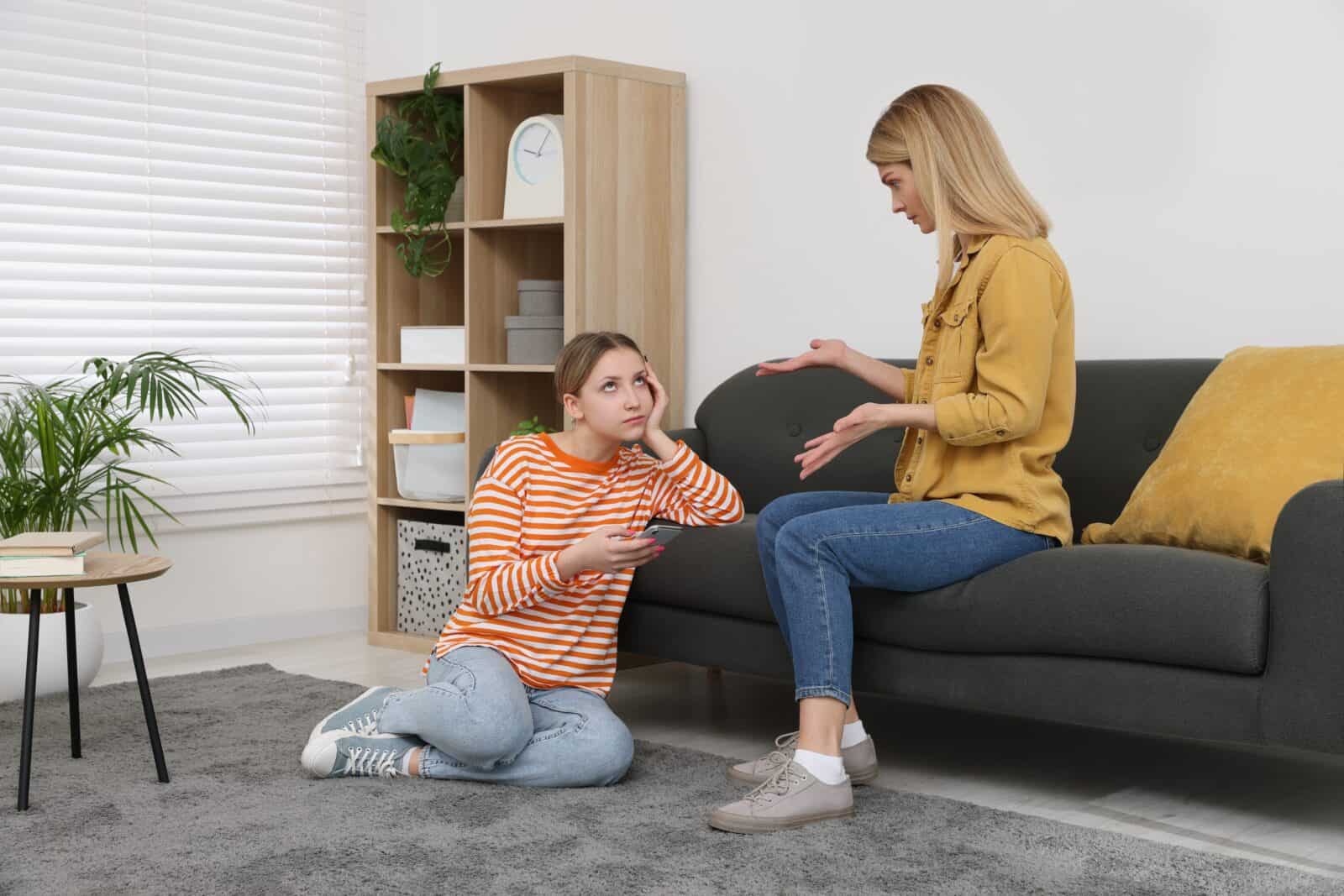
A home without adult rules can become a house full of old parent-child habits. Pew found that most young adults living with parents do contribute in some way, including 65% who pay household expenses such as groceries or utilities and 46% who contribute toward rent or a mortgage.
That still leaves many families negotiating chores, guests, noise, bills, work schedules, and respect long after everyone involved is legally grown. James Lehman, MSW, writing for Empowering Parents, says parents should use a clear structure, including rules about getting up at a certain time, looking for work, and avoiding all-day video games.
He also says disrespect and abuse need real consequences, because a parent’s home cannot become a place where basic standards collapse. This is often where the move-out conversation begins. It is rarely about one plate in the sink. It is about the fifth ignored rule, the tenth unpaid bill, the hundredth small cut that makes parents feel like guests in the house they built.
Parents Want to Support, Not Enable

There is a thin line between helping someone stand and carrying them so long their legs forget the work. Bankrate’s 2024 Financial Independence Survey found that 61% of parents with adult children have made financial sacrifices to help them, including 43% who sacrificed emergency savings and 37% who sacrificed retirement savings.
77% of parents who provide financial help attach conditions, but 23% give money without conditions, which can turn support into a soft cushion with no edge. Lehman’s warning lands hard here: “If you’re supporting him today and making excuses for him today and buying his excuses, then what you’re doing to your child of tomorrow is enabling his helplessness.”
That is the sentence many parents feel before they can say it. They are tired of being the rescue boat every time an adult child refuses a paddle. A move-out deadline can shift the family from endless saving to steady training. It says, “I believe you can live your life, so I will stop living it for you.”
Parents Need Space for Their Own Relationships and Health

Parents are people before they are emergency contacts. BLS data from April 2026 shows why the strain feels sharper: food rose 0.5% in one month, food at home rose 0.7%, shelter rose 0.6%, and shelter was up 3.3% over the year.
Those numbers turn into real scenes: a couple whispering about bills after dinner, one partner upset that the living room never feels private, another too tired to exercise, sleep, or plan anything joyful. Adult children at home can bring comfort, but they can also crowd out the quiet rituals that keep parents healthy.
A marriage or partnership needs oxygen. So does a single parent’s nervous system. When parents ask an adult child to move out, they may be choosing rest, intimacy, sleep, and a kitchen that no longer feels like a shared bus station. That isn’t selfish. It is maintenance on the human engine that has been running for decades.
Cultural Norms Around Independence Are Shifting

The old map of adulthood has been redrawn, and everyone is arguing over the legend. The U.S. Census Bureau reported in 2025 that less than 25% of adults ages 25 to 34 had reached four traditional milestones in 2024, meaning living away from parents, working, marriage, and children, down from 45% in 1975.
Census researchers also found that the most common path in 2024 involved economic milestones: working and living independently, without marriage or children. Dr. Jack Stoltzfus, a psychologist who writes about launching adult children, gives this shift a humane frame: “We should align with and support our adult children’s desire to have their own identity and strive for emancipation.”
That matters because moving out need not be framed as an act of exile. It can be framed as identity work. Parents who grew up seeing independence as a milestone may still need compassion for today’s costs, but they can also honor the deep human need to become one’s own person under one’s own roof.
Financial Reality Checks: Boomer Parents Can’t Do It All

Parents cannot pour from an account that keeps draining. Bankrate found that 56% of baby boomer parents with adult children have made financial sacrifices to help them, compared with 69% of Gen X parents, and that these sacrifices often affect emergency savings, debt payments, retirement savings, and other milestones.
Supporting parents often helps with groceries, cell phone bills, rent, health insurance, and even vacations, with average support reaching $1,474 per month. That monthly number can sound abstract until it becomes a roof repair postponed, a medical copay delayed, or a retirement date pushed farther into the fog.
Many boomer parents live near or on fixed incomes, and they know a painful truth: if they spend down their safety net now, they may need help later from the same child they tried to protect. Asking an adult child to move out can be a financial boundary drawn before the family creates a bigger crisis.
Launching Builds Skills That Staying Home Can’t

Some life skills refuse to grow in perfect comfort. Thrivent’s 2025 survey found that only 46% of parents with boomerang children gave those adult children strong marks for budgeting, compared with 63% for adult children who had never moved back home.
Pew found that only 45% of young adults ages 18 to 34 say they are completely financially independent, with the share rising to 67% among those ages 30 to 34 but falling to 16% among those ages 18 to 24. That gap shows why independence often arrives in stages, not as a grand doorway that swings open in one day.
Rent teaches. Utility bills teach. A landlord’s email teaches. A flat tire on a Tuesday teaches. Parents can explain budgeting at the kitchen table for years, but adulthood often teaches best through receipts, deadlines, and choices. That is why some parents nudge adult children out before comfort becomes a classroom with no exams.
Parents Need to Model Healthy Boundaries for Younger Siblings

Younger siblings watch more than their parents think. Pew found that 71% of parents of young adults say their children’s successes and failures reflect on the job they have done as parents, which helps explain why boundaries inside the home feel so personal.
If one adult child ignores chores, skips bills, breaks rules, or treats the house like a free hotel, younger siblings may learn that adulthood comes with room service and no checkout date. That can weaken a parent’s authority fast. It can also breed resentment, especially if younger children see one sibling getting more money, more patience, or more chances.
In many homes, the move-out conversation is not just about the adult child in the bedroom down the hall. It is about the whole family system. Parents may set limits because they want younger siblings to see a clear lesson: love can be generous, but it still has doors, rules, receipts, and consequences.
Some Parents Know They Can’t Be Caregivers Forever

The deepest reason may be the one parents whisper to themselves at night: I won’t always be here. FinanceBuzz found that nearly one in three adults ages 18 to 34 now live with their parents, and Census data shows that adulthood milestones have shifted sharply since 1975.
For families with disability, serious illness, or complex mental health needs, the answer may involve supported housing, long-term care planning, public benefits, or shared living with formal support. That is a different conversation and deserves tenderness. But for adult children who can build more independence, parents may sense a closing window.
Their energy, income, health, and patience are not infinite. A move-out plan can become an act of preparation rather than punishment. It gives the adult child practice before the parent’s body, bank account, or memory starts saying no. The goal is not to cut the rope in anger. It is to teach the child to hold their own end before the parent’s hands grow tired.
A Short Reflective Close

No parent dreams of turning love into a deadline. Still, the numbers show why more families are having this talk: 33% of young adults live with parents, $1,474 a month in average support can leave parents stretched, and 61% of parents with adult children have made financial sacrifices to help.
Asking an adult child to move out can sound harsh from the sidewalk. Inside the house, it may sound like a parent trying to save the relationship before resentment eats the walls. Sometimes love keeps the door open. Sometimes love helps someone pack.
Key Takeaways

- About one-third of Americans ages 18 to 34 live with parents, and the trend remains close to pandemic-era highs.
- Parents who support adult children spend an average of $1,474 per month, and half of parents with adult children provide regular financial help.
- Thrivent found that 38% of parents with boomerang children say long-term goals, such as retirement, have been affected, making boundaries feel less optional.
- Asking an adult child to move out can protect money, mental health, privacy, younger siblings, and the adult child’s own growth.
- The healthiest version of this conversation is firm, planned, and respectful: a launch, not a rejection.
Disclaimer – This list is solely the author’s opinion based on research and publicly available information. It is not intended to be professional advice.
Like our content? Be sure to follow us