11 ways smaller families are changing the role of grandparents
Nearly one in five people alive right now is a grandparent. That figure, 1.5 billion grandparents globally, projected to reach 2.1 billion by 2050, would feel like a story about abundance if the other numbers weren’t moving in the opposite direction.
Fewer babies are being born, families are shrinking, and the children who do arrive are increasingly growing up without siblings, without clusters of cousins, and without the wide lateral family networks that once distributed the weight of kinship across many people. What’s left is something more concentrated – a smaller cast of characters with higher stakes for each relationship.
Grandparents, who once played supporting roles in large family productions, are increasingly the leads. The way they fill that space is being rewritten by demography, whether anyone planned it or not.
Fewer grandchildren means each one gets more of everything

The average American family size shrank from 3.20 people in 2007 to 3.11 in 2022, according to the U.S. Census Bureau’s American Community Survey – a modest shift on paper, but a profound one for grandparents who now have fewer grandchildren to divide their time, money, and attention across. In parts of Europe, the compression is starker. In 1950, a 65-year-old woman could expect to have 41 living relatives. The number of relatives people have is expected to fall by more than 35% in the coming decades.
The consequence for grandchildren is a kind of inheritance windfall that has nothing to do with money, at least not directly. Fewer siblings mean fewer cousins, fewer cousins mean less competition for a grandparent’s attention, and less competition produces depth where breadth once existed.
A grandparent who babysits one child has a categorically different experience than one who manages four at once – more patience to offer, more presence of mind, and a greater likelihood of learning who that child actually is beyond the noise of a crowded family dynamic. The solo grandchild, a figure once relatively rare, is increasingly the norm. And with that singularity comes an attention that rewrites what it means to be grandparented at all.
They are becoming the family’s financial backbone

41% of grandparents said they planned to financially support their adult children or grandchildren that year, a sharp jump from 37% the previous quarter. Among Americans with children under 18, 45% plan to seek financial help from parents or grandparents. Put those two numbers side by side, and you begin to see the architecture of modern family finance – one where grandparents are no longer the passive recipients of care but the quiet underwriters of everyone else’s stability.
The driver is a structural dependency born of smaller families, where fewer siblings mean fewer people to share the costs of aging parents, housing, childcare, and education. In larger family configurations of previous generations, financial pressure was distributed laterally; siblings pooled resources, cousins split expenses. Smaller families funnel that pressure vertically, meaning grandparents carry the weight that a wider network once absorbed. The result is a three-generation household economy that few families formally name, but nearly half are quietly living inside.
Childcare is where the arithmetic becomes impossible to ignore. In the United Kingdom, over 7 million grandparents provide regular childcare, and research from financial services firm SunLife calculated that figure represents over £96 billion in annual savings for working parents. Savings that grandparents provide for free while often spending their own money in the process, at an estimated average of £80 per week.
In Australia, grandparents save working parents more than $2 billion annually. These numbers don’t describe a support role. They describe a structural subsidy, one that families quietly depend on and rarely quantify until it disappears.
They are becoming parents again – but not always by choice

Susan Kelley, professor emerita of nursing at Georgia State University, has studied this phenomenon for years and puts it plainly: it is very rarely for positive reasons that grandparents find themselves raising grandchildren.
Usually, she says, a tragic situation in an adult child’s life precedes it – a death, incarceration, or mental health issues correlating with substance abuse. The opioid epidemic made this reality visible at scale. U.S. Census Bureau research shows that states with higher opioid prescribing rates consistently have higher percentages of grandparents raising grandchildren, and at the epidemic’s height in 2018, more than one million children were being raised by grandparents primarily because of opioid addiction (roughly one grandfamily for every tragic statistic that otherwise disappears into overdose tallies).
Grandparents in these arrangements postpone or abandon retirement plans, deplete savings, and reconfigure their social and domestic lives entirely. One in five custodial grandparents lives below the poverty line. Many manage chronic health conditions while navigating school systems, pediatric appointments, and child welfare bureaucracies designed with younger parents in mind.
The age gap between grandparent and grandchild is widening
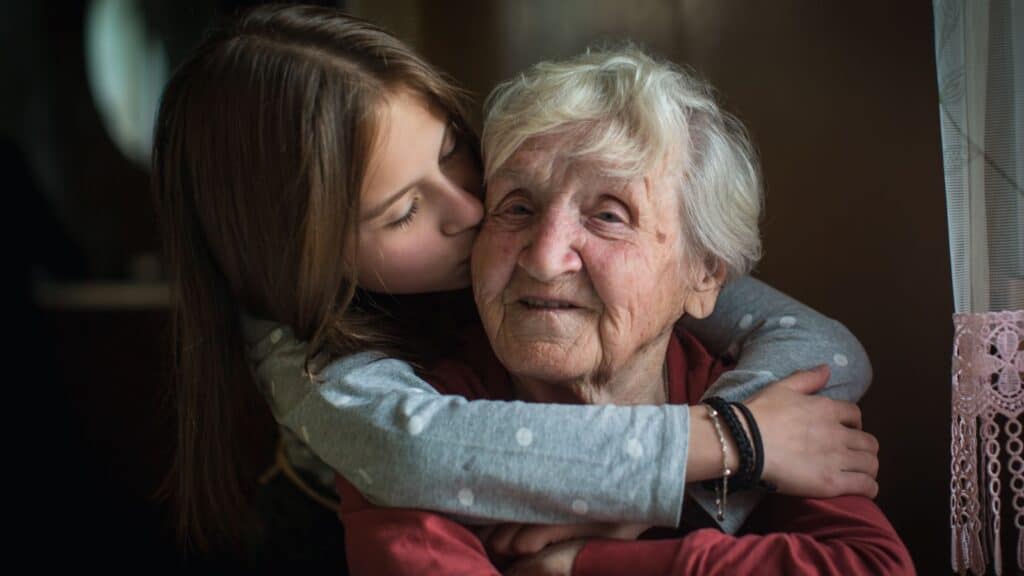
In the mid-20th century, a woman having her first child at 22 and that child having their own at 22 produced a grandmother at 44 – active, physically capable, present in ways that shaped memory. Repeat the sequence with a first birth at 32, and the arithmetic produces a grandmother at 64.
The average age of grandparents in the United States is currently around 67. That average conceals a meaningful reality: the window of healthy, physically engaged grandparenting has narrowed. A grandparent who becomes one at 67 has a fundamentally different relationship with a toddler than one who became one at 50. The energy available for chasing a child through a playground, the likelihood of attending a high school graduation, the probability of meeting a great-grandchild – all of it shifts with every year the timing extends.
What makes this doubly significant in smaller families is that the grandchild has no sibling to share the burden of that relationship as it evolves. In larger families, when one cousin drifted from an aging grandparent, others maintained the connection. In a one or two-child family, the maintenance falls entirely to whoever is there. Smaller families produce more vertical structures (more living generations above and below each person, with longer age gaps between them), and each person within those structures carries more relational responsibility with less backup.
They’ve become the economic lifeline propping up childcare
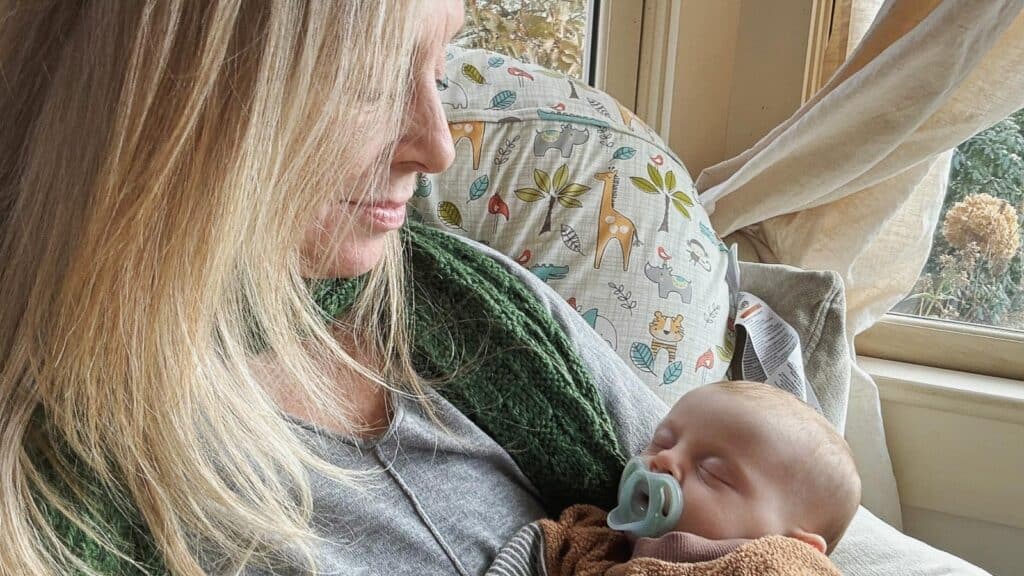
Formal childcare in most wealthy countries is expensive enough to constitute a second mortgage for many households. For grandparents willing and able to step in, their availability represents not just family support but a subsidy that enables maternal labor market participation at a scale governments have not formally priced in.
Yale University’s YaleGlobal has described grandparents as indispensable to mothers with young children, particularly single mothers, enabling them to enter and remain in formal employment. Research published in Population Studies from Finnish researchers found that mothers of children 12 and under were significantly less likely to experience depression when their parents were younger than 70, employed, and in relatively good health. And mothers living within 6.2 miles of their parents showed measurably lower depression rates.
In smaller families, this dynamic intensifies because the grandchild is often the sole focus. A grandparent providing care for one child is more likely to maintain consistency, build deep familiarity with the child’s routines and personality, and serve as a genuine secondary attachment figure. That depth is exactly what formal childcare struggles to replicate at scale. The ratio of caregivers to children in most daycare settings ranges from 1:3 to 1:12, depending on age group.
A doting grandparent offers a 1:1 ratio that no institution can match, and no government subsidy has yet fully replaced.
Smaller families are making grandparents the main keepers of family memory

In households where one child and two parents constitute the entire nuclear unit, nobody else is telling the old stories. No aunt repeats the version she swears is the real one. No older cousin who remembers what the grandfather was like before the kids arrived. The family narrative concentrates on the grandparents, who become its sole custodians – a role that in larger, more distributed families was shared, contested, and corrected across multiple voices.
This concentration gives grandparents in small families an unusual degree of narrative authority. What they choose to remember and tell becomes, functionally, the family’s history. The grandparent’s version becomes the version.
The responsibility this places on that relationship is worth sitting with. A grandparent who is estranged, geographically distant, or cognitively declining doesn’t just leave a gap in affection – they leave a gap in the archive. For an only child with no aunts or uncles, that gap has no natural substitute. The family story either lives through the grandparent or survives only in what parents can piece together from photographs and partial memory.
Smaller families have elevated grandparents from supporting narrators to primary authors of how the next generation understands its origins.
The emotional stakes are higher, and the grief cuts even deeper

Among the less-examined consequences of declining birth rates is what happens to people who expected grandchildren that never came. A New York Times report titled The Unspoken Grief of Never Becoming a Grandparent documented the experience directly, including a 35-year-old woman who, having decided she likely wouldn’t have children, described her grief process as involving guilt about her own mother.
Smaller families amplify grief because fewer children in the next generation means statistically fewer chances for any one of them to have children of their own. A parent of four has four chances for grandchildren; a parent of one has one. When that single adult child chooses not to have children (or cannot), the entire grandparenting chapter of a life closes without opening.
The flip side of this grief belongs to the adult child who chooses childlessness. Guilt about foreclosing someone else’s grandparent identity is a real emotional texture in those decisions, one that rarely surfaces in public conversation about reproductive autonomy but is quietly present in the private ones.
Technology hasn’t replaced proximity, but it has redefined what distance

More than half of American families have grandparents living over 300 kilometers from at least one grandchild, according to AARP survey data. A third of grandparents live more than 80 kilometers from their nearest grandchild. In earlier configurations of larger, more geographically rooted families, extended kin often clustered within the same town or region. Smaller, more mobile families have dispersed across cities and continents, and grandparents have followed their adult children’s career migrations only sometimes and partially.
The response to this distance has been technological in ways unrecognizable a generation ago. Video chats are now being used to close the gaps.
In smaller families, this technological intimacy fills a more critical gap. A child with multiple cousins who all see Grandma regularly has a diffuse relationship; the single grandchild on a weekly FaceTime call has something more exclusive. Distance hasn’t erased grandparenting so much as formalized it.
Where the relationship once happened incidentally (Sunday dinners, school pickups, proximity), it now requires scheduling, intention, and effort from both generations. That effort, paradoxically, may produce stronger conscious bonds than the accidental ones once generated.
The boundary wars are getting louder as grandparents gain more concentrated influence

When grandparents were one node in a large extended family network, their influence on any single child was diluted by the presence of other adults, other opinions, other holidays. In a two-generation household with one child, a grandparent’s preferred parenting philosophy has no natural counterweight within the family system. This concentration creates what psychotherapists now describe as helicopter grandparenting – a pattern of overinvolvement that mirrors the helicopter parenting literature of the early 2000s but applied one generation up.
The signs:
- Constant commentary on the child’s routine.
- Repeated bending of house rules around treats or screen time.
- Visible hurt when parents attempt to set limits.
The consequences for parents are an erosion of parenting confidence; for children, confusion about who holds authority. A grandparent and a parent in open disagreement about bedtimes send a child the signal that the rules are negotiable, which is a different kind of instability than the one parents think they’re preventing by enforcing them.
The child psychology literature, as far back as 1937, in a paper literally titled “The Grandmother: A Problem in Child Rearing,” warned about grandmothers who, in old-fashioned ways, interfered with mothers’ child-rearing. What has changed is the stakes. In a large family, a grandmother’s preference for authoritarian discipline competed against multiple other adults’ influences.
In a one-child family with deeply involved grandparents, it competes only against the parents. The field is smaller, and the game is louder.
Grandparenting is keeping older adults healthier, and smaller families are deepening that effect

The research on grandparenting and aging is neither straightforward nor wholly positive, but its most consistent finding is that the quality of engagement matters more than the volume of caregiving. Among grandparents, those who are more socially and emotionally engaged with their grandchildren report lower levels of loneliness, more healthful behaviors, and better subjective memory.
Purely instrumental caregiving (babysitting without the relationship) is associated in another study with greater loneliness, suggesting that showing up to watch children without a genuine connection produces a different outcome than the same hours spent in emotional exchange.
Smaller families produce both effects in more concentrated form. The grandparent of a grandchild with a genuinely close relationship experiences a more intense version of the benefits described above. But the grandparent who provides childcare for a single child without emotional reciprocity (perhaps because the parents are managing distance, conflict, or simply exhaustion) has no other grandchild relationship to balance the equation.
The returns to grandparenting in a small family are higher when the relationship works and lower when it doesn’t.
People are waiting longer to become grandparents
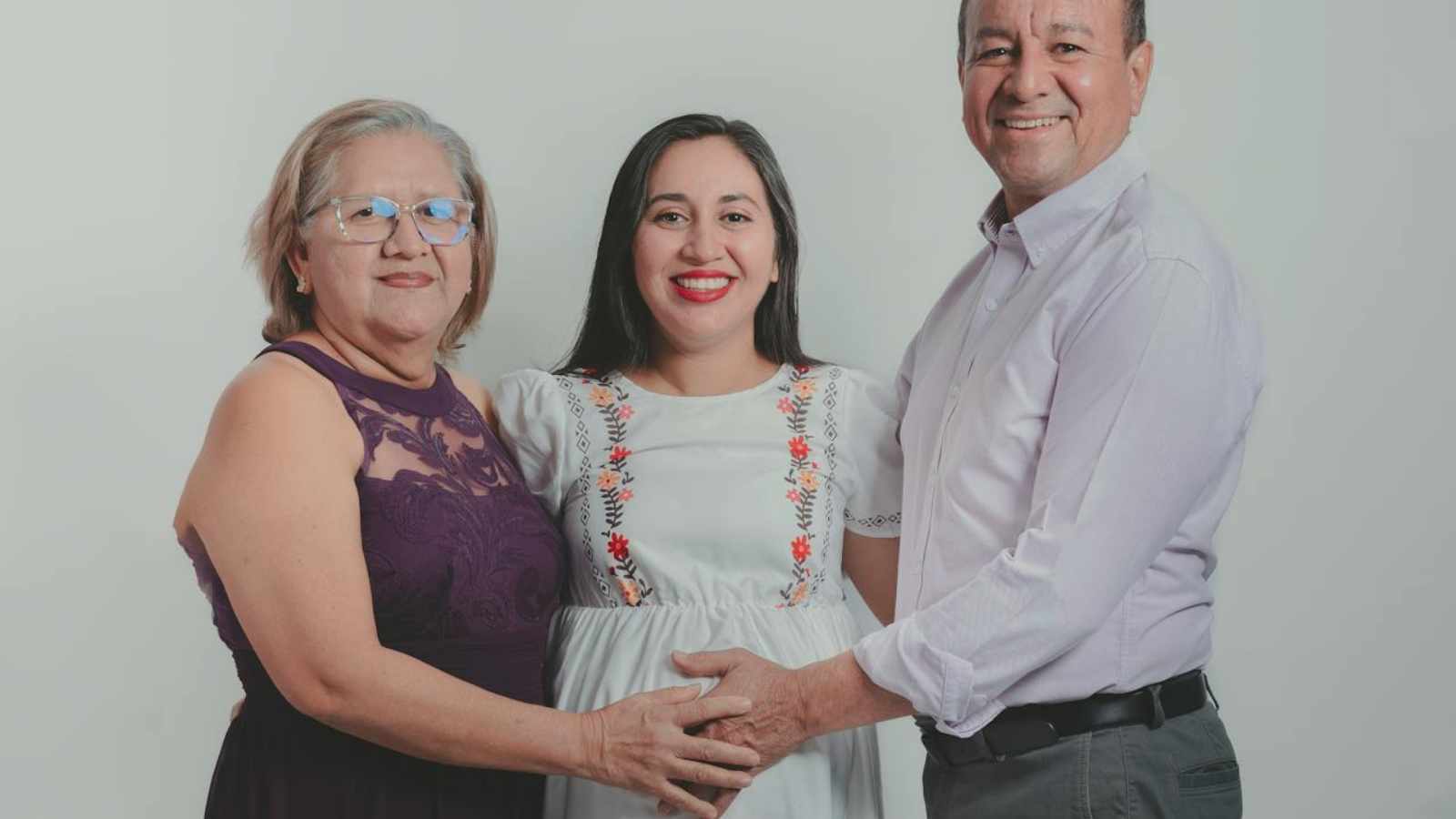
When both generations delay, the compounding is significant.
This restructures what the relationship can contain. A grandmother at 48 occupies a fundamentally different cognitive and cultural register than one at 68. The first can text the grandchild’s idioms, attend concerts with them, and be mistaken for their mother. The second is more likely to hold a wisdom gap that younger grandchildren find either awe-inspiring or alienating, depending on whether anyone has built the bridge.
Families growing vertically (more generations alive simultaneously, with longer age gaps between each) will produce grandparent-grandchild relationships with more years of lived difference separating them than at any prior point in recent history.
A more nuanced view is that older grandparents often bring something younger ones can’t: the unambiguous sense that they have already survived whatever the grandchild is worried about. Economic crises, personal failures, relationship losses, professional disappointments – the grandparent who is 70 has lived through iterations of all of them.
In smaller families where that grandparent’s relationship with the grandchild is less diluted by sibling dynamics, that transmission of perspective happens in closer quarters, with more opportunity for it to actually land.
Key takeaways:

- Fewer grandchildren doesn’t mean a weaker grandparent relationship – research suggests it produces a more intense one, with less competition for attention, time, and resources.
- Grandparents are functioning as an invisible economic infrastructure, providing childcare subsidies and financial support at a scale that neither families nor governments formally acknowledge until it’s gone.
- The age at which people become grandparents is rising on both ends – delayed childbearing in two consecutive generations means the window of healthy, physically engaged grandparenting is narrowing.
- Smaller families concentrate risk: when the grandparent relationship fails – through estrangement, distance, or decline – there is no extended network to absorb the loss for the grandchild.
- The grief of never becoming a grandparent is quietly becoming a demographic phenomenon of its own, one that will only grow as birth rates continue to fall and single-child families become the norm.
Disclaimer – This list is solely the author’s opinion based on research and publicly available information. It is not intended to be professional advice.
Like our content? Be sure to follow us