For a lot of women, cash feels like freedom, but that sense of control come with serious hidden costs.
For generations, women were allowed to earn and contribute, but the systems that turned money into power were built to exclude them.
For long stretches of modern economic history, women could earn money but not control it, contribute knowledge but not be credited for it, and participate in households without formal financial authority.
Legal frameworks like the Married Women’s Property Acts only began to shift that balance in the late 19th century, and even then, progress was uneven.
That legacy still echoes, not in obvious prohibitions, but in quieter patterns: lower credit visibility, delayed investment participation, and a persistent gap in who feels fully inside financial systems. In that context, cash can feel like autonomy: private, immediate, outside institutional oversight. It offers a sense of control that formal systems historically denied.
But that instinct carries a paradox. The same features that make cash feel independent, its invisibility, its lack of traceability, can also strip away the very forms of protection, proof, and leverage that modern financial systems provide. Understanding that tension is key. The question isn’t whether cash is good or bad; it’s whether relying on it as a shield against tracking actually strengthens or weakens financial power in a system that still rewards visibility, records, and access.
Cash is completely untraceable

The illusion of a ghost footprint often crumbles under modern forensic accounting and pervasive surveillance. While a $20 bill lacks a GPS chip, the movement required to spend it leaves a breadcrumb trail through Automated License Plate Readers and high-definition CCTV with facial recognition capabilities now standard in retail hubs.
For women navigating high-risk domestic situations, relying on cash to mask relocation can ironically create a vacuum of evidence. Legal practitioners often struggle to secure restraining orders or prove stalking patterns when a survivor’s movement isn’t anchored by timestamped transactions.
Without a digital ledger, establishing a status quo of expenses during a divorce or custody battle becomes a logistical nightmare, often resulting in lower alimony awards due to a lack of verifiable spending history. A 2023 report from the Electronic Frontier Foundation notes that metadata from surrounding devices often tags your location anyway, meaning you trade financial protection for a privacy shield that is more porous than it appears.
No fraud protection

Cash remains the only financial medium with a 100% loss rate in the event of theft or error. Once a physical note leaves your hand, under the legal doctrine of negotiable instruments, the holder is generally the owner. This creates a massive vulnerability for women, who are targeted by 63% of “grandparent scams” and a high volume of caregiver-related fraud, according to Federal Trade Commission (FTC) data.
Unlike a credit card protected by the Fair Credit Billing Act, which limits liability to $50 and allows for chargebacks, cash offers no undo button. If a fraudulent contractor or a manipulative acquaintance takes a cash deposit, the victim’s only recourse is the civil court system: a path often too expensive to pursue.
Scammers exploit the physical nature of cash to create a sense of urgency and finality, bypassing the cooling-off periods and fraud-detection algorithms that modern banking apps use to flag suspicious behavioral deviations.
No financial footprint

Credit is a gatekeeper to survival, and cash is a silent gatekeeper. The Consumer Financial Protection Bureau identifies roughly 26 million Americans as credit invisible, a demographic where women are overrepresented due to career breaks and the persistent gender wealth gap.
A cash-only lifestyle prevents the generation of a FICO score, which landlords increasingly use as a proxy for character. Data from Experian suggests that those without active credit files pay up to $200,000 more in interest over their lifetimes because they are forced into subprime lending markets.
While avoiding debt is the ultimate freedom, the lack of a paper trail hinders securing a business loan or a mortgage.
Even in the rental market, a woman with a backpack full of cash is often viewed with more suspicion than one with a mediocre credit score, as the latter offers a predictable history of reliability that the former cannot replicate.
Budgeting blind spots

The envelope system is often touted as a peak mindfulness tool, yet it ignores the reality of the mental load borne by women managing multifaceted households. The lack of immediate visibility and physicality in digital payments alters consumers’ perceptions of spending, leading to impulse buying and increased purchasing.
Physical money lacks the categorization and automated visualization provided by modern fintech. When balancing the fluctuating costs of childcare, groceries, and healthcare, the absence of an exported CSV file or an automated pie chart forces a reliance on manual record-keeping: a task that takes hours and is prone to human error.
Bankrate data indicate that 54% of consumers spend more when paying in cash for small purchases because they don’t perceive the drip-feed loss of coins and small bills as a significant budgetary hit. This lack of transparency results in financial leakage, with hundreds of dollars disappearing each month into undocumented incidental costs.
Increased theft risk

Carrying physical currency makes a person a high-value target in a way that a locked smartphone or an encrypted card does not. The Bureau of Justice Statistics highlights that personal larcenies are frequently crimes of opportunity where the presence of visible cash is a primary catalyst.
For women commuting or traveling alone, the physical bulk of cash requires frequent access to purses or wallets, signaling vulnerability to snatch-and-grab offenders. Unlike a digital wallet, which requires biometric authentication (Face ID or fingerprints) to authorize a transaction, cash is authenticated by whoever holds it.
In informal markets or high-traffic tourist zones, the need to carry large sums due to a lack of digital alternatives directly correlates with increased physical risk. There is no remote wipe function for a stolen purse, and the psychological trauma of a physical confrontation often outweighs the monetary loss itself.
Limited access in a cash-light economy
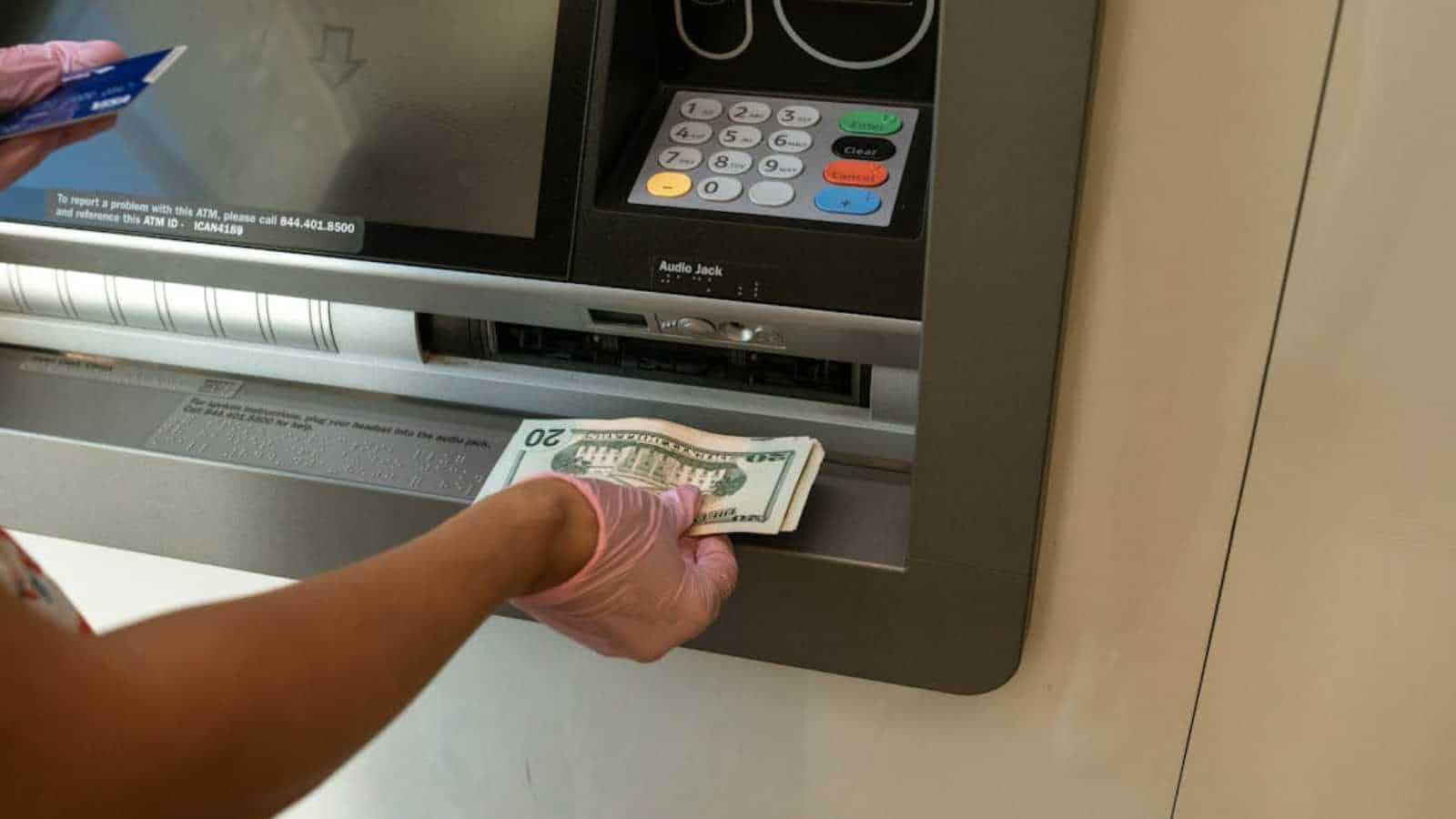
The world is increasingly digital by default, and those who cling to cash face a functional exclusion tax. From ride-hailing services like Uber and Lyft to emergency Airbnb bookings, the infrastructure of modern safety and mobility requires a digital tether.
For a woman stranded at night, a cash-only status could mean the difference between a tracked, safe ride home and an unregulated, riskier alternative.
Cash-only signs are increasingly rare in urban centers, effectively creating service deserts for the unbanked. Furthermore, many airlines and hotels have moved to completely cashless environments for incidentals.
This isn’t just an inconvenience; it’s a barrier to independence. If you cannot book a flight or a hotel room instantly during a personal crisis because you lack a digital payment method, your physical cash becomes a heavy, useless weight.
False sense of privacy

In the context of coercive control, cash is often seen as a tool for secret independence, but it can actually facilitate isolation. Financial abusers often monitor cash withdrawals more stringently than digital spending because cash is harder to justify without a receipt.
Dr. Nicola Sharp-Jeffs, founder of Surviving Economic Abuse, notes that abusers may use the lack of a digital trail to gaslight victims about how much money was actually provided or spent. Relying on cash prevents a woman from building a private, secure digital escape fund that could be hidden behind multi-factor authentication or within apps that provide financial literacy resources.
Moreover, the privacy of cash is easily compromised by a simple act, such as a partner checking a coat pocket or a car’s glove box. In contrast, digital privacy, when managed correctly with secure, independent accounts, offers a level of encryption that physical storage simply cannot match.
Emergency constraints

Speed is the most valuable currency during a crisis. Digital payments allow for the instantaneous transfer of funds across borders and institutions, a feature that physical cash lacks.
A key finding from the Bill & Melinda Gates Foundation (often cited in World Bank literature) is that when emergency government transfers are sent directly to a woman’s mobile wallet rather than as a cash payout to a male head of household, the recovery rate for the entire family unit accelerates by roughly 20%.
If a woman needs to flee a dangerous situation, she can receive a digital transfer from a relative or a non-profit in seconds. Cash requires a physical hand-off, which is often dangerous or impossible in urgent scenarios.
Furthermore, in the wake of natural disasters, ATMs are frequently the first things to fail. Those reliant on digital wallets often find they can still transact via peer-to-peer apps even when physical infrastructure is crippled, providing a critical lifeline when traditional commerce stalls.
Relationship dynamics

While some view cash as a way to maintain private spending within a marriage, it often serves as a double-edged sword, enabling financial infidelity or control. In a healthy partnership, digital transparency fosters shared goals; in a toxic one, cash becomes a mechanism for financial breadcrumbing.
An abuser might provide a cash allowance to prevent the victim from ever interacting with a bank, thereby ensuring she never develops the skills or the credentials to survive on her own. The National Coalition Against Domestic Violence (NCADV) reports that financial abuse occurs in 99% of domestic violence cases.
By sticking to cash, a woman might inadvertently participate in her own disenfranchisement, as she remains invisible to the very institutions that could offer her the financial leverage, such as a small business loan or a credit line, needed to establish a life independent of a controlling partner.
No spending insights

Modern wealth building is a game of data, and cash is data-silent. For women juggling the second shift: the unpaid labor of home management, the lack of automated insights leads to significant cognitive fatigue. Apps like YNAB or Mint (and their successors) provide longitudinal data that can identify price gouging in recurring bills or subscriptions that are no longer needed.
A study focusing on branding and the consumer side confirms that proactive self-control strategies, such as digital tracking and visible nudges, have a medium effect size ($d = 0.57$) in increasing savings. Cash users have to rely on memory or manual entry, both of which fail under high stress.
Without a dashboard showing that 40% of income is being lost to miscellaneous cash leaks, the ability to pivot toward investments or retirement savings is severely hampered.
Legal and tax complications

The informal economy is heavily populated by women-owned micro-businesses, from craft selling to freelance consulting. While cash payments avoid immediate processing fees, they create a glass ceiling for growth. The Internal Revenue Service and equivalent global bodies scrutinize cash-intensive businesses.
Without clean, digital records, a woman cannot easily prove her income to secure a commercial lease or apply for government grants. Furthermore, companies with digital accounting are significantly more likely to survive the first five years.
Cash transactions leave no trail for tax deductions, meaning a woman might end up paying more in taxes than a digital-savvy competitor who can prove every business expense. Transparency isn’t just about following the law; it’s about building a verifiable track record that allows a small hustle to scale into a legitimate enterprise.
Missed financial tools

The gender investment gap is exacerbated by the cash-only mindset. Digital platforms now allow for round-up savings, where every transaction is rounded to the nearest dollar, and the difference is invested in a diversified portfolio.
For someone using only cash, these passive wealth-building mechanisms are inaccessible. While women are, on average, better investors than men, they often wait longer to start investing.
By staying out of the digital loop, women miss out on sign-up bonuses, high-yield savings accounts that require electronic deposits, and rewards programs that can yield 2-5% back on daily essentials. Over 20 years, the opportunity cost of choosing $100 in a physical jar rather than $100 in a 5% yield account is thousands of dollars.
Cash doesn’t just sit still; in an inflationary environment, its purchasing power actively shrinks, meaning the safe money in your wallet is losing value every single day.
Key Takeaways

- Financial systems have historically limited women’s control more than their participation, and that legacy still shapes access to credit, visibility, and economic leverage today.
- Cash can feel like autonomy because it avoids oversight, but that same invisibility often removes protection, proof, and financial credibility when they’re most needed.
- Many risks are tied to cash: lack of fraud protection, no transaction history, limited access to services, and becoming sharper in contexts where women already face structural or situational constraints.
- Digital financial tools are not neutral, but they provide enforceable records, faster mobility, and access to opportunities that cash alone cannot replicate.
- The strongest strategy is not choosing cash or digital outright, but using both, deliberately balancing privacy with traceability to maintain control without losing protection.
Disclaimer – This list is solely the author’s opinion based on research and publicly available information. It is not intended to be professional advice.
Like our content? Be sure to follow us