Is a 50/50 split fair in early dating? 12 reasons why men ask for it
Despite shifts in income equality, hypergamy remains a recurring reference point in discussions about value, investment, and partner selection in modern dating. This is partly because women have historically been assumed to “date up” in status or resources, a narrative that still shapes how some interpret romantic dynamics even as female participation in the workforce has increased significantly.
At the same time, dating itself has accelerated: Pew Research Center estimates that around 30% of U.S. adults have used a dating app, reshaping courtship into a high-frequency, low-certainty exchange rather than a slow, traditional progression. In this environment, even simple questions, like who pays on a first date, carry disproportionate meaning. What was once a predictable social script has become a site of interpretation.
To some, a 50/50 split signals fairness in an era where financial independence is expected. To others, it disrupts long-standing expectations around effort, interest, and romantic signaling. So the real question is no longer whether splitting the bill is mathematically fair, but what it communicates in a dating landscape where neither side fully agrees on the rules anymore.
When Equality Moves Faster Than Etiquette

Social scripts often lag behind systemic shifts, creating a friction point where modern values collide with inherited traditions. While the Gender Pay Gap has narrowed to approximately 18% in the United States, according to Pew Research Center data, the expectation that men should pay remains a stubborn outlier in social psychology.
Many men propose a split because they perceive a contradiction in advocating for workplace parity while maintaining a dating model based on male provision. While women historically prioritized resources, modern shifts in female earning power have begun to decouple financial provision from romantic suitability.
This creates a scenario in which a 50/50 split serves as a test of ideological alignment. If a woman earns a comparable salary, a man may view the split as a reflection of mutual respect rather than a lack of interest.
However, a competing view suggests that dating rituals are not purely economic transactions but symbolic performances of care. Traditionalists argue that the first date is a microcosm of future protection, where the gesture of paying outweighs the literal dollar amount. Consequently, the tension arises not from the money itself, but from the lack of a universally accepted new rulebook to replace the old one.
The Rise of Frequent First Dates Changes the Math

The sheer volume of first meetings facilitated by digital platforms has transformed dating from a rare event into a high-frequency activity. Heavy app users may go on multiple first dates per month, making the traditional model of the man paying for every encounter financially unsustainable for many.
If a single man goes on two dates a week at an average cost of $80 per outing, his annual dating expenditure could exceed $8,000, a significant portion of the median after-tax income. This high-churn environment encourages men to treat the first meeting as a low-stakes screening rather than a formal courtship. Logan Ury, Director of Relationship Science at Hinge and author of How to Not Die Alone, suggests that Date Zero, a quick coffee or drink, is a response to this fatigue.
Men ask for a split here to protect their burn rate as they search for a genuine connection. This financial pragmatism ensures that a string of unsuccessful matches does not lead to personal insolvency. By removing the heavy price tag from the initial vibe check, men feel they can participate in the dating pool longer without resentment building toward the process or the people they meet.
Fairness vs. Generosity: Two Competing Definitions

The disagreement over the bill often stems from a fundamental difference in how partners define a successful interaction. For many men, fairness is a mathematical constant: two participants who enjoy the same service contribute equally.
This is supported by the Social Exchange Theory, which posits that social behavior results from an exchange process aimed at maximizing benefits and minimizing costs. Conversely, a different perspective holds that dating is a realm of generosity where keeping score is an immediate turn-off. In a Money Magazine survey, nearly 78% of respondents still believed men should pay on the first date, regardless of who asked whom.
This creates a psychological trap: a man may think he is being fair, while his date perceives him as being stingy or disinterested. The divide is often between those who view the date as a shared experience and those who see it as an opportunity for one party to impress the other. Men who insist on a split may be prioritizing the establishment of a partnership based on balance from the very first hour, effectively filtering out anyone who views the man’s role as primarily transactional or as a source of support.
Economic Pressure Is Reshaping Dating Behavior

Rising living costs and stagnant wage growth among younger demographics have turned dating into a luxury. In a 2023 LendingTree report, roughly 19% of daters said they are going on fewer dates because of inflation, and 14% are actively seeking cheaper activities. Men in the early stages of their careers often feel the weight of these statistics most acutely, which can lead to the 50/50 request as a survival mechanism. This is not merely about a lack of funds, but about a shift in opportunity cost.
Spending $100 on a dinner with a stranger means that money cannot go toward a down payment or student loan interest. This economic reality is challenged by the idea that dating should remain a protected space from the harshness of the market. Some social commentators argue that if a man cannot afford a date, he should not be dating, yet this ignores the basic human need for companionship across all income brackets.
The move toward splitting is an organic adaptation to a world in which a single income no longer carries the same purchasing power it did 40 years ago. It allows for romantic exploration without requiring a man to jeopardize his financial stability for a person he may never see again.
Avoiding Misread Intentions in Early Interactions

A split check can serve as a clear communication tool that removes the unspoken pressure of a transactional debt. Some men prefer a 50/50 split to ensure that the woman does not feel she owes him anything, whether that be a second date or physical intimacy. This is a move toward communicative transparency.
By leveling the financial playing field, the focus remains entirely on the conversation and chemistry. Traditional dating scripts can sometimes reinforce power imbalances, leading the payer to feel entitled to take the lead in the interaction. Avoiding this dynamic allows for a more organic development of attraction. This perspective overlooks the possibility that many women find the offer to pay as a sign of safety and provision, not an attempt at control.
However, for the modern man concerned with consent and boundaries, the split is a way to signal that he views his date as a complete equal whose company is valued for its own sake, not as a reward for a meal he paid for. It strips away the performative layers of the date, leaving only the raw data of how two people actually get along.
Past Experiences Quietly Rewrite Present Rules

Dating history often functions as a silent architect of current behavior. A man who has spent thousands of dollars on first dates that led nowhere may develop dating burnout, leading him to adopt a split-check policy as a form of emotional and financial self-protection. This is an application of Loss Aversion, a principle in behavioral economics that holds that the pain of losing is twice as powerful as the pleasure of gaining.
If past experiences involved being ghosted after an expensive dinner, the man may associate paying with being taken advantage of. This behavior is not necessarily a reflection of the current date but a defensive crouch against historical patterns. Critics argue that this cynicism punishes the new person for the sins of the old, yet the human brain is hardwired to learn from negative stimuli.
Statistics from Norton indicate that online dating scams and financial manipulation are on the rise, prompting men to be more cautious about where they put their money. Splitting becomes a litmus test for the woman’s intentions; if she is willing to pay her share, he perceives her as being there for him, not for a free meal.
The Initiator Question: Who Should Carry the Cost?

The old adage, “the one who invites pays,” has become complicated in an era where the lines of initiation are blurred. While men still initiate the majority of first contacts on apps, agreeing to meet is often a collaborative effort. Women are increasingly taking the lead, yet the expectation for the man to pay often persists even when he did not choose the venue or the time.
Men who ask for a split are often challenging the assumption that the initiator is the sole beneficiary of the date. They argue that because both parties are looking for a partner, both should invest in the search. This claim fails to account for the Pink Tax and the higher cost of dating preparation for women, including makeup, hair, and clothing, which can create a hidden financial burden.
However, from a man’s perspective, the visible cost of the bill is the only one he can influence. By splitting, he is attempting to equalize the investment. This moves the interaction away from a host-guest dynamic and toward a co-adventurer model, where both individuals are equal stakeholders in the potential relationship.
Signaling Compatibility Through Financial Choices

Money is one of the leading causes of divorce, and men may use the first date to screen for financial compatibility. A man who values frugality and long-term planning might find a partner who expects a free dinner to be a poor fit for his lifestyle. According to data from Northwestern Mutual, 49% of adults say they are not financially compatible with their partners.
By suggesting a split, a man is essentially conducting an early-stage compatibility test. He is looking for a woman who shares his views on fiscal responsibility and gender roles. This is a deliberate filtering mechanism designed to find a match who values partnership over traditionalism. While this might alienate some, it ensures that those who remain are aligned with his core values.
This view is challenged by the idea that a first date is an inappropriate time for a budget meeting and that romance requires a degree of suspension of disbelief. Nevertheless, for the pragmatist, a woman who reaches for her wallet is signaling a lack of entitlement, which many men find highly attractive in a world where modern life requires two incomes to maintain a comfortable household.
The Difference Between Equality and Equity

While equality focuses on everyone getting the same, equity focuses on everyone having what they need to succeed, given their circumstances. Some men argue for 50/50 as a pursuit of pure equality, but this overlooks the Income Disparity that still exists in many sectors. A woman might be earning $50,000 while the man earns $150,000, making a split far more taxing for her than for him.
In this context, a more nuanced view is that the split should be proportional to income. However, since salary is rarely discussed on a first date, the 50/50 split remains the default fallback for men who want to avoid making assumptions about a woman’s financial status. They may feel that assuming she needs him to pay is patronizing.
By asking to split, he treats her as a peer with her own agency and resources. This is particularly common in tech hubs like San Francisco or Seattle, where female professionals often out-earn their male counterparts. In these environments, the split is less about saving money and more about acknowledging the woman’s professional success and independence.
Emotional Risk Management in Uncertain Outcomes

Every first date is a gamble with a high probability of failure. Men use the split check to manage the sunk cost of an evening that doesn’t spark. When a man pays the full bill, and the date goes poorly, he feels a double loss of time and capital. By splitting, he reduces the sting of rejection. It changes the narrative from I paid for a bad time to We both tried something that didn’t work. This is a form of Emotional Risk Management.
Men often feel a greater pressure to perform on dates, and the financial burden adds to that anxiety. Removing the expectation of paying can actually lead to a more relaxed, authentic interaction, as the man isn’t worrying about the bill throughout the night.
On the other hand, some argue that this lack of skin in the game makes men more likely to treat dating as a disposable hobby rather than a serious pursuit of a partner. Regardless, for many, the split serves as a buffer, keeping the dating experience from becoming a series of expensive disappointments.
Cultural Background Still Shapes Expectations
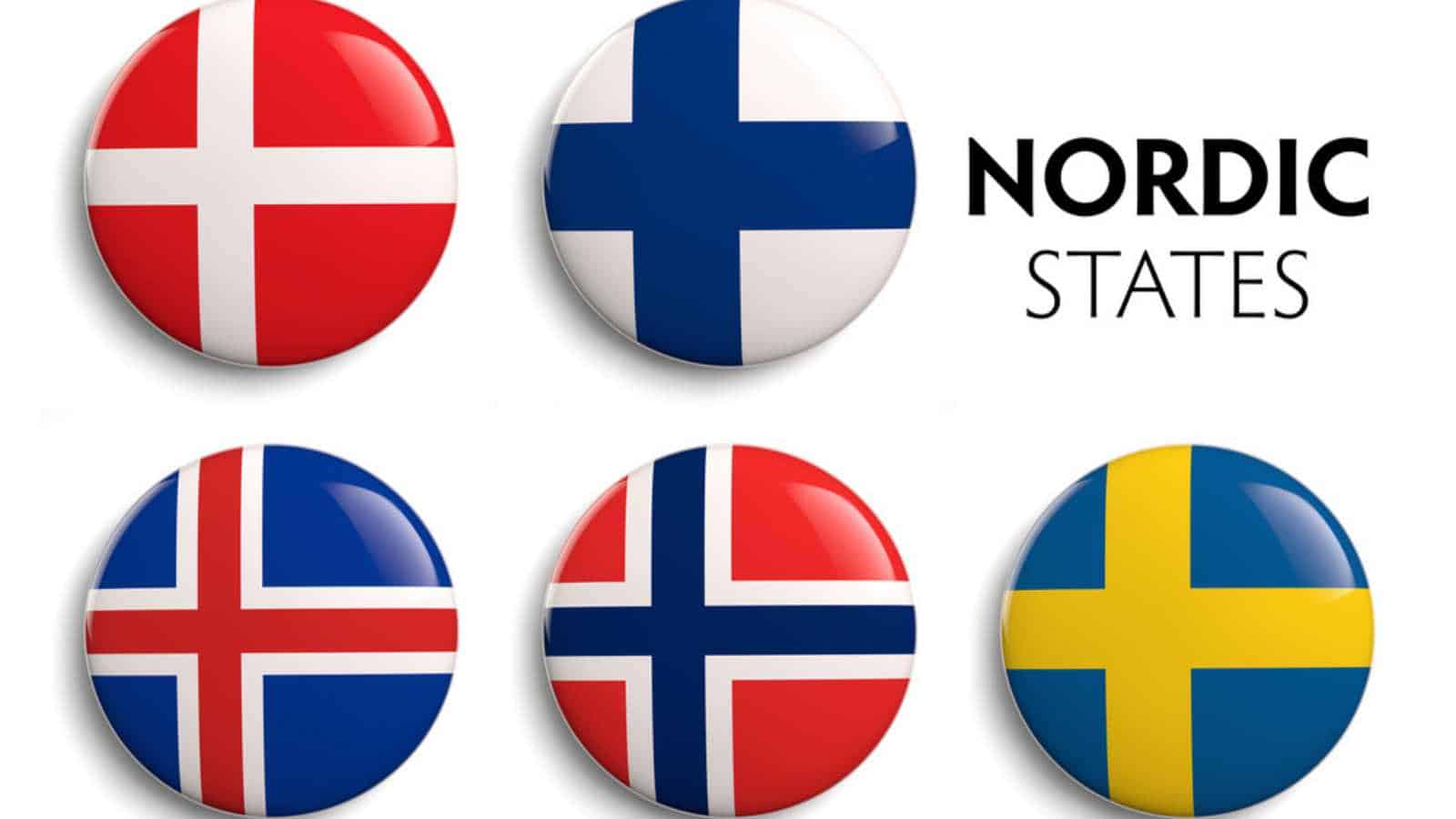
The 50/50 debate is heavily influenced by geography and upbringing. In many Northern European cultures, splitting the bill is the standard practice and is rarely questioned. In contrast, in many Southern or Middle Eastern cultures, a man asking to split would be seen as a deep insult to his own honor and the woman’s family.
Men who move between these worlds or are influenced by shifting cultural tides often find themselves at a crossroads. Hofstede’s Cultural Dimensions holds that societies with low Masculinity scores tend to favor more egalitarian dating rituals. A man asking for a split may be operating within a framework of Egalitarianism, while the woman may be operating within a framework of Chivalry. This mismatch is where most dating conflicts occur.
The reality is more complex, as individuals often hold a mix of modern and traditional values. A man might be a progressive feminist in his politics but still feel a deep-seated urge to pay due to his father’s influence. When he chooses to split, he is often actively resisting his internal cultural conditioning to align with what he believes is a fairer, more modern way of living.
Effort isn’t just financial, but money is the Visible Part

The argument for a 50/50 split often ignores the invisible labor involved in dating. Women frequently spend more time and money on grooming, while men often take on the emotional labor of planning and initiating. Men who insist on splitting may feel that their effort in organizing the date balances out the woman’s investment in her appearance. This is a case of Cognitive Dissonance, where both parties feel they are doing more than the other.
The evidence shows that money is simply the easiest metric to track. You cannot easily quantify the value of a well-planned itinerary or a perfectly applied winged eyeliner, but you can see the $65 on the receipt. By focusing on the bill, men are attempting to bring order to the chaotic, subjective world of dating. It provides a clear, measurable point of agreement.
While this can feel cold or unromantic, it is a transparent way to start a relationship. It moves the focus away from what one can provide for the other and toward what they can build together. In the end, the split is less about the dollars and more about the desire for a partner who is a co-pilot, not a passenger.
Key takeaways

- The debate over a 50/50 split in early dating reflects broader uncertainty about modern relationship norms rather than a single agreed-upon definition of fairness.
- Hypergamy remains a recurring interpretive framework in discussions about dating, but it is more often used to explain perceived patterns than to describe a fixed behavioral rule.
- The rise of dating apps has increased the frequency of first dates, making cost-sharing more common as a practical response to higher dating volume and financial fatigue.
- Men’s preference for splitting the bill is shaped by multiple factors, including economic pressures, past dating experiences, a desire for reciprocity, and differing views on fairness and signaling.
- The meaning of paying on a first date is contested: it can signal generosity, equality, interest, or neutrality depending on cultural background and personal interpretation.
Disclaimer – This list is solely the author’s opinion based on research and publicly available information. It is not intended to be professional advice.
Like our content? Be sure to follow us