Millions clock in, do nothing, and still get paid. Here’s why
There is a strange little theater happening in offices, homes, coworking spaces, and open-plan floors across America. The laptop is open. The status light is green. The spreadsheet is on the screen. The meeting invite exists. The employee looks busy enough to survive the day, but the actual work is somewhere else entirely.
According to Gallup’s 2025 State of the Global Workforce Report, 79% of employees worldwide are disengaged, marking one of only two engagement drops in the past 12 years.
It is easy to turn this into a lazy-worker story, but that would miss the bigger wound. Many people are not simply refusing to work. They are burned out, checked out, underpaid, over-managed, emotionally detached, or trapped in jobs that feel pointless. Some are gaming the system, yes. But many are responding to a work culture that rewards looking available more than doing meaningful work.
Quiet quitting turned minimum effort into a survival strategy

Quiet quitting does not always mean someone is lazy. Often, it means they stopped donating unpaid energy to a job that stopped giving much back. They still answer the email, attend the meeting, finish the required task, and avoid getting fired. What disappears is the extra sparkle: the late-night effort, the emotional ownership, the cheerful volunteering, the “we’re a family” performance.
Gallup reported that quiet quitters made up at least half of the U.S. workforce in 2022, with only 32% of workers actively engaged and 18% actively disengaged. That is not a tiny workplace mood swing. That is a warning that many employees are physically present but psychologically gone. They are still clocking in, but the relationship with work has cooled into something transactional.
Fake productivity has become its own workplace skill

Some workers have learned how to look busy without being especially productive. They walk around with notebooks, type random things, keep spreadsheets open, schedule pointless meetings, or hold a phone like a call is happening. It sounds ridiculous until you realize many workplaces reward the appearance of motion more than the value of the work itself.
Resume Now’s 2025 Ghostworking Report found that 58% of employees admit they regularly pretend to work, while another 34% do so occasionally. Only 12% said they never fake productivity. That number is less funny when you sit with it. If almost everyone is pretending at least sometimes, the problem is not just individual dishonesty. It is a work culture where performance has replaced purpose.
The green status light became the new office mask

Remote work gave people freedom, but it also created a new kind of surveillance. In some jobs, being “active” online became a substitute for being trusted. That is how we ended up with the absurd little world of mouse jigglers, status tricks, and workers trying to convince software that they are present even when their minds are not.
Reports have suggested that a small but real share of remote workers have used tools that mimic activity, and Wells Fargo fired more than a dozen employees in 2024 after finding simulated keyboard or mouse activity. The deeper issue is not the gadget. It is the fact that some companies measure trust through movement instead of outcomes.
When management watches the mouse instead of the work, employees learn to move the mouse.
Many workers are job hunting while on the clock

Some employees are not doing nothing. They are doing something else: trying to escape. Resume Now’s ghostworking research found that 92% of workers admitted to job-searching during work hours, with many editing resumes, applying for jobs, taking recruiter calls, or sneaking out for interviews.
That is not a small side habit. It is an exit sign flashing across the workday. When people use paid time to look for another job, it often means they have already emotionally left the one they have. The employer still sees a person in the seat. The employee sees a temporary funding source while they search for a place that feels less draining, less pointless, or at least better paid.
Some people do not believe their jobs matter

A job can pay the bills and still feel spiritually empty. That is the uncomfortable heart of the “bullshit jobs” debate. If someone spends their day moving numbers between systems, preparing decks nobody reads, joining meetings that create more meetings, or managing processes that feel detached from human value, disengagement starts to make sense.
Research discussed by the British Sociological Association found that 19% of American workers said their jobs were rarely or never useful to society. Workers in finance, sales, and managerial roles were more likely than others to feel this way. That does not mean every corporate or office job is meaningless. It means many workers are spending their lives in roles where the paycheck is real, but the purpose feels missing.
Burnout turns people into workplace ghosts

Burnout can make a person look like they are still functioning, while the inside has gone gray. They attend calls. They reply with “sounds good.” They keep the camera off. They finish just enough. But the energy, creativity, curiosity, and care that once made them good at the job have been drained down to fumes.
Surveys have found high burnout across full-time workers, especially among younger employees. When people are burned out, fake productivity becomes a shield. It helps them preserve the job without admitting how little they have left. This is especially familiar to women and caregivers, who may finish the paid workday only to begin the second shift of children, meals, elder care, errands, emotional labor, and household management.
Meetings became a hiding place

The modern meeting can be useful, but let’s be honest: plenty of meetings exist because no one wants to make a decision, write a clear update, or trust people to do their work without gathering everyone into a digital waiting room. For checked-out workers, meetings can become perfect camouflage.
Resume Now found that 12% of workers admitted to scheduling fake meetings to avoid real work. Even real meetings can have the same effect when they are vague, bloated, or unnecessary. People can spend a whole day “busy” in calls and still produce very little. The calendar looks full. The output looks thin. Somehow, everyone is exhausted anyway.
Presenteeism is the expensive cousin of absenteeism
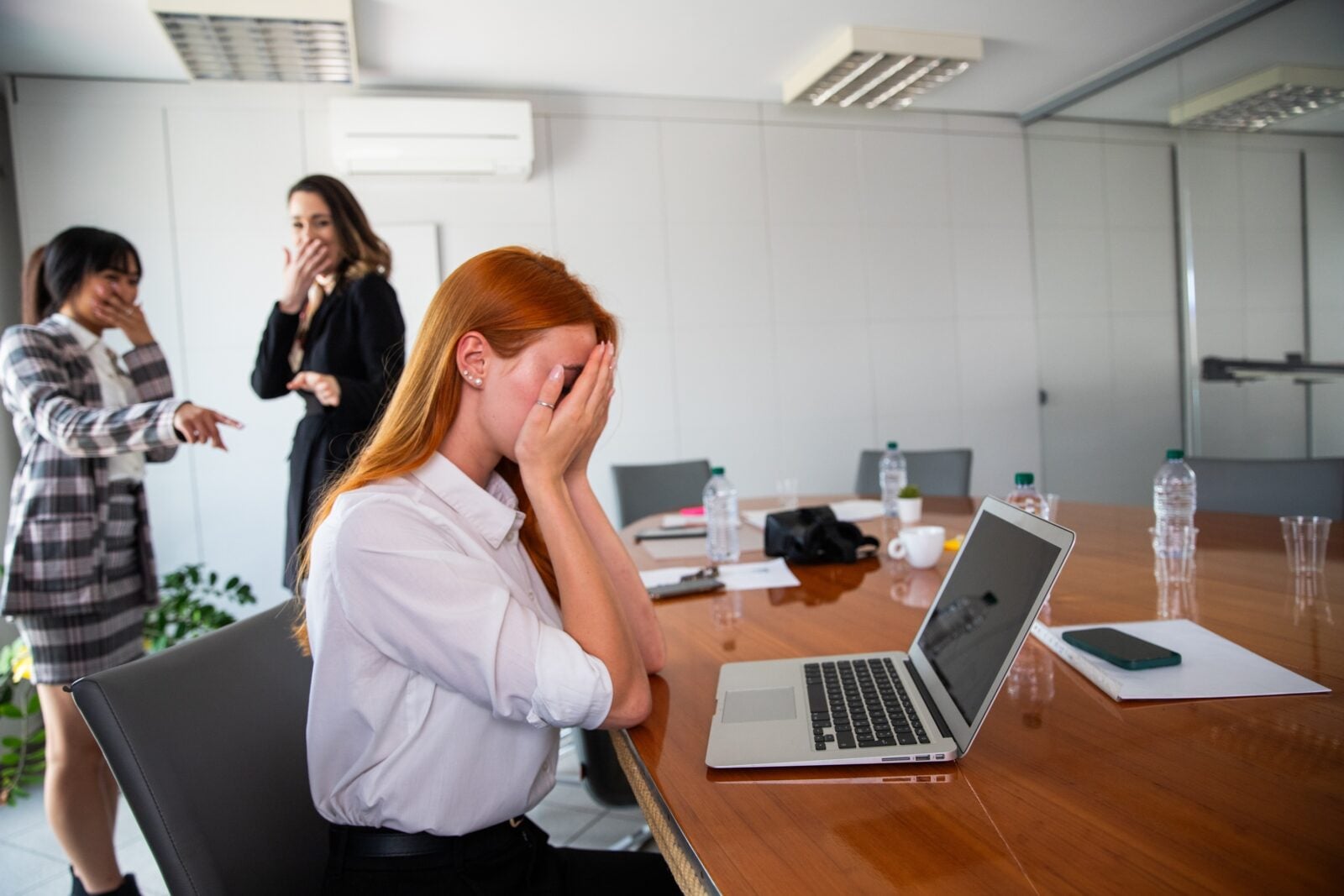
Absenteeism is when people do not show up. Presenteeism is sneakier: they show up, but they are too sick, stressed, distracted, depressed, burned out, or disengaged to perform well. It is the worker at the desk with a migraine. The employee answering messages through anxiety. The parent pretending to focus while a child is sick at home. The person whose body is present but whose capacity is gone.
Presenteeism can cost employers heavily because it hides inside ordinary attendance. The worker is technically there, so the system counts the day as covered. But the quality of work suffers, mistakes rise, and the employee often gets worse instead of better. A culture obsessed with attendance can miss the obvious truth: a body at work is not the same as a person able to work.
Pay and productivity stopped feeling connected

For decades, workers have heard that effort pays off. Work harder, produce more, stay loyal, build value, and life should get better. But many workers look around and see corporate profits, executive pay, and productivity gains rising faster than their own wages.
The St. Louis Fed has explored the long-running debate over wages and productivity, noting the accumulated gap that opened after the late 1970s, depending on the price measure used. For workers, the technical debate matters less than the lived feeling.
If productivity rises but pay does not feel like it follows, extra effort starts to look foolish. People stop sprinting for a finish line that keeps being moved.
Remote work gave people new ways to disappear

Remote work did not create disengagement, but it gave disengaged workers more privacy. At home, it is easier to fold laundry during a meeting, run an errand between tasks, keep a status light active, or stretch a simple assignment across an afternoon. That can be abuse of trust in some cases. In others, it is a response to work that was never filling the day honestly in the first place.
The uncomfortable truth is that many jobs contain more slack than managers want to admit. In the office, that slack gets covered by hallway chats, coffee walks, desk tidying, and looking busy. At home, the same slack becomes visible in different ways. Remote work did not invent wasted time. It simply removed the costume rack.
Younger workers are checking out faster

Younger workers are often accused of being entitled, but many entered adulthood during economic whiplash, student debt, rising rents, pandemic disruption, climate anxiety, and a work culture that still talks like loyalty is a one-way street. They have watched older generations burn out and are less willing to pretend exhaustion is a badge of honor.
That does not mean every young worker is disengaged. It means many are asking a sharper question: what am I giving, and what am I getting back? If the answer is stress, low pay, weak flexibility, vague advancement, and constant pressure to be grateful, the emotional checkout comes quickly. They may still do the job. They just stop pretending the job deserves their whole soul.
Employers also helped create the problem

It is tempting for companies to look at fake productivity and ask, “What is wrong with workers?” A better question might be, “What kind of workplace makes pretending feel safer than honesty?” If people are ghostworking, quiet quitting, hiding in meetings, or job hunting on company time, surveillance alone will not fix it.
Workers need clear expectations, fair pay, meaningful work, humane workloads, trust, flexibility, and managers who know the difference between productivity and performance theater. Employers also need to confront their own side of the bargain. Wage theft, unpaid labor, constant after-hours availability, fake urgency, and vague job design all teach workers that the system is already playing games. People learn from the culture they are in.
The takeaway
Millions of people may be clocking in, doing very little, and still getting paid, but the story is not as simple as “workers got lazy.” Some are burned out. Some are underused. Some feel their jobs do not matter. Some are quietly leaving before they officially leave. Some are responding to workplaces that reward availability over outcomes and busyness over value.
This is also a care and dignity story. Women know what invisible labor looks like, and they also know what it feels like to be drained by systems that take effort for granted. A healthier workplace would not need employees to perform busyness like a survival ritual. It would make work clearer, fairer, more human, and more worth doing. Because when people have to pretend to work, something bigger is already pretending to function.
Disclaimer – This list is solely the author’s opinion based on research and publicly available information. It is not intended to be professional advice.
Like our content? Be sure to follow us