12 common U.S. money rules that do not apply in Canada
One bad money rule can cross the U.S.-Canada border and turn into a very expensive surprise. A tip that sounds perfectly sensible in Buffalo can start falling apart in Toronto before the first rent payment, tax form, or bank fee hits. The two countries share roads, brands, families, jobs, and weekend trips, but their money systems follow different scripts.
That matters right now because Statistics Canada reported that Canadian household credit-market debt passed CAD $3.2 trillion in the fourth quarter of 2025, with households owing $1.77 for every dollar of disposable income. When families are already carrying that much pressure, the wrong advice is not just annoying. It can show up as a tax bill, a weaker retirement plan, a currency loss, or savings protected under the wrong deposit-insurance limit.
That is the sneaky part. Many U.S. money rules sound close enough to Canadian life to feel safe. Save for retirement. Protect your deposits. Watch your taxes. Plan for health costs. Those ideas make sense on both sides of the border, but the details change fast once Canada enters the chat.
The IRS taxes U.S. citizens abroad on worldwide income; Canada uses RRSPs and TFSAs instead of 401(k)s and IRAs; and CDIC deposit protection does not match FDIC coverage dollar-for-dollar. Broad money habits can travel, but the exact rules need a border check before you trust them with your wallet.
“Your Primary Home Is a Big Tax Bill When You Sell.”

In the U.S., home-sale advice often starts with the IRS exclusion: up to US$250,000 of gain for single filers and up to US$500,000 for married couples filing jointly, if they meet the rules. Canada takes a different path.
The Canada Revenue Agency says that if a property was solely your principal residence for every year you owned it, you usually do not pay tax on the gain because of the principal residence exemption. That can make a huge difference in cities where homes rose far beyond their original purchase price.
Jamie Golombek, managing director of tax and estate planning at CIBC Private Wealth, called the principal residence exemption “perhaps the biggest tax break remaining for ordinary Canadians” and noted that it can allow an unlimited tax-free gain on a qualifying home sale. That does not mean every sale is clean.
Rental use, partial business use, foreign ownership issues, or missed reporting can still matter. But the U.S. rule about bracing for taxable gain above a set exclusion does not fit Canada’s main-home system.
“Just Max Out Your 401(k) and IRA Every Year”

U.S. retirement advice loves a neat rhythm: 401(k), IRA, maybe Roth IRA, repeat each year. Canada does not use those accounts. Canadians usually think in terms of RRSPs and TFSAs, and those tools operate under different rules.
The CRA lists the 2026 TFSA dollar limit at CAD $7,000, and its registered-plan guidance says the 2026 RRSP limit is CAD $33,810, though personal room depends on earned income, pension adjustments, and unused room. The IRS, by contrast, raised the 2026 401(k) employee contribution limit to US$24,500 and the IRA limit to US$7,500.
A TFSA is funded with after-tax money and offers tax-free growth and withdrawals, while an RRSP gives a deduction now and taxes withdrawals later. That means a U.S. “max everything” script can be too simple in Canada. A younger worker, a high earner, a new immigrant, and a retiree may each need a different RRSP-TFSA order.
“The IRS Only Cares Where You Live.”

Many Americans assume taxes follow them wherever they sleep, work, and buy groceries. For U.S. citizens in Canada, that idea can become a trap. The IRS says U.S. citizens and resident aliens living outside the United States generally remain subject to U.S. income tax on worldwide income, regardless of where they live.
That means an American who moves to Vancouver, Calgary, or Montreal may still need a U.S. return while also dealing with Canadian tax residency rules. The Canada-U.S. tax treaty, foreign earned income exclusion, and foreign tax credits can reduce or prevent double taxation in many cases, but they do not erase the filing problem.
Cardinal Point Wealth Management’s Karen Rogers Sim, a cross-border tax manager, frames the move as a planning issue rather than a clean break, noting that people need to understand how the Canadian and U.S. systems differ before they move. In plain English, leaving the U.S. does not always mean leaving the IRS behind.
“The U.S. Dollar Is All You Need.”

The U.S. dollar has muscle, but Canada still runs everyday life in Canadian dollars. A tourist shop near the border may accept U.S. cash, but rent, payroll, tax refunds, groceries, utilities, and most regular banking services speak CAD.
The Bank of Canada publishes daily exchange rates, monthly averages, and annual averages because currency movement is not background noise for cross-border households. It changes real buying power. A U.S. retiree moving north may look at a familiar account balance and feel comfortable, only to see conversion spreads, exchange timing, and CAD prices change the math.
A Canadian paid in U.S. dollars may love a strong USD month, then feel the pinch when the Canadian dollar moves. This is where casual advice turns thin. “Just use your U.S. card” may work for a weekend. It is not a comprehensive financial plan for a lease, mortgage, tax payments, tuition, or retirement spending in Canada.
“FDIC Insurance Up to $250,000 Covers Your Savings.”

The U.S. savings rule is famous: the FDIC protects eligible deposits up to US$250,000 per depositor, per insured bank, and per ownership category. Canada has its own safety net, and the numbers change. CDIC says eligible deposits are insured separately up to CAD $100,000 per insured category, per member institution, including principal and interest.
The Financial Consumer Agency of Canada says CDIC coverage can include savings and chequing accounts, GICs, other term deposits, and foreign currency deposits, but the limit still sits in Canada’s coverage framework.
So the U.S. habit of spreading cash around based on a US$250,000 mental line does not travel cleanly. A Canadian saver may still get more than CAD $100,000 of total protection by using different categories or member institutions, but the structure needs Canadian math. Deposit insurance is one of those dull topics nobody loves until a bank name flashes across the news. Then the details matter fast.
“You Can Ignore Currency Risk in Long-Term Planning.”

A U.S. retirement headline might say you need one million dollars, two million dollars, or some neat multiple of income. That advice gets slippery for someone who earns in one currency and spends in another.
The Bank of Canada tracks exchange rates because currency levels change the value of wages, investments, transfers, inheritances, pensions, and property proceeds. Shiraz Ahmed, CEO and portfolio manager at Sartorial Wealth, wrote in May 2026 that for cross-border clients, “0.73 is a real number with real consequences,” referring to the Canadian dollar’s value against the U.S. dollar. That line captures the issue better than a spreadsheet ever could.
Currency risk is not just for traders staring at screens. It belongs to the nurse in Windsor with U.S. investments, the retiree in Arizona planning to return to Canada, and the family moving savings north for a down payment. A good plan asks where the money is earned, where it is invested, and where it will be spent.
“U.S.-Style Health Costs and HSA Strategy.”

U.S. personal finance advice often treats healthcare as a financial storm cloud. It talks about premiums, deductibles, provider networks, medical debt, and Health Savings Accounts.
For 2026, IRS guidance sets HSA contribution limits at US$4,400 for self-only coverage and US$8,750 for family coverage, tied to high-deductible health plans. Canada changes that planning picture. Health Canada says insured health services include medically necessary hospital, physician, and certain surgical and dental services.
That does not mean Canadians pay nothing for health. Dental care, prescriptions, vision, mental health services, private rooms, travel coverage, and some therapies may still cost money, depending on the province, plan, age, and job benefits. But the U.S. rule that says “max your HSA first” has no direct Canadian twin.
Canadians may use employer benefits, provincial programs, out-of-pocket planning, and medical expense tax credits instead. The risk is not that health costs disappear in Canada. The risk is using a U.S. tax tool to solve a Canadian problem.
“Debt Loads Look the Same on Both Sides of the Border.”

Debt is not just debt once housing markets, interest rates, and income patterns enter the room. Statistics Canada reported that household credit-market debt in Canada passed CAD $3.2 trillion in the fourth quarter of 2025, up 4.4% from a year earlier.
The debt-to-disposable-income ratio rose for the fifth straight quarter to 177.2%, meaning households owed CAD $1.77 for every dollar of disposable income. That is a heavy backdrop for anyone borrowing in Toronto, Vancouver, Calgary, Ottawa, or smaller communities where prices have jumped faster than paycheques.
U.S. debt rules of thumb can miss this pressure because Canadian mortgages, stress tests, renewal cycles, and housing concentration can create different risks. A debt-to-income number that sounds manageable in a U.S. blog may feel much tighter in Canada after property taxes, insurance, higher grocery prices, and a mortgage renewal at a new rate. Canadian debt advice needs Canadian housing math, not copy-pasted comfort.
“Federal Deficits Will Play Out the Same Way.”
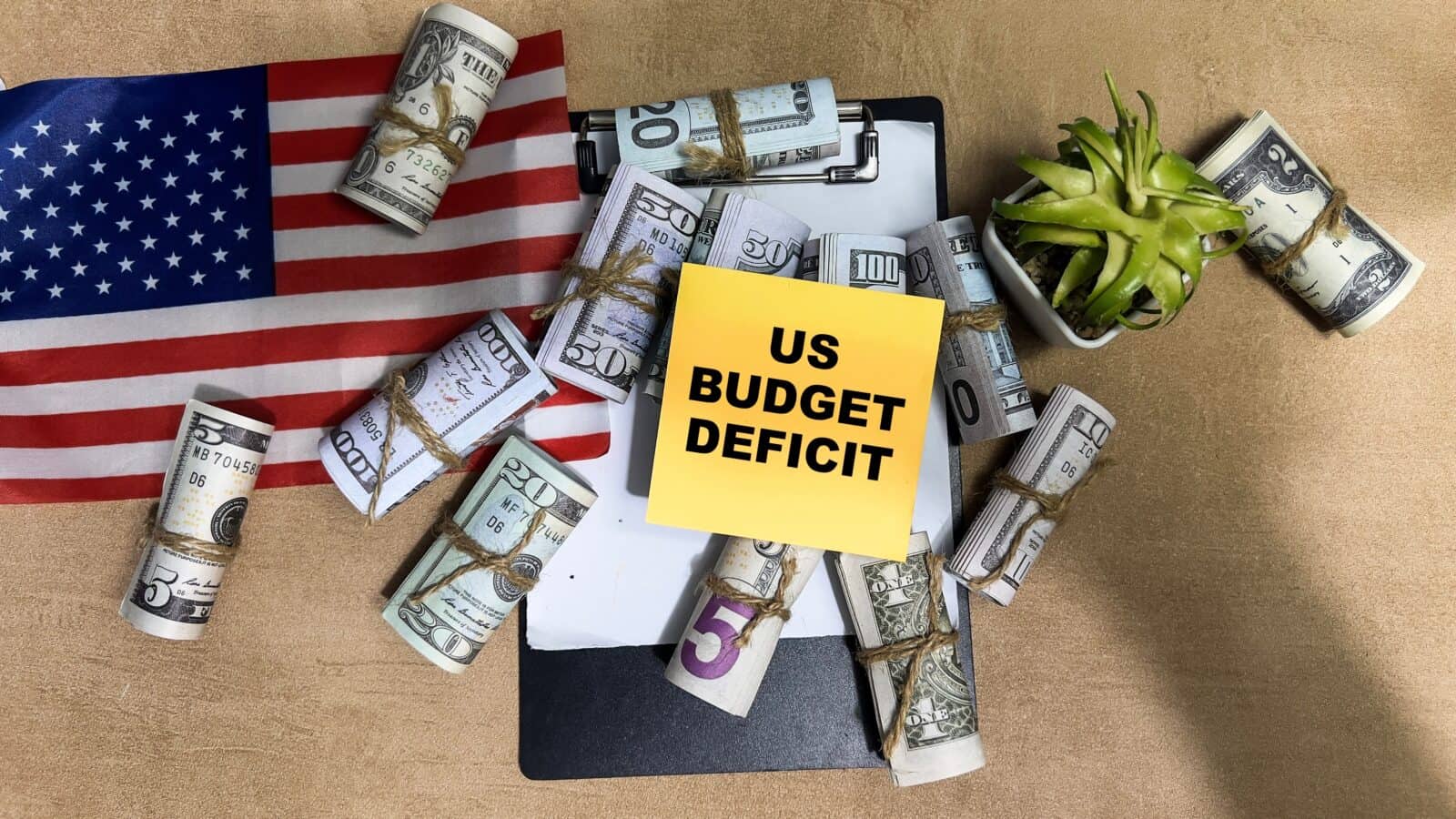
Some U.S. money content turns federal deficits into a reason to overhaul every investment choice, flee cash, buy hard assets, or expect a specific tax future. Canada has deficit issues, too, but the scale and context differ.
Canada’s 2024 Fall Economic Statement said Canada’s general government deficit-to-GDP ratio was 2% in 2024, tied with Germany for the lowest in the G7, while the U.S. deficit sat at 7.6% of GDP. Reuters later reported in April 2026 that Canada’s 2025-26 deficit was expected at CAD $66.9 billion, lower than an earlier forecast of CAD $78.3 billion, though growth forecasts were trimmed.
That mix matters. Canada still faces fiscal pressure, aging costs, housing stress, and political fights over taxes and spending. But a U.S. doom-scroll about federal debt does not map perfectly onto Canada’s fiscal picture. Defensive investing based on U.S. numbers can push Canadian readers into fear before they have checked their own country’s data.
“Just Use Any Bank, They All Work the Same.”

Banks may look alike from the sidewalk, but the rules feel different once you start paying bills, closing accounts, mailing cheques, or moving money across the border.
RBC’s cross-border banking guide notes that in the U.S., reducing a checking account balance to zero does not automatically close it. You must contact the bank, or fees can keep coming, and even overdraw the account.
RBC also explains that post-dated checks can be deposited immediately in the U.S., which may surprise Canadians accustomed to different cheque-writing habits. Payment culture differs, too. The Bank of Canada’s 2024 Methods-of-Payment Survey found that Interac e-Transfer was the most common alternative payment method, used by just under half of Canadians in the past year.
Ron Morrow, executive director of payments, supervision, and oversight at the Bank of Canada, told Reuters in 2024, “It’s no exaggeration to say that if we didn’t take steps to continuously improve our payments systems, our economy would suffer.” That is not just banker talk. It is a reminder that payment plumbing shapes everyday life.
“You Don’t Have to Think About CPP or Totalization Agreements.”

U.S. retirement advice often circles Social Security as if it were the only public pension game in town. Canada adds CPP, and Quebec has QPP. For people who have worked in both countries, the planning gets more layered.
The U.S. Social Security Administration says that if you have credits in both the United States and Canada, you may be eligible for benefits from one or both countries. The Canada-U.S. Social Security agreement can help people qualify by combining credits in some cases, and the Canadian government says the agreement came into force on August 1, 1984.
That means a simple “claim Social Security at 62, 67, or 70” article leaves out a lot for cross-border workers. A person may need to think about CPP timing, Social Security credits, tax treatment, currency conversion, survivor benefits, and residency. The border can turn retirement from a single calendar decision into a two-country puzzle.
“Personal Finance Content Is Interchangeable.”

This is the biggest rule that fails because it is the easiest one to believe. U.S. money content is everywhere, and plenty of it is useful at a high level. Spend less than you earn. Avoid high-interest debt. Build an emergency fund. Invest for the long run. Those ideas travel well. The technical details do not.
The CRA’s principal residence exemption differs from the IRS home-sale exclusion. RRSP and TFSA rules differ from those of 401(k) and IRAs. CDIC’s CAD $100,000 coverage framework differs from FDIC’s US$250,000 framework.
The IRS taxes U.S. citizens abroad on worldwide income, while Canada’s planning depends on residency rules. Health care, banking, debt loads, currency risk, and public pensions also split at the border.
So the safer habit is to treat U.S. personal finance content as a conversation starter, not a Canadian instruction manual. If the decision affects taxes, housing, retirement, immigration, or cross-border accounts, Canada-first advice is not fancy. It is self-defense.
A Short Reflective Close

Money advice can sound clean online because the messy parts get shaved off. Real life is messier. A person can live in one country, earn in another, save in two currencies, own a home under one tax code, and retire under two benefit systems.
Canada and the U.S. may sit shoulder to shoulder on the map, but their financial rules were written in different ink. Statistics Canada’s 2025 household debt data shows why this matters: people do not have much room for expensive guesses when debt already sits at $1.77 for every dollar of disposable income.
The smartest rule may be the plainest one. Before you follow a money tip, ask which country it belongs to.
Key Takeaways

U.S. money advice can help with broad habits, but it can mislead Canadians on the details. Home-sale taxes, retirement accounts, deposit insurance, healthcare planning, and public pensions work under different rules.
Canada’s principal residence exemption, RRSPs, TFSAs, CPP, CDIC coverage, and public healthcare system change the financial playbook. U.S. tools like 401(k)s, IRAs, HSAs, and FDIC insurance do not copy over cleanly.
Cross-border households face additional pressure because the IRS can still tax U.S. citizens abroad on worldwide income, and currency fluctuations can alter the real value of savings, pensions, and investments.
The safest move is to read U.S. personal finance content with caution. Use it for ideas, then check the Canadian rule before making big choices about taxes, housing, banking, retirement, or healthcare.
Disclaimer – This list is solely the author’s opinion based on research and publicly available information. It is not intended to be professional advice.
Like our content? Be sure to follow us