12 types of women who thrive after divorce
Divorce is often associated with stress, financial challenges, and emotional upheaval, but research shows that many people eventually adapt and rebuild satisfying lives after the end of a marriage. Studies published in family and psychological research journals have found that factors such as strong social support, financial independence, resilience, and a sense of personal control are linked to better post-divorce outcomes.
While the experience varies widely from person to person, many women report increased self-confidence, personal growth, and greater life satisfaction as they move forward.
Thriving after divorce doesn’t depend on age, income, or background alone. Instead, certain attitudes, habits, and support systems can make the transition easier. Here are 12 types of women who often navigate post-divorce life particularly well.
The woman who has already done the work before signing

By the time some women file, the grief is almost finished. These are the ones who spent the last year of their marriage already in therapy, already journaling, already reconstructing who they are outside of a partnership. Divorce, for them, is less a rupture and more a formality catching up to an emotional reality that arrived months earlier.
Sociologist Paul Amato of Penn State University, reviewing decades of research on divorce outcomes, found that people who experienced what he called a psychological divorce before the legal one reported significantly fewer adjustment problems post-separation. They had already mourned the marriage as it existed in their minds before a judge dissolved it on paper.
What makes this woman distinctive is not strength in the performative sense – she is not stoic or cold. She is precise. She knows the difference between the end of a marriage and the end of herself. By the time the dust settles, she has a therapist she trusts, a clear sense of what she wants the next chapter to look like, and enough self-knowledge to avoid repeating the same dynamics in a new relationship. She does not bounce back. She steps forward from a position she prepared.
The financially literate woman who planned her exit

Divorce economics hit women harder than men on paper. Women’s household income drops approximately 41 percent after divorce, compared to 23 percent for men. That number has been repeated so often that it has started to function as a warning label – proceed at great personal cost. But it misses an important variable: women who understood their finances before the marriage ended.
There is a category of divorced women who not only survive the income shock but also leverage the restructuring to their advantage. She knew the account numbers, understood the asset valuations, hired a forensic accountant when necessary, and negotiated her settlement from a place of information rather than exhaustion. She is the reason financial therapists now routinely advise women – married or not – to maintain separate financial literacy and independent credit histories.
Liz Pharo has noted that women are no longer financially dependent on their partners as prior generations were, meaning the decision to leave an unsatisfying marriage is less economically catastrophic for those who have prepared for it.
The woman who thrives financially after divorce is not necessarily wealthy. She is informed. She converted the chaos of separation into a spending reset, a housing decision made without sentimentality, and a retirement account that grew because she finally stopped deferring to a partner who handled the investments.
The one who builds her first real social circle at 40

Marriage, particularly long-term marriage, has a way of quietly collapsing a woman’s social world into a shared one – couple friends, his work colleagues, joint holiday plans. The friendships that survive tend to be the oldest or the most intentionally maintained. For many women, divorce exposes just how much of their social scaffolding was structural rather than genuine.
What follows, for the women who thrive, is often the most honest friendship era of their lives. Free from the pressure to maintain couple-compatible friendships, they start choosing people based on actual affinity. A 2016 Avvo survey found that 75 percent of women, compared to 58 percent of men, would prefer to be alone, successful, and happy than be in an unsatisfying relationship.
Women who build strong post-divorce social networks do so intentionally rather than by convenience. They join things – classes, volunteer organizations, professional associations, community groups – not to fill time but because they finally have the freedom to show up somewhere as themselves. The friendships that form in that space tend to be more honest than anything that formed during the marriage, partly because vulnerability is no longer coded as marital weakness, and partly because everyone in the room already knows life is complicated.
The mother who becomes a better parent alone

The conventional assumption is that single parenthood is the hardest form of mothering – and by material measures, it often is. The logistics are relentless.
But a separate phenomenon runs alongside the difficulty: many women become more present, more emotionally available, and more deliberate parents once they are no longer managing a conflicted or depleting marriage at the same time.
Penn State’s Amato documented this pattern in his review of divorce outcomes, noting that divorced mothers frequently reported improvements in career opportunities, social engagement, and overall happiness, with those improvements directly influencing parenting quality.
A woman who is not chronically emotionally exhausted by her partnership has more to give the children in the room. That is not a romantic claim. It is a straightforward allocation-of-resources observation.
The career woman who finally stops holding herself back

Women’s earnings and career trajectories suffer post-marriage, while men’s improve. Married men earn more than their unmarried counterparts. Married women, on average, do not. The reasons are layered – unequal domestic labor distribution, geographic compromises made for a partner’s job, and the mental load that competes with professional ambition. Divorce removes several of those constraints at once.
The women who capitalize on this are often the ones who had already been circling an ambition they could not fully pursue within the structure of the marriage. A promotion that would have required too much travel. A business idea that felt too risky when someone else’s comfort depended on financial stability. A degree deferred indefinitely. Divorce breaks the ceiling that was sometimes another person’s fear.
A 2025 Journal of Marriage and Family study by sociologist Ephrat Almog examined women who initiated divorce and found that relational autonomy – the freedom to define one’s own life priorities – was among the most significant gains they attributed to post-divorce life. Many of them described the shift not as abstract liberation but as the ability to make professional decisions without requiring consensus. For some women, that is the first time in years that they have been the only vote that counts.
The woman who stops being who her marriage needed her to be
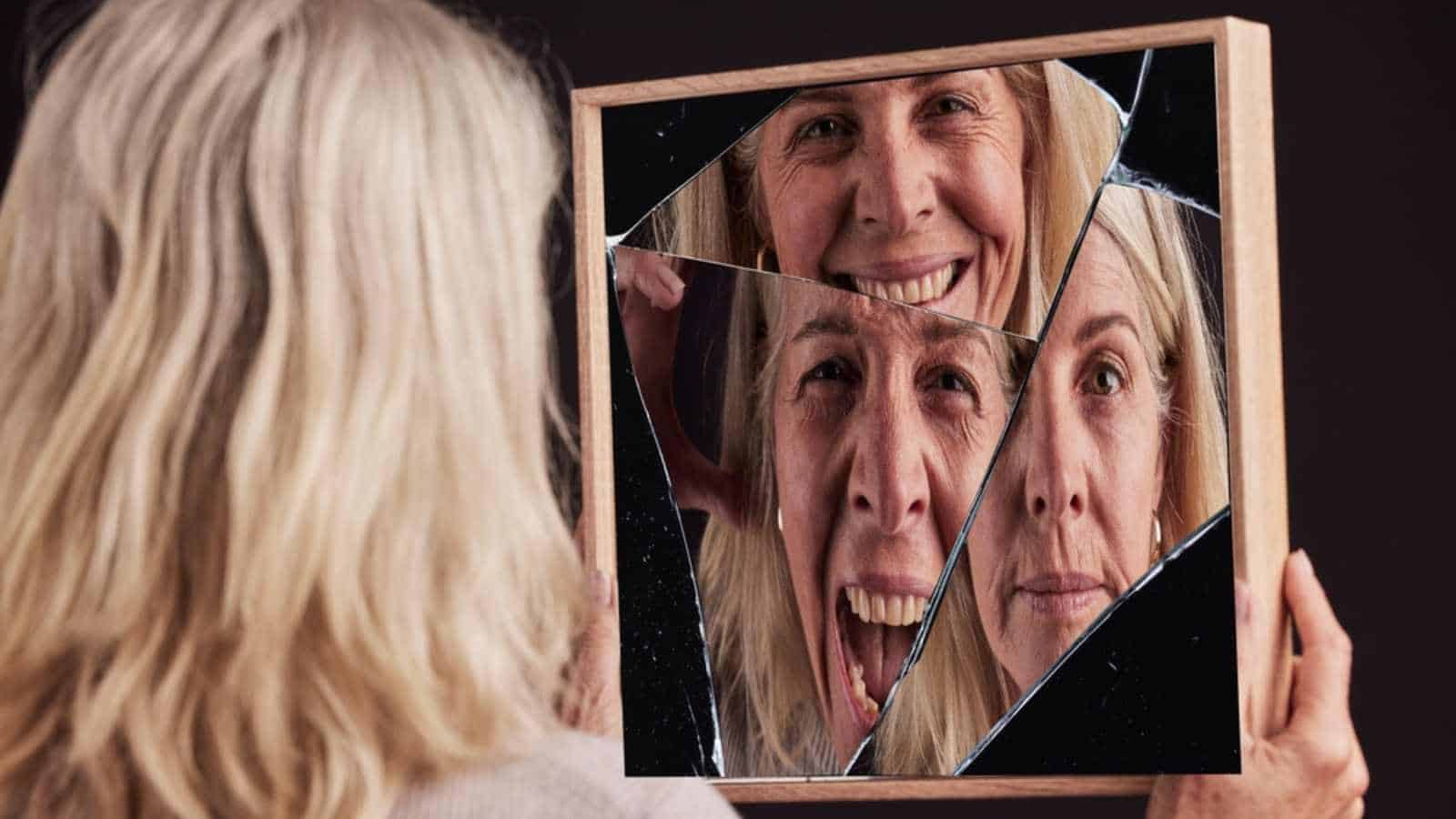
Identity erosion in marriage is gradual enough that most people only notice it in retrospect. The woman who loved photography before she became a wife spent weekends on family obligations. The one with strong political opinions who learned to moderate them at dinner parties. The one who had a sharper sense of humor before it became inconvenient to the partnership’s social image. The self that gets pruned to fit a marriage rarely announces itself as lost – it just quietly stops showing up.
Post-divorce identity reconstruction is one of the most documented but least discussed aspects of recovery. A study on South Asian women’s lived divorce experiences used narrative analysis to trace how women in collectivist, patriarchal societies described the post-divorce period as a biographical break – not a legal or relational one – that restructured identity, subverted embedded gender norms, and pushed women to rewrite their self-narratives around autonomy, dignity, and self-defined purpose.
Divorce restructured identity, subverted embedded gender norms, and pushed women to rewrite their self-narratives around autonomy, dignity, and self-defined purpose.
The chronic giver who finally learns to receive

Marriages that end in divorce frequently share a common backstory: one partner – more often the woman – absorbed the majority of the emotional labor. She managed the feelings in the room, anticipated needs before they were voiced, smoothed conflicts before they became arguments, and generally functioned as the household’s emotional regulator. The Mental Health Foundation’s research confirms men are significantly less likely to seek professional help or disclose mental health difficulties, creating a vacuum that women in heterosexual marriages often fill by default.
After years of that arrangement, many women genuinely forget how to be on the receiving end of care. They deflect compliments, refuse help, and experience dependency as weakness. The women who thrive after divorce are often the ones who directly confront this pattern – typically through therapy, sometimes through the forced vulnerability of needing others during the worst of the separation period.
The irony is that, for all its difficulty, the divorce itself creates the conditions for this shift. A woman who has to ask her sister to help with the kids, accept a friend’s casserole, or admit to a therapist that she is not managing as well as she appears – she is practicing something she spent years suppressing.
The cognitive behavioral therapy research on post-divorce adjustment in women consistently identifies emotion regulation skills as the strongest predictor of long-term recovery. Not resilience in the broad cultural sense, but the specific ability to name, tolerate, and respond to one’s own emotional states. Women who arrive at that skill usually credit the divorce as the catalyst that made it unavoidable.
The woman who took the financial hit but gained her own life

There is a version of post-divorce thriving that looks nothing like financial success and everything like autonomy. She may be living in a smaller apartment. She may have canceled subscriptions, stopped dining out, and renegotiated her entire relationship with money. But for the first time in years, every decision in her home is hers. The furniture arrangement, the thermostat, the meals, the silence.
The financial consequences of divorce for women are real and serious, with gray divorces – those occurring after age 50 – carrying particularly severe economic penalties. Pew Research data show that the gray divorce rate has remained at approximately 10.3 per 1,000 married women over 50 as of 2023, up from 3.9 per 1,000 in 1990. These are women ending marriages of roughly 23 years on average, and their post-divorce income losses are among the steepest documented.
And yet autonomy has measurable value that income statistics do not capture. The study by researchers Ephrat and Anat, in the subhead on women who initiated divorce, found that freedom from having to repeatedly negotiate daily life decisions appeared in participant accounts as one of the most unexpected and meaningful gains of post-divorce life. Several women described it as the ability to exist without commentary – to move through a day without their choices being subject to another person’s reaction. For women who spent years in quietly suffocating partnerships, that is not a consolation prize. It is the whole point.
The spiritually grounded woman who reframes everything

This does not require religion in any conventional form. The women who thrive on this path share a common feature: they hold a narrative about their divorce that imbues it with meaning. Not the meaning of blame or vindication, but a larger story in which the marriage, the ending, and the life being built afterward all belong to a coherent arc.
Viktor Frankl argued in Man’s Search for Meaning that the capacity to find purpose in suffering is the primary variable in psychological survival. He was writing about concentration camps, not divorces, but the mechanism is the same.
Women who arrive at a meaningful frame for their divorce tend to stop fighting the past, which frees up enormous cognitive and emotional resources for the present. They are also notably less likely to narrate their ex-husbands as villains – not because they are performing generosity, but because a villain narrative requires constant maintenance that becomes exhausting.
The one who finally sees what she was tolerating

Familiarity has a way of normalizing things that should have been flagged much earlier. A woman who spent five or ten years in a marriage that included chronic criticism, low-grade contempt, or the particular erosion of being consistently dismissed comes to experience those conditions as simply what relationships are like. Divorce, with the distance it creates, has a clarifying function. Months later, in the quiet of a new space, she realizes she had not been anxious before – she had been adapting.
University of Chicago sociologist Linda Waite’s often-cited 2002 study found that, on average, unhappily married adults who divorced were not significantly happier on psychological well-being measures than those who stayed. The study is often cited as evidence against divorce. It is less regularly contextualized: Waite herself stated that divorce is likely the appropriate outcome in marriages characterized by abuse, addiction, or persistent betrayal. The women who thrive after divorce most visibly are very often the ones exiting exactly those conditions – not the ambivalent-but-functional marriages the study’s average was built on.
For these women, the most striking post-divorce development is physical. They sleep better. Their blood pressure drops. The chronic tension headaches resolve.
The late bloomer who starts something she was told was too late

She is 47 and starts the company. She is 54 and enrolls in the program. She is 61 and moves to the city she always meant to live in. Late-blooming women post-divorce have been documented extensively enough to constitute a distinct category of entrepreneurial and creative output.
What is interesting about these women is that they describe timing as the first time the obstacles were gone. The marriage, for many of them, had functioned as a permission structure – not necessarily a hostile one, but one that required consensus on risk that a partner was unwilling to share. Alone, the risk calculus changes. There is only one vote on whether to try.
The cultural expectation that a certain age makes new beginnings implausible is one that divorced women in this category consistently ignore, typically not out of bravery but out of the practical recognition that they have less to lose now than they have in years. The mortgage is simpler.
The social performance is reduced. The identity is already being rebuilt anyway. Starting a business or a creative practice inside that reconstruction costs less psychologically than it would have at the height of a stable married life, which is perhaps the strangest, most counterintuitive advantage that divorce confers on women who are paying attention.
The woman who changes her relationship with love itself

Women who entered their marriages in their twenties, when attachment was partly urgency and partly performance, often arrive at post-divorce dating with a clarity that reads to outside observers as intimidating selectivity.
They know which silences are companionable and which are avoidant. They have felt the difference between someone who tolerates them and someone who is genuinely curious about them. They have learned, usually the hard way, that consistency is a more reliable signal than intensity – that the relationship that began with overwhelming feeling and ended in quiet disappointment was making exactly the argument they needed to hear.
The result is a version of partnership that is harder to romanticize but far more durable. Not because expectations dropped, but because they sharpened into something specific enough to actually be met.
Key takeaways

- Women who thrive after divorce are rarely surprised by their own recovery – most had already begun rebuilding their identity, finances, or social world before the papers were signed.
- Initiating divorce correlates strongly with better post-divorce outcomes; women who chose to leave report significantly higher autonomy and life satisfaction than those who were left.
- The financial hit is real, but women who enter the process informed – understanding assets, credit, and settlement leverage – absorb it without losing ground long-term.
- Thriving post-divorce is less about personality type and more about which constraints the marriage was quietly enforcing – career limits, social pruning, emotional labor overload – and how quickly a woman recognizes their absence.
- The women who build the most satisfying second chapters are not the ones who move fastest. They are the ones who got specific about what they actually want before accepting anything less.
Disclaimer – This list is solely the author’s opinion based on research and publicly available information. It is not intended to be professional advice.
Like our content? Be sure to follow us