Why Digital Realty stock dropped after the $3.5 billion Blackstone data center deal
Digital Realty just bought the kind of property the AI boom says everyone wants: fully leased data centers in Northern Virginia, the world’s most watched data center corridor. Wall Street’s first answer was to sell the stock.
The company agreed to pay Blackstone-managed funds $3.5 billion for interests in three hyperscale facilities valued at $7.8 billion, including debt and remaining development costs. The assets total 288 megawatts of IT capacity, all leased to investment-grade hyperscale customers.
Yet Digital Realty shares fell after the announcement, with Reuters reporting a 2.4% drop in extended trading, and later market data showed the stock near $173, down about 1.9% on July 2. The market did not reject AI infrastructure. It questioned the bill.
What Digital Realty is buying
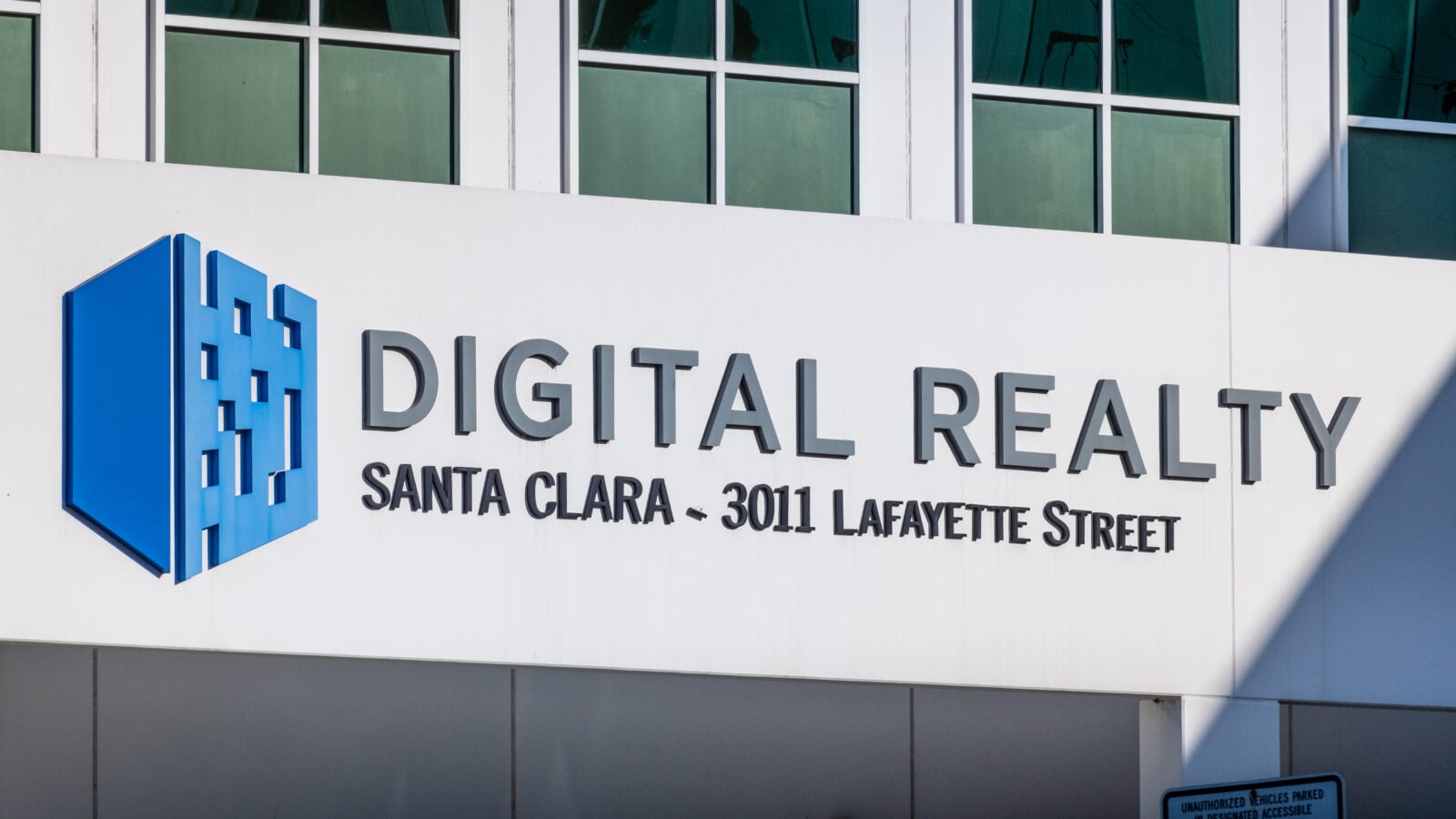
The deal gives Digital Realty more control over three Northern Virginia properties it had already been developing with Blackstone.
The company is buying Blackstone’s 80% interest in two 96-megawatt data centers in Manassas and its 50% interest in a 96-megawatt facility in Sterling. Two sites are expected to stabilize in the first half of 2027, while the third is expected to stabilize in the first half of 2028.
Digital Realty says the portfolio carries an expected initial stabilized cap rate above 6.5%, with 15-year leases, 3.6% annual rent escalators, and a blended AA- tenant credit profile. Greg Wright, Digital Realty’s chief investment officer, said the transaction allows the company to increase its ownership of “fully leased, high-quality hyperscale assets.”
Why the stock fell anyway

For investors, the problem is not the buildings. It is the way the check gets written. Digital Realty will pay $1.2 billion in cash and $2.3 billion in shares to Blackstone.
Soon after, Blackstone affiliates moved to sell 12,310,249 Digital Realty shares at $185 per share through a secondary offering led by Morgan Stanley. Digital Realty said it is not selling shares in that offering and will not receive proceeds from Blackstone’s sale. That detail matters.
Existing shareholders see new stock enter the market, but the company does not receive fresh cash from the secondary sale. In plain-language terms for investors, this is where the dilution worry starts.
The AI landlord problem

Data centers are becoming the landlord layer of the AI economy. Chatbots, cloud apps, chip clusters, and corporate AI tools may look digital, but they need power, land, cooling, fiber, and buildings with enormous electrical capacity.
The International Energy Agency says global data center electricity use could double to about 945 terawatt-hours by 2030, just under 3% of global electricity use. That demand makes prime capacity in places like Northern Virginia valuable. It also makes owning it expensive.
Digital Realty is making the classic REIT wager: pay a lot now, lock in tenants, collect rent later. Investors are asking whether the spread between asset yields, funding costs, and new-share dilution is wide enough to make the deal worth it.
The balance sheet is now part of the story

Digital Realty had momentum before this deal. In the first quarter of 2026, the company reported revenue of $1.6 billion, up 16% from a year earlier.
It generated adjusted EBITDA of $920 million, up 16% year over year, and reported core FFO of $2.04 per share. It also raised 2026 core FFO guidance to $8.00-$8.10 per share. Those are not weak numbers.
REIT investors closely monitor debt, and Digital Realty reported total debt of $18.0 billion as of March 31, 2026, with net debt-to-adjusted EBITDA of 4.7x. A good acquisition can still make shareholders nervous if it arrives with cash needs, share issuance, and years of development timing attached.
The bull case is still clear

Digital Realty is not buying empty shells and hoping customers show up. The portfolio is fully leased, and management expects the deal to add to core FFO per share in 2027 and 2028 as construction finishes and rent begins to be collected.
Matt Mercier, Digital Realty’s chief financial officer, said the transaction is expected to be accretive to core FFO per share in each of those years. That is the argument long-term bulls will make: if AI demand keeps rising, fully leased Northern Virginia capacity with strong tenant credit may look more valuable later than it looks expensive today.
The market’s doubts concern price, funding, and timing, not the basic appeal of owning scarce data-center capacity.
Blackstone’s move cuts both ways

Blackstone’s role is the part investors are reading like body language. The firm is receiving cash and shares, then selling the Digital Realty stock through a large offering. That can look like a private-equity giant taking chips off the table while public shareholders absorb the new supply. But the signal is not purely bearish.
Blackstone remains deep in digital infrastructure. Reuters reported in May that Blackstone’s new data center REIT raised $1.75 billion in a U.S. IPO, and the firm had a $150 billion global digital infrastructure portfolio with a major pipeline of opportunities.
Blackstone leaders Mike Forman and Greg Blank said demand for digital infrastructure is “even stronger today” than when the Digital Realty venture began. Public investors can believe that and still dislike the near-term stock overhang.
Why Northern Virginia is the prize and the pressure point

Northern Virginia is not a random address on the deal sheet. It is Data Center Alley, the world’s largest data center market, where hyperscalers go for dense, connected capacity.
That gives Digital Realty a strategic rationale for seeking greater ownership there. It also adds concentration risk. Data centers are drawing more scrutiny from communities and power-grid planners.
A Reuters/Ipsos poll found that only 33% of Americans support rapid AI-driven data center construction, 57% would oppose a data center in their own community, and 77% worry AI data centers could raise electricity costs.
For investors, local resistance and power availability are no longer side issues. They can shape permitting, grid connection timelines, and future development returns.
What investors should watch next

This deal will not be fairly judged by one trading session. The next test is execution.
Investors will watch whether the first two Virginia sites stabilize in the first half of 2027, whether the Sterling site follows in the first half of 2028, and whether the promised FFO lift materializes without further balance-sheet strain.
They will also track interest rates, leasing demand from AI and cloud customers, power availability in Northern Virginia, and future equity issuance. Digital Realty’s first-quarter results showed real operating strength, but this transaction asks shareholders to accept near-term dilution for longer-term cash flow.
That bargain can work. It just has to prove itself in numbers, not slogans.
Key takeaways

Digital Realty’s stock drop is a reminder that AI infrastructure has entered its expensive phase. A data center can be fully leased, strategically located, and tied to strong AI demand, yet still raise hard questions about dilution, debt, and timing.
That is the investor lesson inside the Blackstone deal. The AI boom does not erase real estate math. Someone still has to pay for land, power, cooling, debt, shares, and construction.
Digital Realty is betting that those costs will yield stronger rent growth and greater control over a scarce asset base. Shareholders are asking a simpler question: after the cash, the stock issuance, and the Blackstone sale, how much of that upside is still theirs?
Disclaimer – This list is solely the author’s opinion based on research and publicly available information. It is not intended to be professional advice.
Like our content? Be sure to follow us