Are men to blame for climate change more than anyone wants to admit?
The climate story doesn’t start with a smokestack. Sometimes, it starts with a steak sizzling on a grill, a pickup rolling through traffic, or a man laughing off climate worry because caring too much still feels awkward in some circles. That’s the uncomfortable twist here: the planet is getting hotter, and some everyday ideas about “being a man” may be helping turn up the heat.
The World Meteorological Organization confirmed that 2024 was the warmest year on record, about 1.55°C above pre-industrial levels, and every year from 2015 through 2024 ranked among the ten warmest ever recorded. At the same time, gender-based emissions research continues to point to a pattern worth discussing.
A Swedish study found that men’s spending caused 16% more greenhouse gas emissions than women’s, even though their spending was similar, and a 2025 LSE study found that women in France had food and transport emissions 26% lower than men’s.
This isn’t about blaming men as if half the planet woke up and chose smoke. It’s about looking at the habits, industries, status symbols, and social rules that often push men toward a larger carbon footprint. The better question isn’t “Are men the problem?” It’s this: what old ideas about manhood are still feeding the fire?
Men’s daily choices generate more emissions

The first secret is almost painfully ordinary: men’s daily choices often carry more carbon. The 2025 LSE and CREST study found that women in France emit 26% less carbon from food and transport than men, two areas that account for about half of the average individual carbon footprint.
The study used food data from 2,100 people and transport data from 12,500 people, and found that men averaged 5.3 tonnes of CO₂ equivalent per year from those two categories, compared with 3.9 tonnes for women. Even after accounting for income, employment, travel distance, and food quantity, a large chunk of the gap remained. That’s where culture walks in wearing boots.
Ondine Berland, Fellow in Environmental Economics at LSE, said the study points to “traditional gender norms,” especially those linking masculinity with red meat and car use. That line matters because it pulls the story away from biology and toward behavior. Men aren’t born with bigger carbon footprints. Many are taught to buy, eat, drive, work, and perform strength in ways that burn more fuel.
Red meat is a “man’s food” and a climate accelerant

The second secret sits on the dinner table. Red meat has been wrapped in masculine branding for decades: thick steaks, smoky grills, protein talk, sports ads, and the quiet idea that a salad is a sidekick, never the hero. Climate data makes that image harder to swallow.
The LSE study found red meat was one of the main reasons men’s food-related emissions were higher in France, and FAO data released in 2025 reported that global agrifood-system emissions reached 16.5 billion tonnes of CO₂ equivalent in 2023. Farm-gate crop and livestock emissions accounted for 49% of agrifood emissions.
That does not mean one burger destroys the planet, nor does it mean everyone has to become vegan by Tuesday. It means the old “real men eat meat” script has a real climate bill attached to it. Food choices become identity choices when culture makes them loud. Cutting back can feel less like changing dinner and more like stepping away from a performance. Still, the climate does not grade us on performance. It counts methane, land use, fuel, feed, and demand.
Cars, trucks, and “masculine” driving habits

The third secret has four wheels, a deep engine note, and a lot of advertising behind it. In the United States, transportation accounted for the largest share of greenhouse-gas emissions in 2022 at 28%, according to the EPA, and cars, trucks, aircraft, and other transport sources remain a major part of the country’s climate problem.
The LSE study found car use was one of the biggest drivers of the gender emissions gap in France, especially because men had higher transport footprints. This is where climate data meets driveway culture. Big vehicles are often sold as symbols of freedom, toughness, protection, and control.
For many men, a truck or SUV is not just a means of transport. It can feel like armor. That makes climate action tricky, because asking someone to drive less, downsize, carpool, take transit, or switch vehicles can sound like asking them to shrink. Yet the numbers are stubborn.
When a sector is the largest source of U.S. emissions and male-coded driving patterns lean toward higher-carbon modes, the road becomes more than a road. It becomes a mirror.
Men dominate high-emission industries
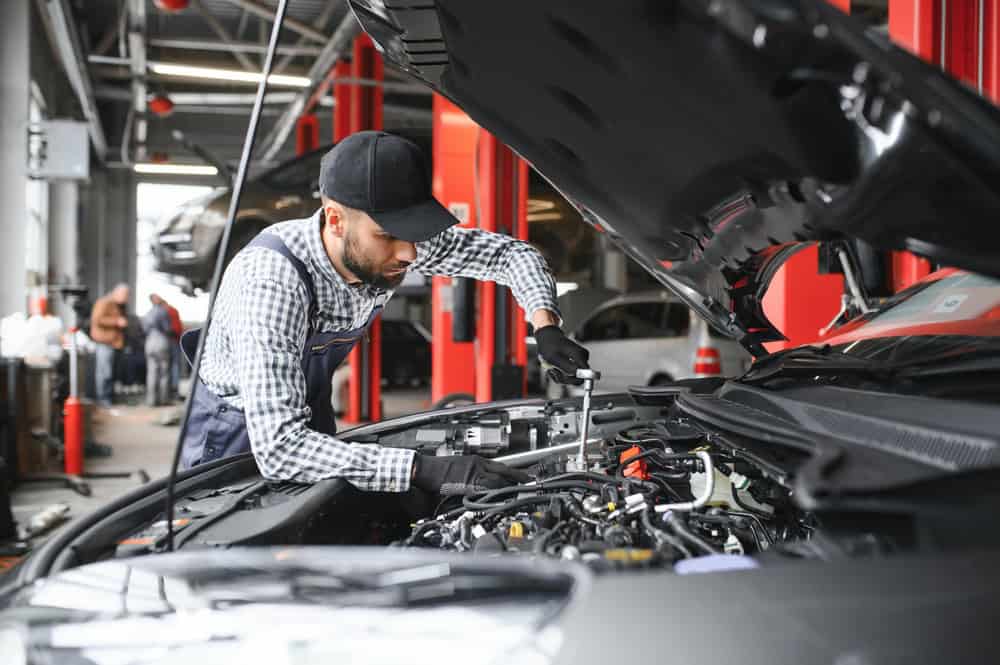
The fourth secret is bigger than personal choice. Many men work in the very industries that keep modern life running and drive high emissions: energy, fuels, utilities, transport, construction, manufacturing, mining, and logistics.
The 2024 U.S. Energy and Employment Report found that the energy workforce was 73% male, compared with 53% in the broader U.S. workforce, and that women made up 26% of the energy workforce but held only 19% of new energy jobs in 2023. That matters because climate change is not just the result of consumer choices.
It is built into paychecks, training systems, regional economies, and family survival. A man working in oil, gas, trucking, or heavy industry may not be choosing pollution in some cartoonish way. He may be choosing rent, school fees, health insurance, and dignity.
That is why a fair climate conversation has to talk about workers, not just lifestyles. If society wants lower emissions, it has to offer real pathways into cleaner work, not just scold people whose skills were shaped by a fossil-fuel economy.
Risk-taking masculinity speeds up environmental damage
The fifth secret lives in the sentence many boys hear before they can even name fear: be tough. During climate-linked disasters, that message can turn dangerous. A 2024 study in Natural Hazards examined men’s experiences during and after the Türkiye earthquake and found that men took greater risks, in part, because of socially loaded responsibilities and masculine expectations.
A 2024 commentary in the Australian Journal of Emergency Management also reviewed research on men, masculinities, and disasters across Australia and New Zealand from 2013 to 2023, showing that gender roles shape preparation, response, and recovery. Climate change is already making heat waves, floods, fires, and extreme storms harder to ignore, and risk does not care about pride.
The man who refuses to evacuate, drives through floodwater, climbs onto a roof without training, or stays behind to “handle it” may be trying to protect people he loves. That instinct can be noble. It can also become a second disaster. Real courage may look quieter: listening early, leaving early, checking on neighbors, and treating warnings as wisdom, not weakness.
Men are less likely to support climate action

The sixth secret is not always denial. Sometimes it is discomfort dressed as skepticism. Yale’s 2024 international climate opinion analysis found that in high-income, high-emission countries, women were more likely than men to be in the “Alarmed” group, at 36% compared with 30%.
In those same countries, 39% of women said climate change should be a very high government priority, compared with 34% of men. Pew Research Center also reported in 2024 that Americans were split on the economic effects of climate policy, with some seeing climate action as a boost and others seeing it as a burden.
That gap makes sense when climate solutions touch things that have been coded as masculine: driving less, eating less red meat, accepting limits, sharing space, using public systems, or letting go of high-consumption status symbols.
A man can believe the planet is warming and still resist the part where his own routine gets edited. That is not an excuse. It is a clue. Climate messages that shame men may harden resistance, but messages that connect change to strength, protection, skill, and responsibility may open a door.
Men’s “hero” image delays systemic change
The seventh secret is the hero story. Culture often tells men they should save the day alone: conquer the wilderness, fix the machine, protect the family, win the argument, master the road, tame the storm.
It makes for strong movie posters, but it can make weak climate politics. Climate change is too large for one hero with a toolbox. It needs grids, buses, heat pumps, safer housing, cleaner food systems, fair jobs, public planning, and neighbors who trust each other.
Political scientist Cara Daggett’s work on petro-masculinity helps explain why fossil fuels can become more than energy. In her 2018 paper, she argues that fossil-fuel use can link with identity, power, climate refusal, and gender anxiety. That lens helps explain why some people respond to climate action as if it is an insult, not a repair plan.
The hero image also narrows the field of view. It treats collective care as soft, even though shared systems are what keep people alive during blackouts, floods, heat waves, and fires. The climate does not need more lone saviors. It needs fewer lonely scripts.
Generational “fathering” patterns matter

The eighth secret starts at home. Fatherhood can turn climate change from a headline into a heartbeat. A 2024 Lancet Planetary Health study of 15,793 U.S. people ages 16 to 25 found that 85% were at least moderately worried about climate change, and 57.9% were very or extremely worried. Those numbers are not soft background noise. They are the sound of a generation looking ahead and seeing smoke on the horizon.
For fathers, uncles, older brothers, teachers, and coaches, that worry creates a choice. They can dismiss it as drama, or they can meet it with practical care. The LSE study showed household structure shapes emissions too: women in couples had more carbon-intensive diets than single women, while gender gaps in transport were especially large among couples with children.
That means family life can either repeat old carbon habits or rewrite them. A father who cooks plant-forward meals, drives less, repairs more, plans safer routes, and talks openly about climate does more than cut emissions. He gives children a different picture of strength, one that protects without pretending not to feel.
Men’s social circles reinforce high-carbon lifestyles

The ninth secret is peer pressure with a cooler name. Men’s social circles can quietly reward high-carbon habits: the biggest grill, the loudest engine, the longest road trip, the heaviest gear, the biggest lawn tool, the most extreme weekend toy.
The Swedish study found that men’s spending produced 16% more climate-heating emissions than women’s, even though spending levels were similar, and researchers linked much of that difference to cars and other fuel-intensive choices.
The 2025 LSE study found a similar pattern in France, with red meat and car use driving much of the gap. That tells us climate behavior is not just private. It is social. A man may care about the planet, then still order the steak because every other guy at the table does.
He may want a smaller car, but worries his friends will laugh. The hopeful part is that norms can flip. The same group chat that praises a gas-guzzler can praise a smart EV deal, a repaired jacket, a lower-cost train trip, or a great meal without beef. Culture is a current. It can carry waste or carry change.
Men’s leadership gaps skew climate policy

The tenth secret sits in boardrooms, cabinets, union halls, ministries, and planning meetings. Men still dominate many climate-critical spaces, especially energy and infrastructure, and those rooms shape what gets funded, built, delayed, or ignored.
The 2024 U.S. Energy and Employment Report’s 73% male figure shows how tilted the workforce remains in a sector central to emissions and the clean-energy shift. At the same time, UN Women’s 2024 Gender Snapshot warned that under a worst-case climate scenario, up to 158.3 million more women and girls could be pushed into extreme poverty by 2050. That contrast is hard to miss: men often have more power in systems that drive emissions, while women and girls face sharp risks from the fallout.
Simon Stiell, Executive Secretary of UN Climate Change, put the policy lesson plainly: “Combining bold climate action with progress in gender equality” is one of the strongest ways to move beyond business as usual. Gender-balanced leadership will not fix the climate on its own. Still, broader voices can change what leaders notice, protect, and prioritize.
Men’s climate anxiety is Real

The eleventh secret is tender: many men are scared, too, but they may not say it out loud. Climate anxiety has become a real mental-health pressure, especially for younger people. The 2024 Lancet Planetary Health study found 43% of U.S. respondents ages 16 to 25 said climate worries affected their mental health, and 38% said those feelings hurt daily life.
The study also found that 85% were at least moderately worried, indicating that climate fear is not a niche mood. It is a wide weather system moving through young minds. Men may carry that fear under jokes, silence, anger, workaholism, or refusal to talk.
Some work in fossil-fuel regions and worry about both the planet and their paycheck. Some are fathers who want to protect their children but feel powerless against fires, heat, storms, and politics.
Climate scientist Katharine Hayhoe has said, “We can’t give in to despair,” and that short sentence fits here. Despair freezes people. Conversation can thaw them. A man who admits fear is not weaker. He may be closer to action than the man who has to pretend none of this touches him.
Changing masculinity can cut emissions fast

The twelfth secret is the hopeful one: masculinity is not fixed in stone. It can change, and emissions can fall with it. Swedish research found that shifting spending toward lower-carbon choices in food, holidays, and furnishings could cut emissions by almost 40% without requiring people to spend less overall.
The LSE study reached a similar moral of the story to the one from France: if high-emission habits like red meat and car use are tied to male identity, then changing the narrative around those habits could change the footprint. That does not mean turning men into climate monks. It means making care feel strong, restraint feel smart, repair feel skilled, and lower-carbon living feel normal.
A man can grill vegetables with pride, drive a cleaner car without apology, take the train without feeling reduced, vote for climate policy, mentor younger men, talk about fear, and still be fully himself. Maybe even more himself. The old version of masculinity often asked men to consume loudly and feel quietly. A better version can ask them to protect what they love with less waste, more honesty, and a longer sense of time.
Reflective Close

So, are men to blame for climate change? Not in the simple, finger-pointing way that makes people defensive and gets us nowhere. But some old ideas about manhood have absolutely helped keep the carbon machine humming: more meat, more fuel, more risk, more silence, more status built from things that burn.
The data does not ask men to disappear from the climate conversation. It asks them to step deeper into it. The world is warming, but the story is still being written in kitchens, cars, workplaces, voting booths, family talks, and friend groups.
If masculinity can be sold through horsepower and steak knives, it can also be rebuilt around courage, care, skill, discipline, and love for the people who will inherit the weather.
Key Takeaways
Men are not the sole cause of climate change, but studies from Sweden and France show that male-coded consumption patterns can lead to higher emissions, especially through red meat consumption, car use, and fuel-intensive spending.
The strongest data point comes from the 2025 LSE and CREST research, which found that women in France had food and transport emissions 26% lower than men’s, with those sectors accounting for about half of the average individual carbon footprint.
The issue is cultural as much as economic. Even after researchers accounted for income, job status, distance traveled, and food quantity, a meaningful portion of the emissions gap remains, pointing to identity, bits, and social norms.
The harm does not fall evenly. UN Women warns that climate change could push up to 158.3 million more women and girls into extreme poverty by 2050 under a worst-case scenario, which makes gender a climate justice issue as much as a lifestyle issue.
The hopeful part is practical. Changing the story around strength, food, cars, work, leadership, and emotional honesty can help men cut emissions without turning climate action into shame. The better invitation is simple: protect more, waste less, talk honestly, and let care become part of what strength looks like.
Disclaimer – This list is solely the author’s opinion based on research and publicly available information. It is not intended to be professional advice.
Like our content? Be sure to follow us