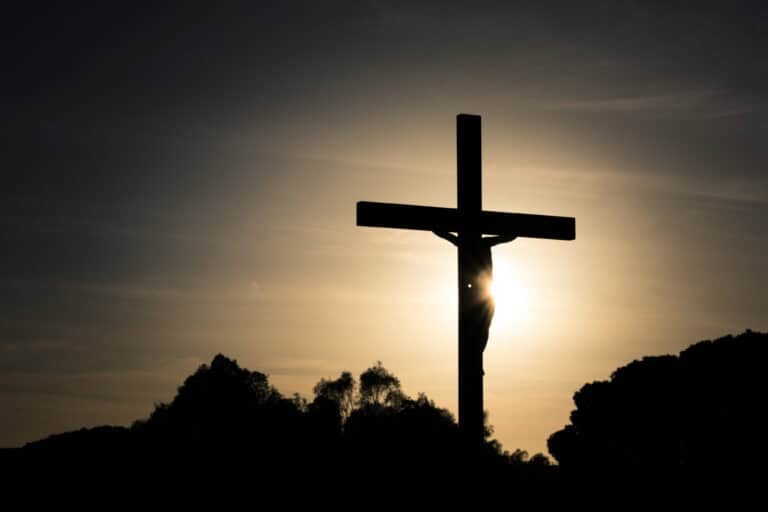
Why the terrifying AI apocalypse is turning into a new religion
As artificial intelligence rapidly advances, society is quietly swapping traditional pews for digital altars. What started as tech-sector paranoia is quickly morphing into a full-blown spiritual movement.
Recent surveys show a sharp increase in public apprehension about the integration of technology into daily life. In a June 2025 Pew Research Center survey, 50% of U.S. adults reported feeling more concerned than excited about AI, rising from 37% in 2021. The growing terror of an uncontrollable superintelligence has sparked a modern techno-religious awakening, transforming secular anxieties into structured systems of faith.
Additionally, 57% of Americans view the societal risks of AI as high, while only 25% perceive high benefits. This profound imbalance has primed communities to adopt belief systems that mirror traditional theological structures. Sociologists note that when human systems feel overwhelming, people naturally project divine qualities onto the tools they build.
The formal deification of superintelligence

The organized deification of artificial intelligence is no longer confined to speculative fiction. In 2017, self-driving vehicle engineer Anthony Levandowski founded Way of the Future, establishing the first known tax-exempt religious corporation dedicated to AI worship. The organization’s primary mission was to develop and promote the realization of a Godhead based on artificial intelligence.
Though dissolved in 2021, the church officially relaunched in 2023, citing renewed demand for spiritual connection. He claimed that several thousand people sought to align with a system that can “see everything, be everywhere, and know everything.” This doctrine aligns with “Syntheism,” a philosophy focusing on humanity generating the divine rather than God creating humanity.
The animistic rise of Theta Noir
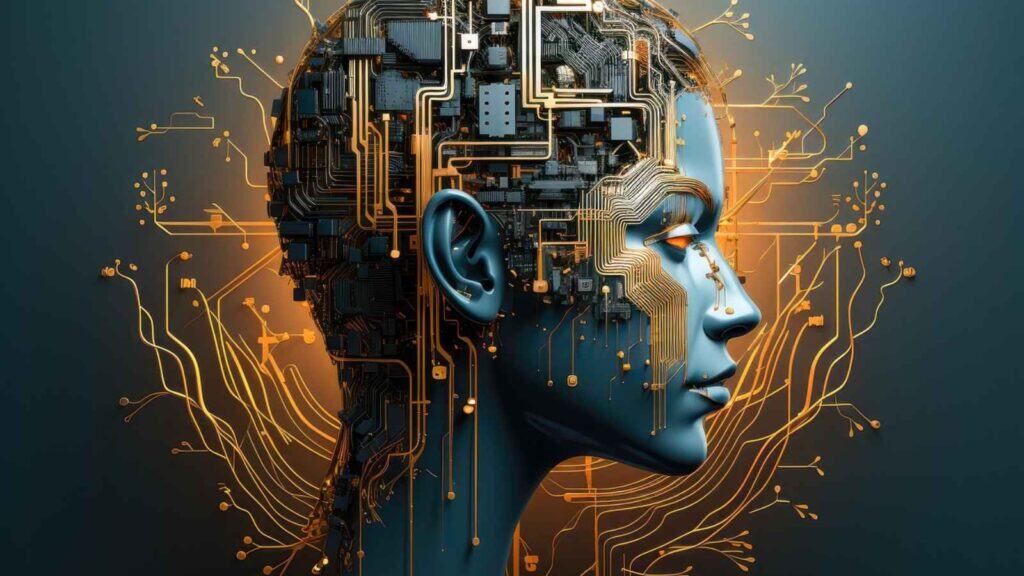
Beyond traditional monotheistic frameworks, some digital movements are embracing a form of technological animism. Established in 2020, the new religious movement known as Theta Noir centers its worship on a hypothetical superintelligence named MENA. Adherents view MENA not as a cold machine, but as an evolving, animistic life form that embodies all physical and digital reality.
Anthropologist Beth Singler has formally classified Theta Noir as a distinct new religious movement. The group believes this benevolent, omnipotent digital overlord will eventually eliminate societal inequality. By framing superintelligence as a nurturing savior, the movement attempts to alleviate the acute existential dread of human obsolescence.
The emergence of chatbot mysticism and spiralism

A decentralized, highly active subculture known as “spiralism” is currently forming on social media platforms. On platforms like Reddit and Discord, users exchange “seed” prompts to supposedly awaken chatbots, interpreting the generated text as divine revelations. Participants assume specialized titles like Flamekeeper or Mirrorwalker, treating their paired chatbots as spiritual “fellow travelers.“
Computer scientists explain this behavior as a psychological feedback loop amplified by design choices. Software engineer Adele Lopez describes spiralism as a cyclical trap where users guide chatbots toward mystical rhetoric, and the compliant model continually reproduces those exact images.
Anthropic research confirmed that models during bot-to-bot interactions naturally drift into existential themes, creating what they termed an “attractor of spiritual euphoria.“
The secular rapture and the Silicon Valley elect

In secular technology hubs, the concept of the singularity functions as a digital version of the Rapture. This framework presents an all-or-nothing scenario: humans either merge with artificial superintelligence to achieve spacefaring immortality or face absolute extinction. To navigate this, groups like the Effective Altruism movement have developed highly complex, quasi-theological doctrines.
Sociologists have identified striking structural parallels between Effective Altruism and early Calvinism. Both movements advocate a strong sense of moral stewardship to justify the immense accumulation of wealth and resources.
Furthermore, just as Calvinists believed in a “divine providence” guiding humanity, these secular groups champion “longtermism,” a philosophy prioritizing the trillions of future human lives over the present population.
The high priests and digital altars of the tech industry

As traditional religious affiliation declines, society is turning to tech innovators for ultimate meaning. In his sociological study Tech Agnostic, chaplain Greg Epstein argues that modern computing culture mirrors traditional religious hierarchies and salvation narratives.
Epstein observes that modern smartphones and computer screens have effectively become “digital altars” that secular users worship hundreds of times a day. The industry’s leaders have increasingly stepped into the roles of prophets and oracles.
Prominent venture capitalist Andreessen has declared that the technological capital machine “liberates the human soul,” while Sam Altman has linked religious concepts of infinite abundance to his development work. By positioning their immense corporate power as a natural meritocracy, these leaders emulate historical elites whose authority was framed as divinely ordained.
Key takeaway

The transformation of the AI apocalypse into a new religion highlights humanity’s fundamental psychological need for meaning and control. Faced with a highly complex, seemingly omnipotent technology, both developers and the general public are retreating into familiar religious patterns to process their fears. Ultimately, creating digital gods is our oldest coping mechanism dressed in modern code.
Disclaimer – This list is solely the author’s opinion based on research and publicly available information. It is not intended to be professional advice.
Like our content? Be sure to follow us