Rivian CEO RJ Scaringe says the company isn’t chasing Tesla—it’s taking notes from Apple
RJ Scaringe is trying to pull Rivian out of Tesla’s shadow with something softer, stranger, and maybe more powerful than a spec sheet. Sitting in a Rivian R2 at the Aspen Ideas Festival, he opened the glove box and pointed to felt lining that cost $11, Fortune’s Diane Brady reported.
It was a tiny detail, almost laughably small beside Rivian’s $5.8 billion Volkswagen partnership, its Uber robotaxi deal, and a stock still 88% below its $130 debut price. But that was the point. Scaringe wants Rivian to be judged less like a Tesla rival and more like Apple or Nike: a brand people feel before they calculate.
What Scaringe said
Scaringe made the contrast plain. Asked about Elon Musk and Tesla, he told Fortune, “we probably couldn’t be more different in terms of the way we show up to the world.”
That line landed because Tesla still has about 17 times Rivian’s revenue, 75 times its market cap, and nearly 10 times its cash, Fortune reported. Rivian is not winning the scale fight today.
Scaringe is making a different case: that Rivian can build a long-lasting relationship with buyers through design, software, service, and emotion. “I hope the brand means more than the products,” he said. “I hope the product inspires people to do the things they love.”
Why does the R2 change the story?
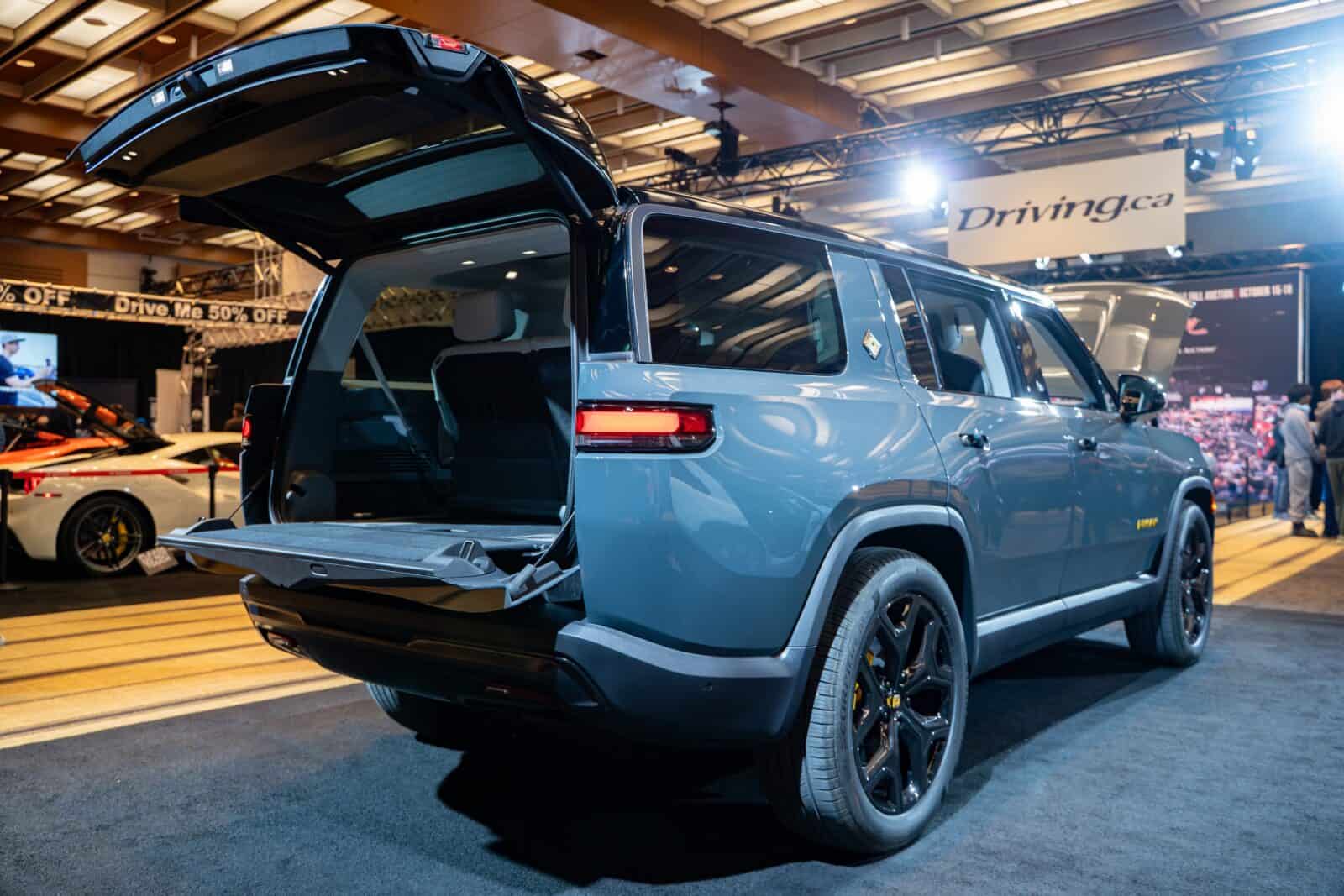
The R2 is where that brand talk meets the showroom floor. Reuters reported Thursday that Rivian raised its 2026 delivery forecast to 65,000 to 70,000 vehicles, up from 62,000 to 67,000, after stronger demand for its R1 vehicles, delivery vans, and the newly launched R2 SUV.
The company delivered 12,194 vehicles in the second quarter, topping the 10,518 expected by analysts, and its shares jumped more than 10%. The R2 began deliveries in June, starts at $57,990, and is expected to move downmarket with a $53,990 version later this year and a $45,000 variant in 2027.
That price path matters because Rivian has spent years being admired by people who could not afford one.
The Apple playbook
The Apple comparison is not just about clean shapes and pretty screens. It is about control. Apple sells hardware, software, services, stores, identity, and habits that reinforce one another.
Rivian is trying to build its own version through vehicles, software, charging, service, events, fleet data, and the kind of small touches that make owners feel seen. Its financials show why that path is tempting.
Rivian reported $1.557 billion in 2025 software and services revenue, up 222% from 2024, while software and services gross profit rose to $576 million from just $7 million the year before.
That is the kind of high-margin growth investors want to believe can sit beside the expensive work of building cars.
The Apple test
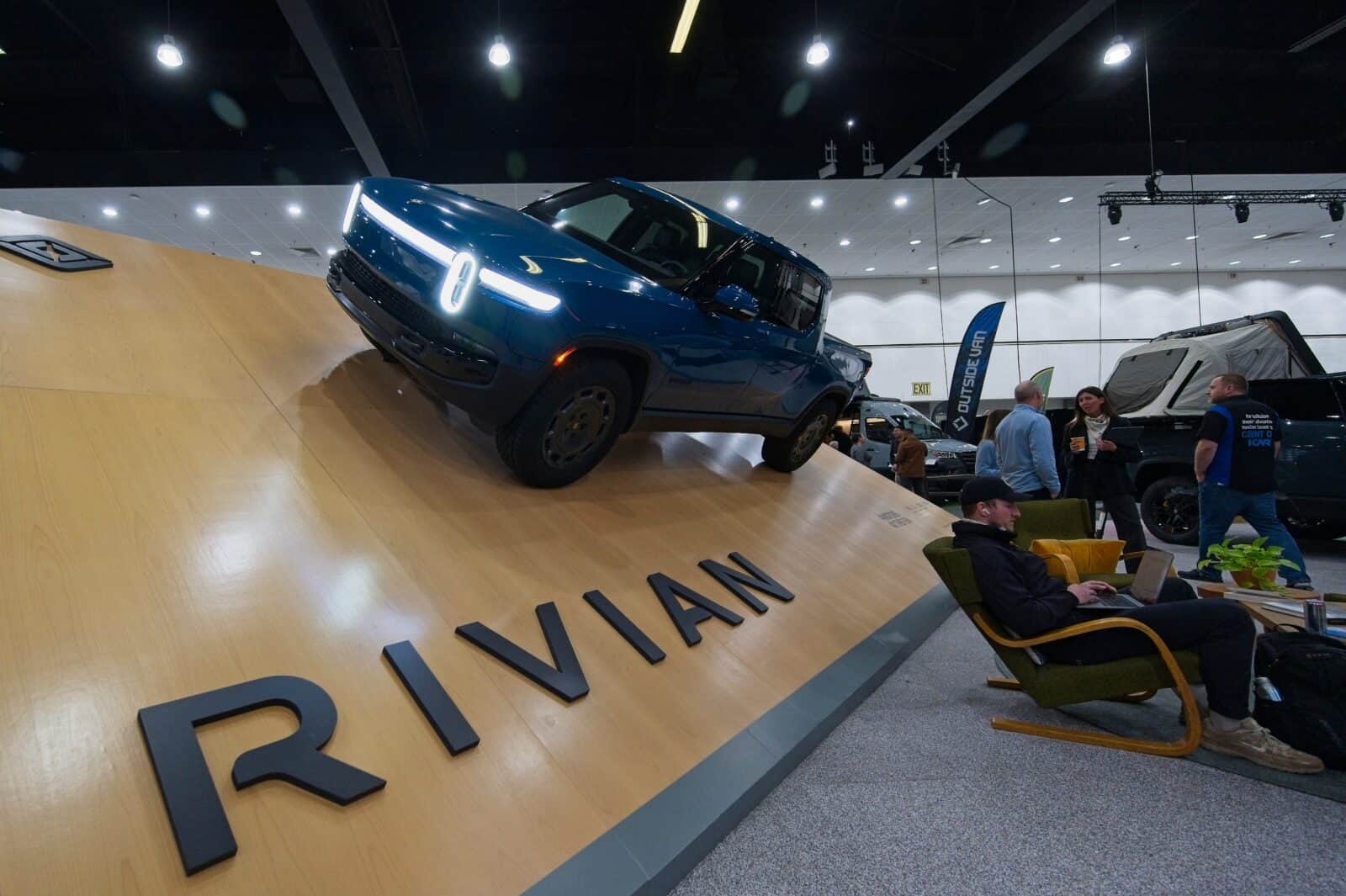
Apple comparisons are earned, not announced. Rivian posted its first full-year consolidated gross profit in 2025 of $144 million, a more than $1.3 billion improvement over its 2024 gross loss. That is real progress.
But the automotive segment still posted a $432 million gross loss, and Rivian’s full-year net loss was $3.626 billion, according to its 2025 results. The Apple test is simple and brutal: can Rivian turn taste into scale, scale into margin, and margin into trust? A beautiful SUV with loyal fans is a start.
Apple became Apple because millions of people kept buying the next device and then stayed within the ecosystem. Rivian has to prove the R2 can create that kind of repeatable pull.
Why Volkswagen and Uber matter
Rivian’s brand vision would sound thinner without big partners betting on its technology. Volkswagen Group plans to invest up to $5.8 billion in Rivian and their joint venture by 2027, with the venture focused on software-designed vehicle architecture and lower EV costs.
Wassym Bensaid, co-CEO of the joint venture, said its aim is “to speed up innovation,lower the cost of owning an EV and increase scale for millions of people around the world.” Uber added another signal in March, announcing plans to invest up to $1.25 billion in Rivian through 2031, tied to autonomous performance milestones, with expected purchases of 10,000 fully autonomous R2 robotaxis and an option for 40,000 more in 2030.
Those deals make Rivian look less like a niche truck maker and more like a platform others want to build on.
Amazon is the quiet backbone
For all the talk of weekend trails and lifestyle branding, Rivian’s most grounded proof point may be the vans that show up at front doors. Amazon says it has more than 50,000 electric delivery vans globally and remains on track to reach 100,000 by 2030.
Fortune reported that Amazon has 30,000 Rivian vans on U.S. roads. That fleet gives Rivian something many EV startups never get: daily mileage, commercial feedback, service data, and a customer with huge logistics needs.
It also keeps Rivian from relying solely on retail buyers who may delay purchases because interest rates are high, EV tax rules are shifting, or gasoline prices are fluctuating.
The Tesla comparison will not disappear
Scaringe may want Rivian measured against Apple and Nike, but Tesla will keep walking into the room. The R2 is aimed at the same broad family crossover segment as the Tesla Model Y.
The Verge noted that Tesla sold more than 1 million Model Ys in 2025, while Rivian sold 42,247 vehicles that year, down 18% from 2024. Ed Kim, president and chief analyst at AutoPacific, told The Verge the R2 is “arguably their biggest make-or-break moment yet,” because it moves Rivian from very expensive EVs into a more mainstream price range.
That is the hopeful part and the hard part. Rivian does not have to become Tesla to win. It does have to build enough R2S, at the right price, with few enough headaches, to make buyers believe.
Why does the brand vision still have life
Hope around Rivian is not just fan fiction. The company survived a rough 17-year road that included a scrapped sports coupe, supply shortages, software bugs, price hikes, and a $250 million shareholder settlement, Fortune reported.
Scaringe told Fortune that entrepreneurs building complex businesses have to be “comfortable being misunderstood for a while.” The R2 gives that long patience a new shape. It is smaller and more affordable than the R1T and R1S.
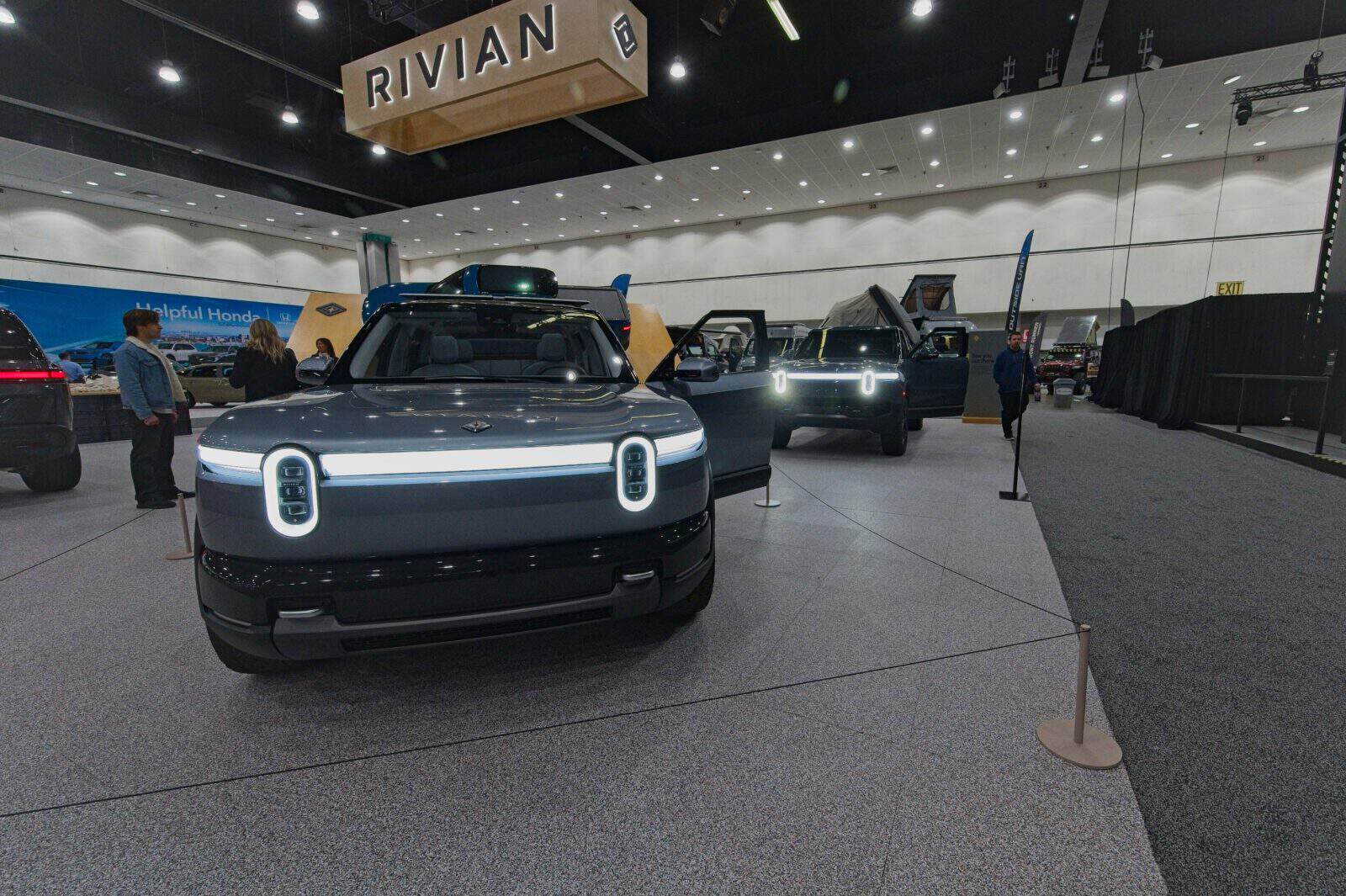
It carries the same friendly oval headlights, outdoor identity, and software-first feel into a market where families actually shop. John Krafcik, a Rivian board member and former Waymo CEO, told The Verge he thinks the R2 “can reset the entire auto industry the way the XJ Cherokee did in the ’80s.” That is a big claim. But it captures why people are still watching.
What readers can take away

Rivian’s story is not really Tesla versus Rivian. It is a test of what a modern car company can be. Tesla proved an EV could become a movement. Apple proved a device could become a daily relationship.
Rivian is trying to borrow from both without copying either. Its stock, now around $18.58 with a market cap near $23.2 billion, still carries the bruises of early hype and hard losses.
But the R2, the Volkswagen software deal, the Uber robotaxi plan, and the Amazon van fleet give Scaringe something more solid than vibes. Rivian’s next chapter will come down to execution, not poetry.
Still, every lasting brand starts with a feeling. Rivian’s job now is to build enough cars to make that feeling travel.
Disclaimer – This list is solely the author’s opinion based on research and publicly available information. It is not intended to be professional advice.
Like our content? Be sure to follow us